
Previous issue | Next issue | Archive
 Volume 16 (2); June 2026
 Research Paper
Anti-inflammatory and Subacute Safety Effects of Pomegranate (Punica granatum) Rind Extract in Recurrent Carrageenan-Induced Inflammation in BALB/c Mice
|
|
Jonas TNK, Waihenya RW, and Kariuki DW.
World Vet. J. 16(2): 312-323, 2026; pii:S232245682600030-16
DOI: https://dx.doi.org/10.54203/scil.2026.wvj30
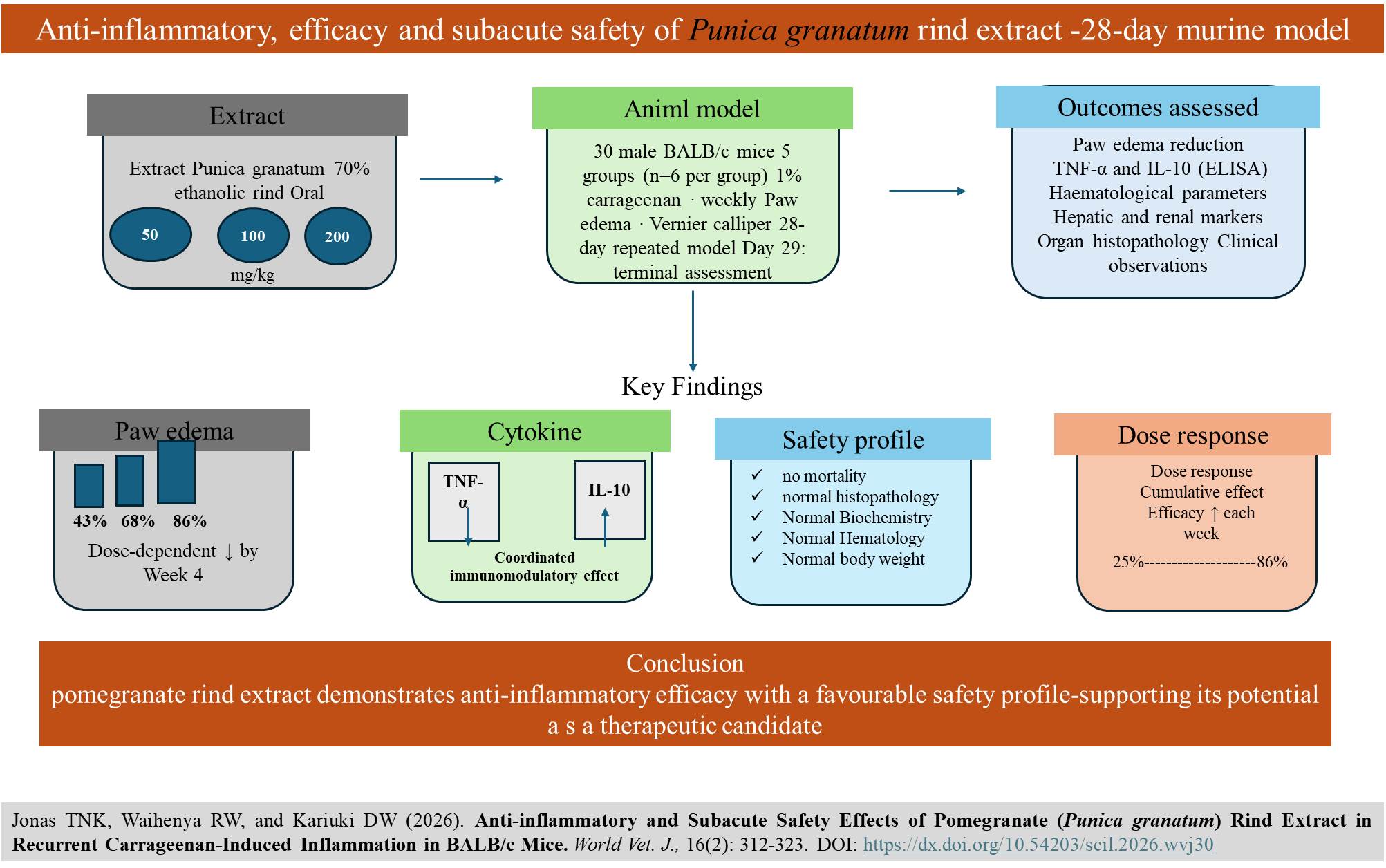
ABSTRACT: Pomegranate (Punica granatum) contains a high level of polyphenols and has anti-inflammatory properties. However, there is limited available data on the safety and effectiveness of pomegranate use during prolonged inflammatory conditions. The present study aimed to evaluate the anti-inflammatory properties and subacute toxicity profile of a 70% ethanolic extract of Punica granatum (P. granatum) rind in carrageenan-induced mice. A total of 30 male mice, aged five weeks and weighing 22-23 grams, were randomly assigned to five groups of six mice each. The study included a negative control group that received normal saline, a positive control group that received meloxicam at 2 mg/kg, and three treatment groups that received P. granatum rind extract at doses of 50, 100, and 200 mg/kg orally over 28 days. Inflammation was induced once weekly in all experimental groups by 1% carrageenan injection into the right hind paw, after which the edema was measured with a digital vernier caliper. The toxicity of the pomegranate extract was assessed using hematological and biochemical profiles of hepatic and renal parameters. Tissue samples from the heart, spleen, kidney, lungs, and liver were collected on day 29. To assess the inflammation status, concentrations of tumor necrosis factor-alpha (TNF-α) and IL-10 were quantified using enzyme-linked immunosorbent assay. The P. granatum rind extract significantly reduced paw edema without mortality or observable toxicity, compared to the negative control group. Mice maintained their normal feeding habits, and body weight increased normally across all groups. Hematological parameters, hepatic, and renal markers were within the normal physiological range across all groups. Histopathological analysis revealed no abnormalities in extract-treated groups. Extract-treated groups demonstrated a dose-dependent elevation of IL-10, peaking at 200 mg/kg, and a reduction in TNF-α level across all doses, with the highest suppression observed at 100 mg/kg compared to the negative control. Daily oral administration of P. granatum rind extract for 28 days exhibited dose-dependent anti-inflammatory effects, as evidenced by reduced paw edema and modulation of cytokines. The absence of systemic toxicity across all tested doses suggested that P. granatum rind extract can be a safe therapeutic agent for treating inflammatory conditions.
Keywords: Anti-inflammatory, Biochemical marker, Carrageenan, Cytokine, Hematological parameter, Inflammation, Punica granatum
[Full text-PDF] [Crossref Metadata] [Scopus] [Export from ePrint]
 Research Paper
Effects of Tryptophan Addition to Green Mussel (Perna viridis) on Cannibalism and Physiological Responses in Lobster (Panulirus homarus)
|
|
Syafi MS, Herawati VE, Sabdaningsih A, Hastuti S, Purnomo PW, Rivaie AR, Yulia MD, and Baragama Y.
World Vet. J. 16(2): 324-336, 2026; pii:S232245682600031-16
DOI: https://dx.doi.org/10.54203/scil.2026.wvj31
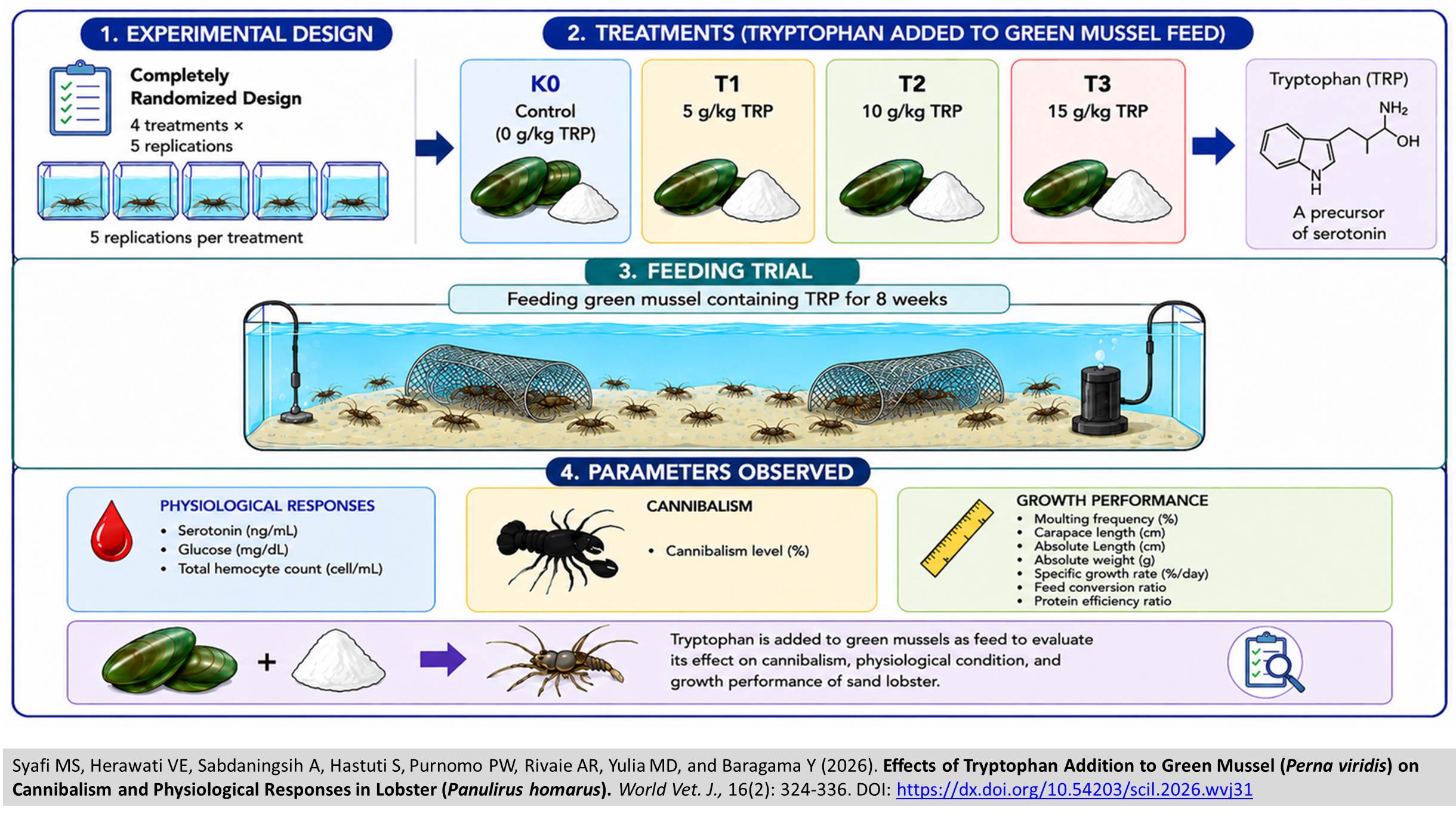
ABSTRACT: The increasing demand for sand lobsters requires higher aquaculture productivity. However, sand lobster production is still constrained by high mortality due to cannibalism, a behavior in which individuals attack and consume conspecifics. One approach to suppress cannibalism is through supplementation of the amino acid tryptophan as a precursor to serotonin, which plays a role in regulating stress and aggressiveness. The present study aimed to determine the effectiveness and optimal formulation of tryptophan in green mussel feed on cannibalism, survival, and growth rate in sand lobsters. The study used a completely randomized design with four treatments and five replications. The treatments consisted of adding tryptophan to green mussels used as feed, including a control without tryptophan (K0), and supplementation at doses of 5 g/kg (T1), 10 g/kg (T2), and 15 g/kg (T3). Observed parameters included physiological responses, cannibalism levels, and growth. The results revealed that T3 treatment was most effective in increasing serotonin levels (89.45 ± 3.069 ng/mL) and survival rate (55.29 ± 5.26 %), and reducing cannibalism (7.06 ± 2.63 %), which caused lower glucose (14.19 ± 3.206 mg/dL) and total hemocyte count (81.00 ± 4.243 cell/mL) levels. However, the highest dose (T3; 15 g/kg) was less effective in enhancing growth performance, indicating that this level of supplementation was not optimal compared to the lower doses. In contrast, T1 (5 g/kg) resulted in relatively higher growth performance compared to the other treatments, as indicated by moulting frequency (1.40 ± 0.23%), carapace length (1.25 ± 0.15 cm), length increase (1.70 ± 0.12 cm), absolute weight (1.14 ± 0.35 g), specific growth rate (3.13 ± 0.46 %/day), feed conversion ratio (5.04 ± 0.93), and protein efficiency ratio (1.42 ± 0.18). However, in T1 (5 g/kg), serotonin (70.66 ± 4.165 ng/mL), survival rate (42.35 ± 4.92%), cannibalism (38.82 ± 3.22%), glucose (16.26 ± 3.352 mg/dL), and total hemocyte count (110.50 ± 9.192 cell/mL) were not as optimal as those observed in T3. Tryptophan supplementation revealed potential to enhance physiological condition, survival, and growth under the experimental conditions.
Keywords: Cannibalism, Growth, Lobster, Physiological, Tryptophan
[Full text-PDF] [Crossref Metadata] [Scopus] [Export from ePrint]
 Research Paper
Prevalence, Genetic Diversity, and Antimicrobial Resistance of Salmonella Enterica Isolated from Broiler Chicken Farms in Dormaa Ahenkro, Ghana
|
|
Nartey MA, Sulemana AL, Addy F, Asiedu P, Hagan BA, Kyei B, and Adzitey F.
World Vet. J. 16(2): 337-346, 2026; pii:S232245682600032-16
DOI: https://dx.doi.org/10.54203/scil.2026.wvj32
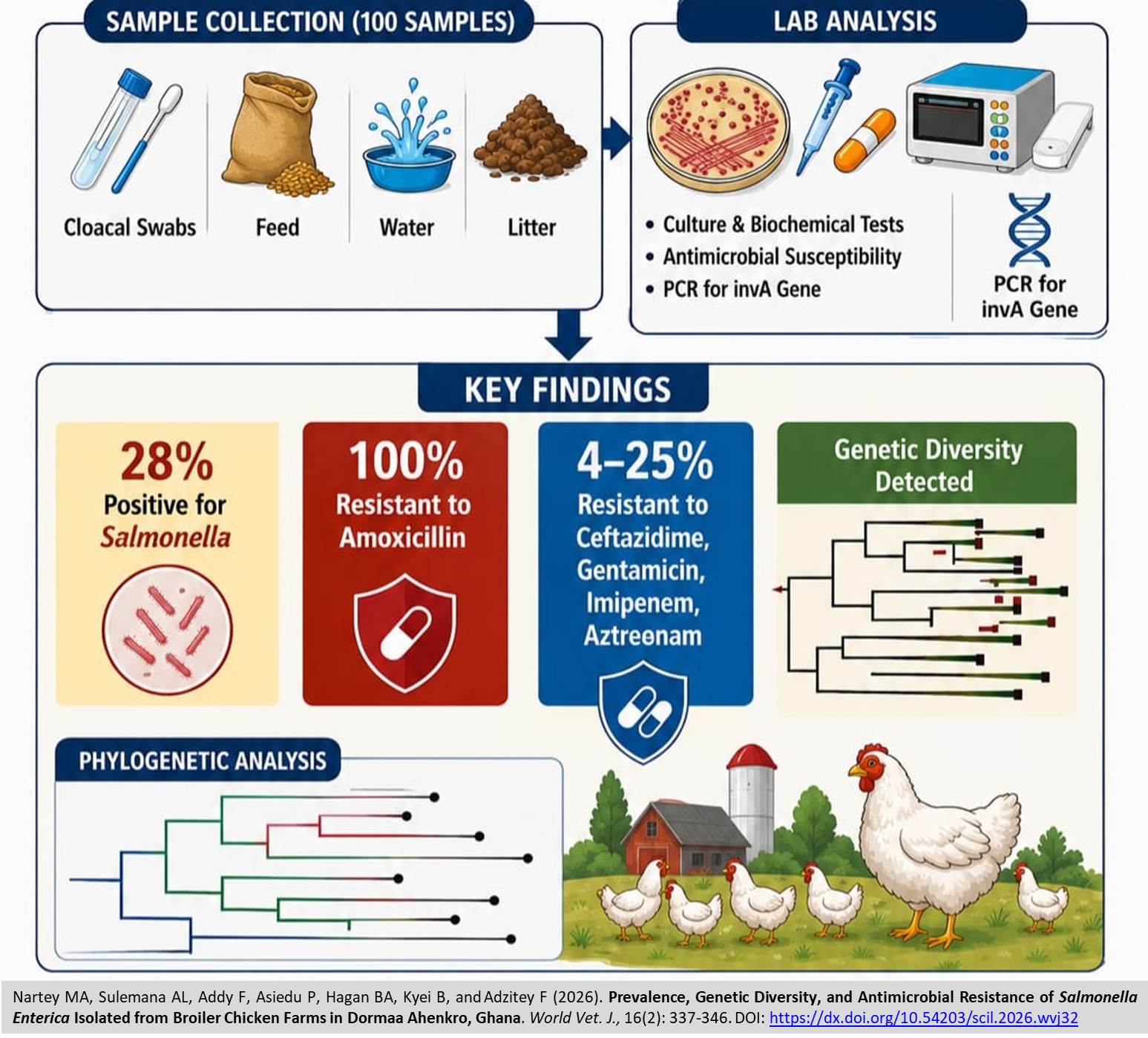
ABSTRACT: Salmonella enterica (S. enterica) remains one of the most important bacterial agents linked to foodborne illness, particularly in regions with expanding poultry production. The present study aimed to investigate the occurrence, antimicrobial resistance, and genetic characteristics of S. enterica isolated from broiler chicken farms in Dormaa Ahenkro, Ghana. One hundred samples (cloacal swabs, feed, water, and litter) were collected from five farms and examined through culture, biochemical tests, antimicrobial susceptibility assays, and molecular confirmation of the invasion gene A (invA). Twenty-eight isolates (28%) were confirmed as Salmonella, all of which exhibited resistance to amoxicillin. Resistance to the antibiotics Ceftazidime, Gentamicin, Imipenem, and Aztreonam tested ranged from 4-25%. Nineteen isolates amplified the invA gene, and sixteen out of 19 submitted samples were successfully sequenced and confirmed as S. enterica with 93.85-99.80% identity. Phylogenetic and haplotype analyses demonstrated substantial genetic diversity, suggesting localized evolutionary divergence. The present findings highlight the presence of multidrug-resistant Salmonella within broiler production systems, emphasizing the need for improved biosecurity and responsible antimicrobial use to safeguard public health. Broiler chicken farms serve as an essential food source in many Ghanaian communities, yet they can harbour bacteria that pose risks to consumers. It was observed that Salmonella contamination in birds and their surroundings in Dormaa Ahenkro. Notably, Salmonella strains seen in these studies were also resistant to commonly used antibiotics, underscoring the need for stronger hygiene practices, prudent antibiotic use, and consistent monitoring to limit the spread of drug-resistant strains from farms to the wider population. Improving control measures will enhance food safety and support the sustainability of poultry production in Ghana.
Keywords: Antimicrobial resistance, Broiler chicken, Molecular characterization, Salmonella, One Health
[Full text-PDF] [Crossref Metadata] [Scopus] [Export from ePrint]
 Research Paper
Histopathological Insights into Purkinje Cell Responses of Maternal and Fetal Cerebellum in Mice: Electromagnetic Wave Exposure and Protective Role of Cactus (Opuntia spp.)
|
|
Armalina D, Susilaningsih N, Sutanto H, and Sunarno.
World Vet. J. 16(2): 347-359, 2026; pii:S232245682600033-16
DOI: https://dx.doi.org/10.54203/scil.2026.wvj33
ABSTRACT: The rapid expansion of wireless technologies has significantly increased human exposure to electromagnetic fields (EMFs), raising concerns about potential effects on reproductive and developmental health. Opuntia cochenillifera (O. cochenillifera), a cactus rich in mucilage and mineral oxides, has potential as a bio-based material for reducing the intensity of electromagnetic waves (EMWs) through dielectric and magnetic interactions. The present study aimed to evaluate the effects of EMW exposure on Purkinje cell morphology in maternal and fetal cerebellum and to assess the protective potential of distinct O. cochenillifera formulations. A total of 42 pregnant BALB/c mice were randomly divided into six groups, including healthy mice as the positive control group, EMW-exposed mice as the negative control group, and four treatment groups. The treatment groups were subjected to EMW exposure alongside the administration of either fresh cactus, dried cactus gel, or powdered cactus (3 g each). The EMW exposure was administered at a specific absorption rate of 1.74 W/kg throughout gestation. Cerebellar tissues were collected on day 20 for histological analysis and characterized by X-ray fluorescence and Fourier-transform infrared spectroscopy. Histological findings demonstrated that EMW exposure disrupted Purkinje cell alignment and decreased Purkinje cell counts in the negative control group. In contrast, all treatment groups demonstrated preserved cellular structure and morphology comparable to that of the healthy mice. Quantitative analysis confirmed significantly higher cell counts in treated groups than in the negative control group. The current findings indicated that EMW exposure adversely affected cerebellar development, while O. cochenillifera exhibited protective effects, supporting its potential as a natural EMF-attenuating material.
Keywords: Cactus, Cerebellum, Electromagnetic wave, Histopathology, Purkinje cell
[Full text-PDF] [Crossref Metadata] [Scopus] [Export from ePrint]
 Research Paper
Antifungal Activity of Crude Solanum incanum Fruit Extracts Against Trichophyton mentagrophytes and Exploratory Analysis of Virulence-Associated Gene Expression
|
|
Deta P, Ogoti P, Kiboi D, and Bii C.
World Vet. J. 16(2): 360-372, 2026; pii:S232245682600034-16
DOI: https://dx.doi.org/10.54203/scil.2026.wvj34
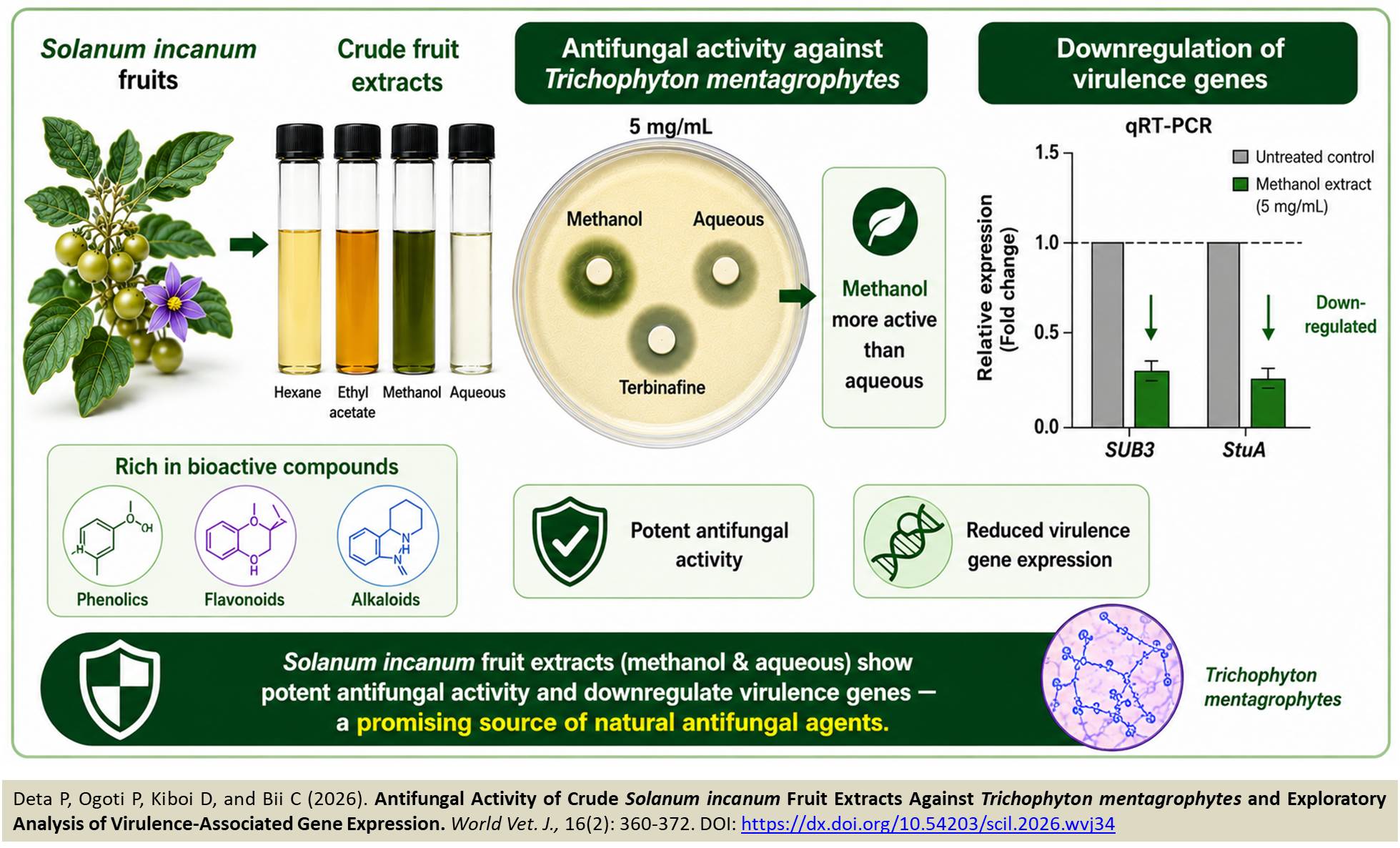
ABSTRACT: Dermatophyte infections in humans and animals are a significant public health concern, and increasing resistance to antifungal medicines highlights the need to explore alternative therapeutic agents. The present study aimed to preliminarily assess the in vitro antifungal activity of crude extracts from Solanum incanum (S. incanum) fruit against Trichophyton mentagrophytes (T. mentagrophytes). Solanum incanum fruits were extracted with hexane, ethyl acetate, methanol, and water. The levels of phenolic, flavonoid, and alkaloid compounds were measured, and antifungal activity was assessed using disc diffusion, minimum inhibitory concentration (MIC), and minimum fungicidal concentration (MFC) assays. Methanol and aqueous extracts exhibited the highest phenolic contents (~19 mg Gallic Acid Equivalents/g extract) and demonstrated significant antifungal activity, producing inhibition zones of 14.46 mm and 8.57 mm, respectively, at a concentration of 5 mg/mL. However, terbinafine demonstrated marginally greater inhibitory activity (15.02 mm) at a lower concentration of 0.1 mg/mL. The present findings indicated that using methanol and aqueous extracts of S. incanum fruit was associated with lower transcript levels of the targeted virulence-related genes (SUB3 and StuA). The current findings provided preliminary evidence regarding the antifungal activity of S. incanum fruit extract against T. mentagrophytes at a concentration of 5 mg/mL, indicating its potential as an antifungal agent.
Keywords: Antifungal activity, Bioactive compound, Dermatophyte, Gene expression, Medicinal plant
[Full text-PDF] [Crossref Metadata] [Scopus] [Export from ePrint]
 Research Paper
Effects of Corn Bran on the Nutritional Quality of Pineapple Peel Silage
|
|
Adelina T, Harahap AE, Juliantoni J, Ali A, and Sepriadi S.
World Vet. J. 16(2): 373-380, 2026; pii:S232245682600035-16
DOI: https://dx.doi.org/10.54203/scil.2026.wvj35
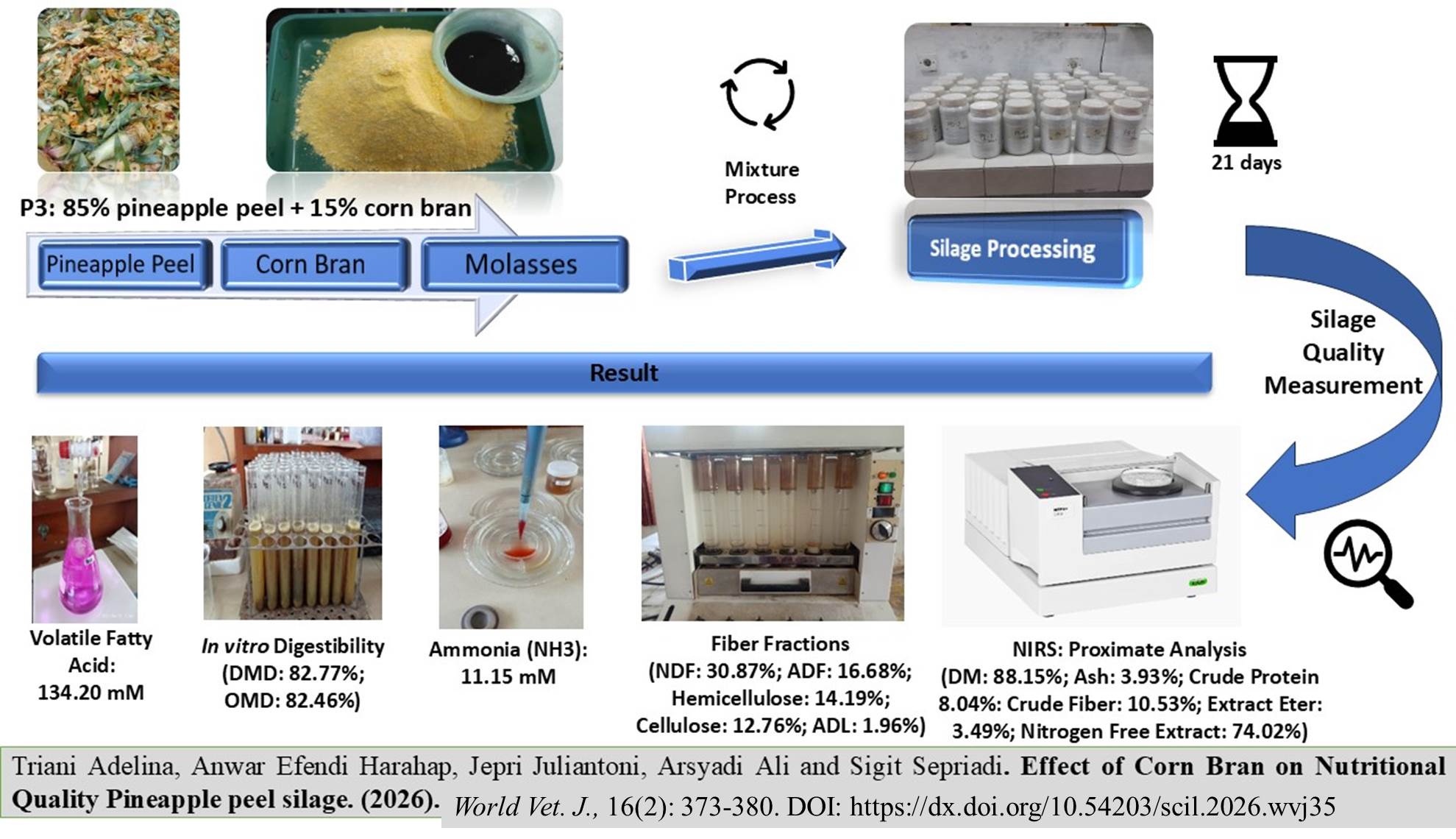
ABSTRACT: Combining pineapple peel waste with a specific level of corn bran produces high-quality silage that meets the nutritional needs of ruminants. The present study aimed to evaluate the effectiveness of incorporating corn bran in improving the physical properties and nutritional quality of pineapple peel silage for ruminant feeding in tropical regions. The silage treatment was conducted using a completely randomized design with four treatment groups and five replications. The experimental diets consisted of four levels of pineapple peel and corn bran, including 100% of pineapple peel with no bran (P0), 95% of pineapple peel with 5% of bran (P1), 90% of pineapple peel with 10% of bran (P2), and 85% of pineapple peel with 15% of bran (P3). Each treatment group received 5% of molasses as an additive. Silage quality was analyzed using near-infrared spectroscopy. To evaluate rumen fermentation and digestibility, the in vitro Conway method was utilized, employing rumen fluid obtained from fistulated Holstein-Friesian bulls. Pineapple peel silage containing different corn starches exhibited a higher pH than the control group. Group P3 significantly produced higher crude protein (CP) and nitrogen-free extract (NFE) levels than the other treatment groups. Increasing the amount of corn bran in group P3 increased ammonia (NH3) production by 11.15 mM and total volatile fatty acids (VFA) by 134.20 mM compared to the control group. Group P3 exhibited the highest digestibility coefficients, with dry matter and organic matter values reaching 82.77% and 82.46%, respectively. The feed mixture comprising 85% pineapple peel and 15% corn bran is recommended for ruminants in tropical regions due to its superior overall nutritional quality. This feed mixture elevated CP, NFE, NH3 production, total VFA, dry matter, and organic matter.
Keywords: Corn bran, Digestibility, Rumen, Tropical region
[Full text-PDF] [Crossref Metadata] [Scopus] [Export from ePrint]
 Research Paper
Shape Variations of Furcula in Different Avian Species
|
|
Karaavcı FA, Demiraslan Y, and Genç B.
World Vet. J. 16(2): 381-390, 2026; pii:S232245682600036-16
DOI: https://dx.doi.org/10.54203/scil.2026.wvj36
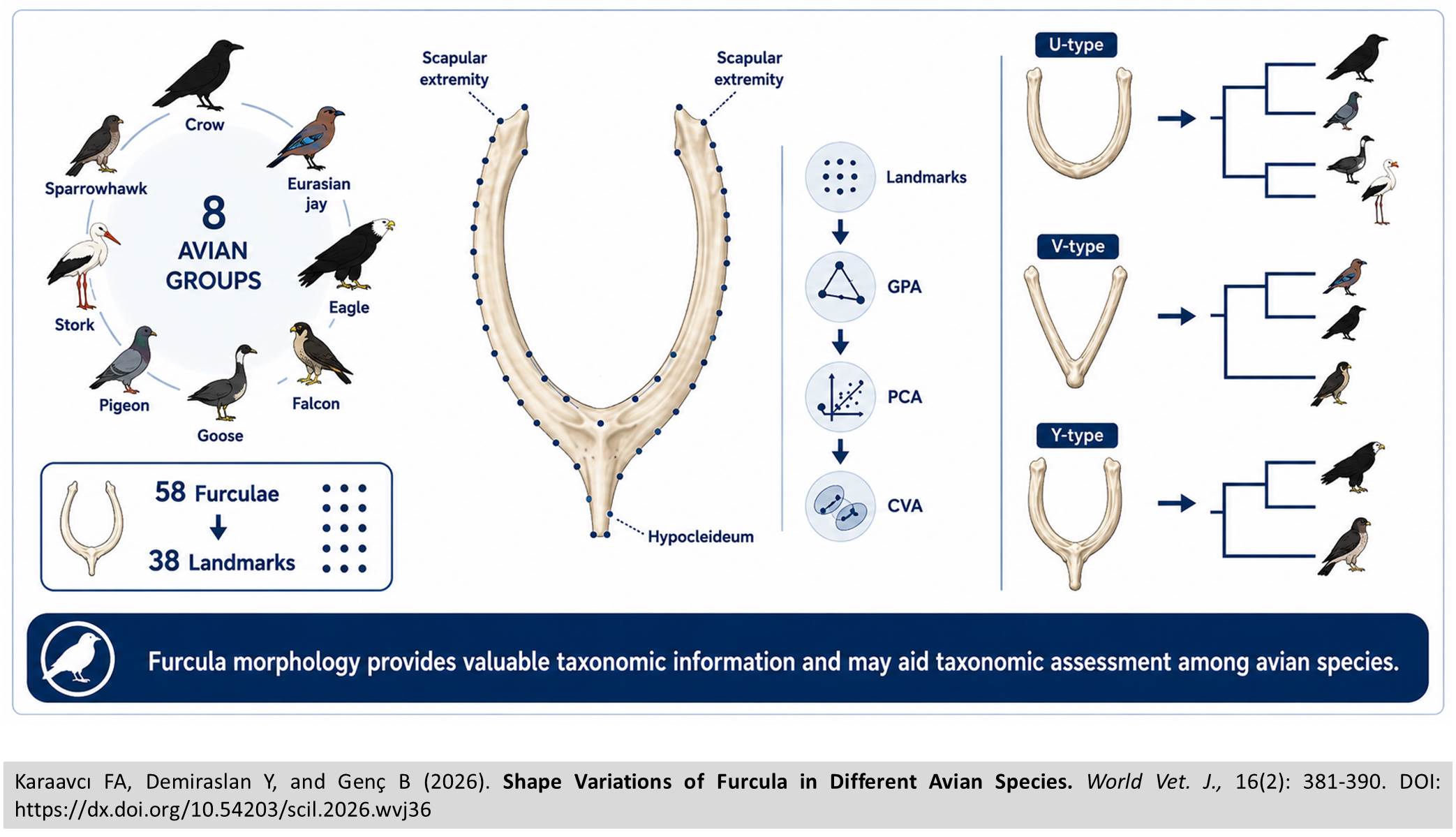
ABSTRACT: The furcula is a distinctive bone in avian species formed by the fusion of the left and right clavicles into a single structure. By acting as a spring during flight, the furcula adjusts the distance between the wing and the shoulder joint, contributing significantly to avian flight. The present study aimed to analyze furcular shapes across several bird species and investigate how these differences influence avian taxonomy. A total of 58 furculae collected from wild adult birds found dead or that died during treatment between 2023 and 2024 were examined. Samples consisted of seven crows, eight Eurasian jays, two eagles, one falcon, 19 pigeons, two storks, 10 sparrowhawks, and nine geese. Furculae were dissected and morphologically examined for overall shape, hypocleideum morphology, and the presence of pneumatic foramina. Morphological examination revealed that the furcula was V-shaped in the crow, Eurasian jay, goose, and pigeon, U-shaped in the eagle, falcon, and sparrowhawk, and Y-shaped in the stork. Geometric morphometric analysis was performed with 38 landmarks. Geometric morphometric analysis revealed that shape variation was primarily concentrated at the scapular ends of the furcula and secondarily in the hypocleideum region. Crow and Eurasian jay samples exhibited relatively similar shape patterns, whereas significant differences were detected among species groups in the canonical variate analysis. The current findings demonstrated species-specific variation in furcular morphology and provided valuable information for avian taxonomy and the functional interpretation of flight-related skeletal adaptations.
Keywords: Avian, Furcula, Geometric morphometry, Morphology, Shape
[Full text-PDF] [Crossref Metadata] [Scopus] [Export from ePrint]
 Research Paper
Effects of Javanese Ginseng (Talinum paniculatum) Leaf Decoction on Immunohistochemical Expression and Superoxide Dismutase Levels in Diabetic Rats
|
|
Suarsana IN, Kardena IM, Suriani NL, Artika IM, and Swastini DA.
World Vet. J. 16(2): 391-401, 2026; pii:S232245682600037-16
DOI: https://dx.doi.org/10.54203/scil.2026.wvj37
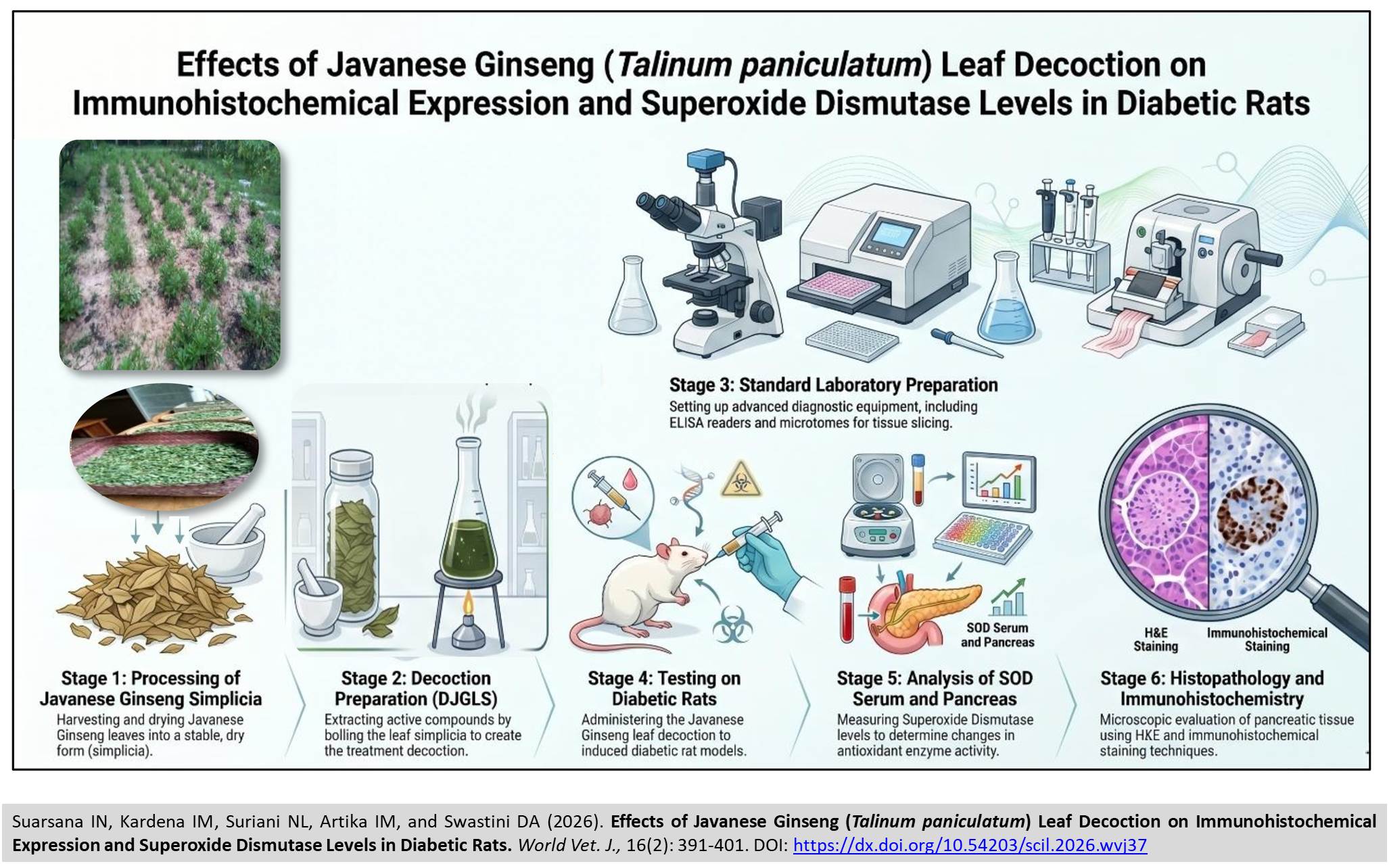
ABSTRACT: Java Ginseng has long been used by Indonesian communities as a medicinal plant and is traditionally consumed as an alternative therapy, even in managing Diabetes Mellitus (DM). The present study aimed to evaluate the effects of the decoction of Javanese ginseng leaf simplicia (DJGLS) on blood glucose levels, serum superoxide dismutase (SOD), the levels and expression intensity of SOD, and pancreatic histopathology in DM rats. Twenty adult male rats were randomly assigned to four groups. The normal control group (GJ-0, n = 5), the DM group (GJ-1, n = 5) received a placebo, and the DM groups (GJ-2, n = 5 and GJ-3, n = 5) were administered a DJGLS (100 g/100 mL, w/v powder simplicia), at volume of 0.5 mL and 1 mL/100 g body weight, respectively for 21 consecutive days. Blood glucose levels were measured using a glucometer. Serum and pancreatic SOD levels were determined using an ELISA kit. Pancreatic histopathology was evaluated using hematoxylin and eosin staining, while pancreatic SOD expression was assessed by immunohistochemical staining. In addition, phytochemical screening was performed on the Javanese ginseng leaf simplicia powder. The present study demonstrated that the phytochemical analysis of Java Ginseng leaf simplicia powder revealed the presence of alkaloids, flavonoids, saponins, tannins, and steroids. DJGLS treatment reduced blood glucose levels and serum SOD levels in diabetic rats, with a significant reduction observed in the GJ-3 group compared with the GJ-1. Administration of DJGLS in the GJ-2 and GJ-3 groups significantly increased pancreatic SOD levels compared with the GJ-1. The DJGLS treatment in the GJ-2 and GJ-3 groups demonstrated restorative effects, as evidenced by the recovery of the Islets of Langerhans area and increased intensity of pancreatic SOD expression compared with the GJ-1. In conclusion, DJGLS treatment was able to reduce blood glucose levels and serum SOD levels, although these values had not fully returned to normal conditions, and it increased pancreatic SOD levels. The DJGLS indicated potential for promoting recovery of the pancreatic Islets of Langerhans area.
Keywords: Decoction, Diabetes, Immunohistochemistry, Javanese ginseng, Superoxide dismutase
[Full text-PDF] [Crossref Metadata] [Scopus] [Export from ePrint]
 Research Paper
Biochemical and Morphological Characterization of Bacteria Isolated from Freshwater in Sudan
|
|
Sulieman HMA and Bakhet HGAB.
World Vet. J. 16(2): 402-410, 2026; pii:S232245682600038-16
DOI: https://dx.doi.org/10.54203/scil.2026.wvj38
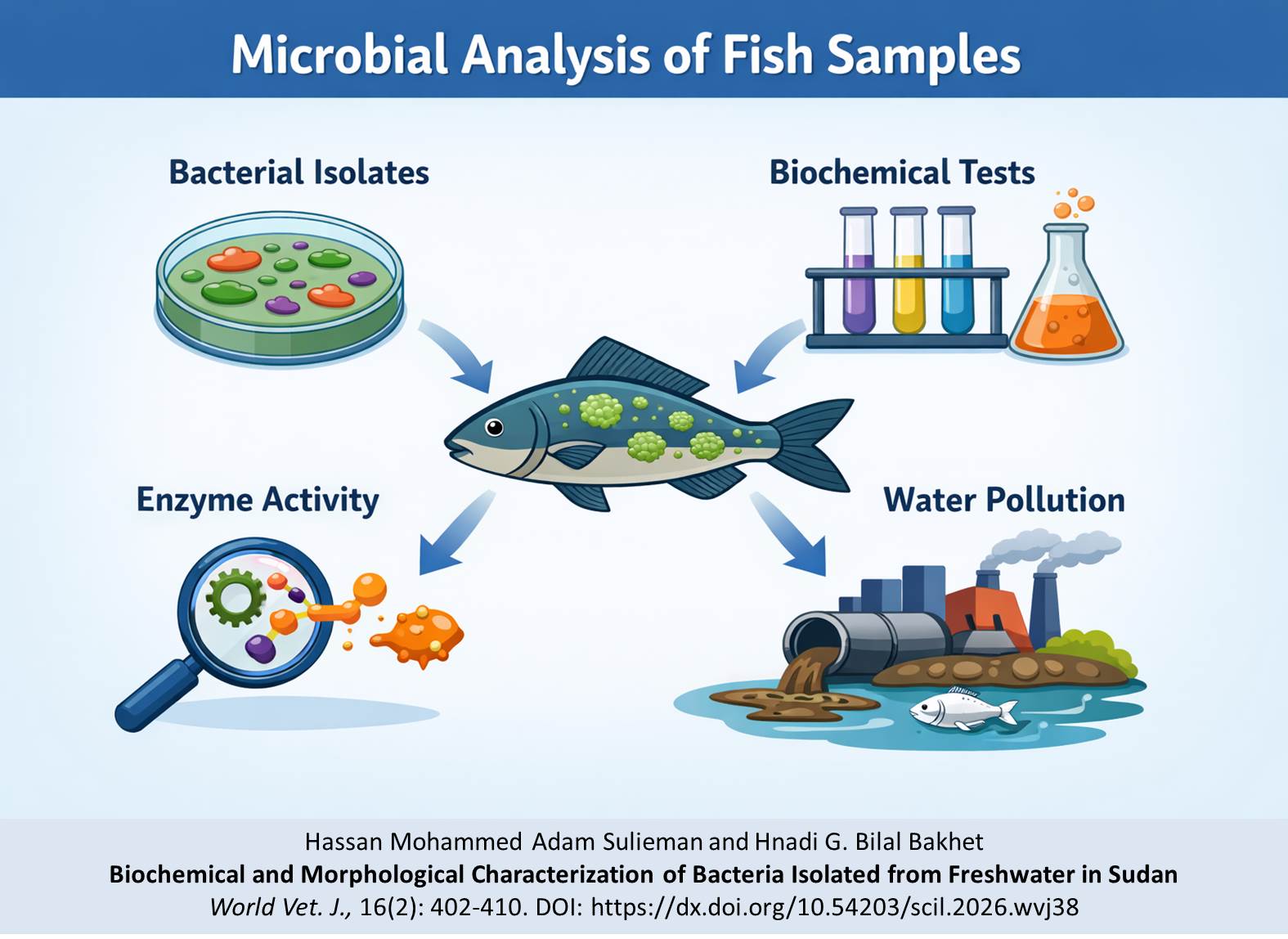
ABSTRACT: The microbial quality of freshwater fish is a crucial indicator of both aquatic environmental health and food safety. The present study aimed to isolate and characterize bacteria from three common freshwater fish species, including Oreochromis niloticus, Clarias gariepinus, and Synodontis alberti, collected from three sites in Khartoum, Sudan. Six fish of each species were collected from each sampling location where the species were present. Total viable bacterial counts in fish gill and intestinal tissues obtained from Green Belt Sewage, Jebel Aulia fish landing, and Al Mourda fish market ranged from 1.2 × 10⁴ to 3.9 × 10⁵ CFU/g, with higher bacterial loads generally observed in intestinal tissues compared to gills. The highest bacterial load (3.9 × 10⁵ CFU/g) was recorded in the intestine of Clarias species collected from Green Belt Sewage. The current results demonstrated a predominance of Gram-negative, rod-shaped bacteria in gill and intestinal tissue samples across all sampling sites. All isolates were catalase-positive and capable of fermenting glucose, indicating facultative anaerobic metabolism. Oxidase activity of bacterial isolates differed by location; fish samples from Al Murda Fish Market had the highest number of oxidase-positive isolates, suggesting the potential presence of Aeromonas and Pseudomonas species. Urease activity was predominantly observed in isolates of fish samples collected from Al Murda and Jebel Aulia, suggesting a greater risk of fish spoilage or pathogenicity. Notably, isolates from the Green Belt Sewage fish samples comprised Gram-positive coccus, potentially identified as Staphylococcus spp., underscoring the likelihood of anthropogenic contamination. The present results indicated that fish obtained from all sampling locations generally exhibited similar microbial communities. However, the differences in enzyme activity across fish from all sites likely reflected variations in environmental factors, sanitation practices, and potential public health risks.
Keywords: Bacterial isolate, Biochemical characterization, Enzyme activity, Fish, Microbial count
[Full text-PDF] [Crossref Metadata] [Scopus] [Export from ePrint]
 Research Paper
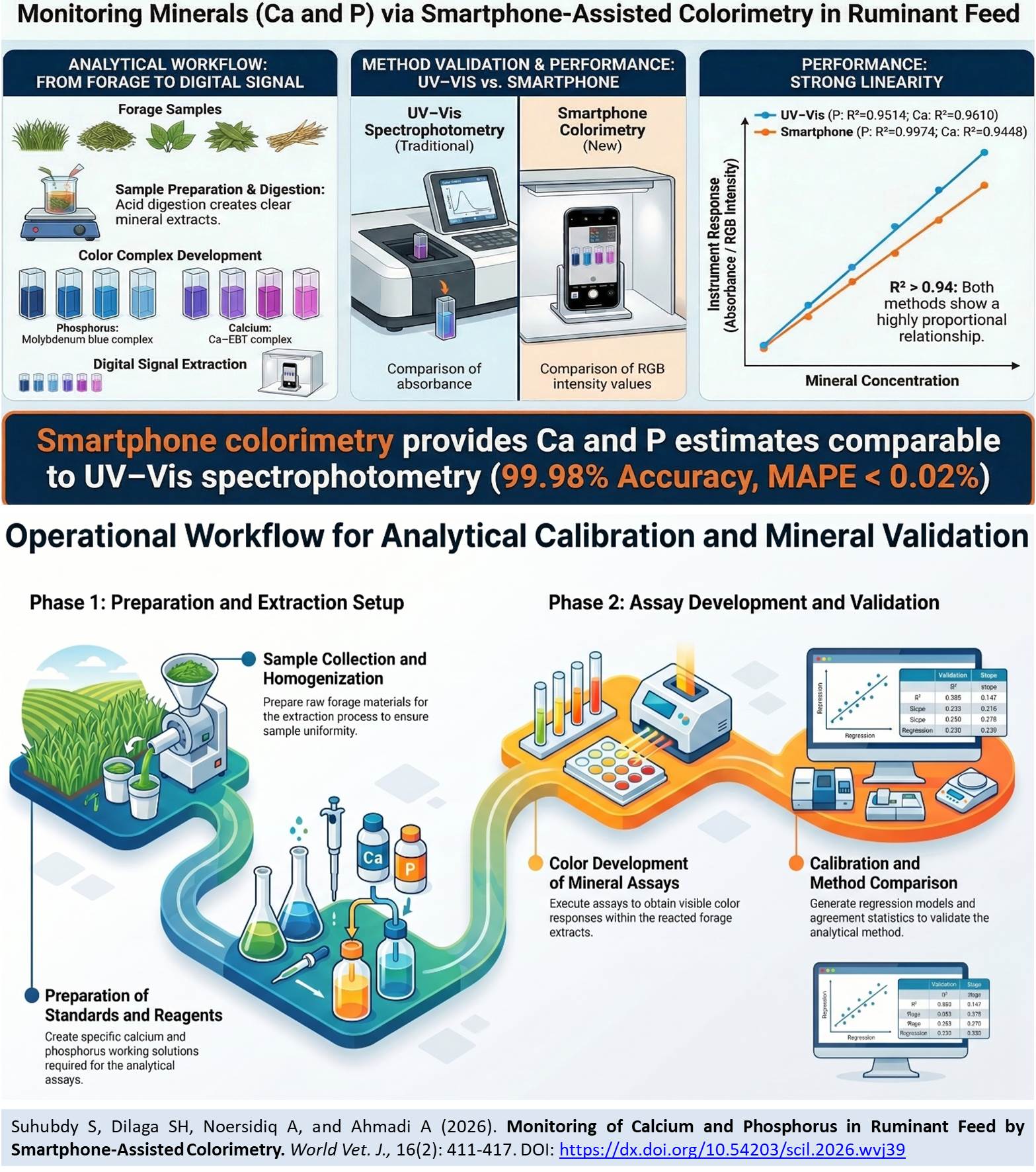
Monitoring of Calcium and Phosphorus in Ruminant Feed by Smartphone-Assisted Colorimetry
|
|
Suhubdy S, Dilaga SH, Noersidiq A, and Ahmadi A.
World Vet. J. 16(2): 411-417, 2026; pii:S232245682600039-16
DOI: https://dx.doi.org/10.54203/scil.2026.wvj39
ABSTRACT: Routine laboratory analysis for ruminant feed minerals is often unavailable in a field setting; therefore, rapid mineral monitoring is necessary. The present study aimed to evaluate a smartphone-assisted colorimetry method for estimating calcium and phosphorus in forage extracts and compare its performance with UV-Visible spectrophotometry. Standard solutions ranging from 1 to 5 ppm were prepared for smartphone-assisted colorimetry and UV-Visible spectrophotometry, and reagent-treated extracts from four forage species, including Pennisetum purpureum cv. Mott, Pennisetum purpupoides, Leucaena leucocephala, and Sesbania grandiflora were measured by a Genesys 10S spectrophotometer and by smartphone imaging under controlled lighting. Linear regression was used to develop calibration models, and method agreement was assessed using Pearson's r and mean absolute percentage error. Both methods indicated strong linearity for calcium and phosphorus. For the smartphone method, the coefficient of determination ranged from 0.9448 to 0.9974, compared to 0.9514 to 0.9610 for the UV-Vis method, with absolute differences between the two methods remaining below 0.5%. Smartphone-assisted colorimetry and UV-Visible spectrophotometry produced closely comparable estimates for each tested forage sample for the tested forages. Smartphone-assisted colorimetry provided accurate estimates of calcium and phosphorus in forage extracts, comparable to those produced by spectrophotometry, and demonstrated potential as a low-cost tool for routine screening of ruminant feed minerals.
Keywords: Calcium, Colorimetry, Forage, Nutrition, Phosphorus, Ruminant feed, Smartphone
[Full text-PDF] [Crossref Metadata] [Scopus] [Export from ePrint]
 Research Paper
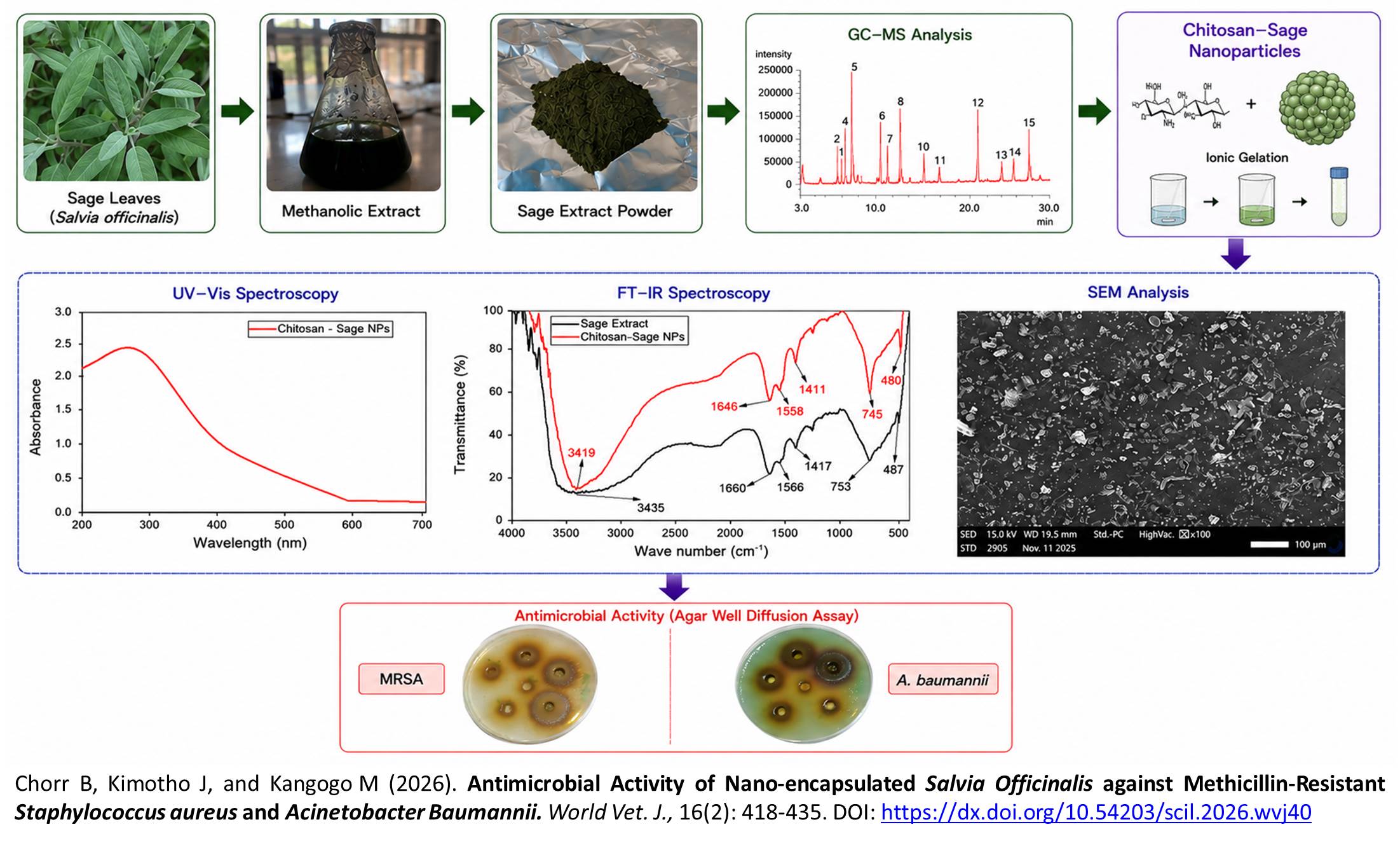
Antimicrobial Activity of Nano-encapsulated Salvia Officinalis against Methicillin-Resistant Staphylococcus aureus and Acinetobacter Baumannii
|
|
Chorr B, Kimotho J, and Kangogo M.
World Vet. J. 16(2): 418-435, 2026; pii:S232245682600040-16
DOI: https://dx.doi.org/10.54203/scil.2026.wvj40
ABSTRACT: Antimicrobial resistance represents a global health burden requiring innovative therapeutic strategies. The antibacterial properties of Salvia officinalis (S. officinalis) are attributed to its bioactive compounds. The present study aimed to investigate the antimicrobial activity of nano-encapsulated S. officinalis leaf extract against methicillin-resistant Staphylococcus aureus (MRSA) and Acinetobacter baumannii (A. baumannii). The crude extract of S. officinalis was subjected to methanolic extraction, and the resulting methanolic fraction was analyzed through phytochemical screening. Phytocompounds were identified using gas chromatography-mass spectrometry (GC-MS), and their potential mechanisms of action were evaluated in silico. The S. officinalis extract was nano-formulated using chitosan and characterized by scanning electron microscopy (SEM), Fourier transform infrared spectroscopy, and UV-visible spectroscopy. Antibacterial activity of the nano-formulation against MRSA and A. baumannii was assessed using agar well diffusion, broth microdilution, and minimum bactericidal concentration analysis. Qualitative phytochemical analysis revealed the presence of flavonoids, alkaloids, tannins, saponins, and terpenoids. The GC‑MS analysis demonstrated 15 peaks, representing 14 distinct compounds, with one compound (3,7,11,15‑tetramethyl‑2‑hexadecen‑1‑ol) eluting at two retention times. Chitosan nanoparticle formation was confirmed by an absorption peak near 290 nm. The functional groups of chitosan nanoparticles included hydroxyl (-OH) and amide (-NH₂) groups, along with C–H, C–N, C–O, and P=O stretching. The SEM imaging exhibited relatively homogeneous, well-dispersed, spherical nanoparticles. The antimicrobial efficacy of S. officinalis chitosan nanoparticles was concentration-dependent, reaching maximum inhibition zones of 21 ± 0.5 mm against MRSA and 17 ± 1.5 mm against A. baumannii at 500 µg/mL. Additionally, susceptibility testing revealed minimum inhibitory concentrations of 62.5 µg/mL and 125 µg/mL, and minimum bactericidal concentrations of 125 µg/mL and 500 µg/mL against MRSA and A. baumannii, respectively. Molecular docking analysis indicated that phytocompounds within the methanolic extract exhibited binding affinity toward penicillin-binding protein 2a (PBP2a) and the carbapenem-associated outer membrane protein (CarO). The interactions between the phytochemicals and protein targets indicated that binding to catalytic sites could inhibit the function of these resistance-associated proteins, potentially reducing antibiotic degradation. The biosynthesized S. officinalis chitosan nanoparticles exhibited strong antimicrobial activity against multidrug-resistant bacterial isolates, supporting their potential as antimicrobial agents.
Keywords: Acinetobacter baumannii, Antimicrobial resistance, Methicillin-resistant Staphylococcus aureus, Nanoparticle, Salvia officinalis
[Full text-PDF] [Crossref Metadata] [Scopus] [Export from ePrint]
 Research Paper
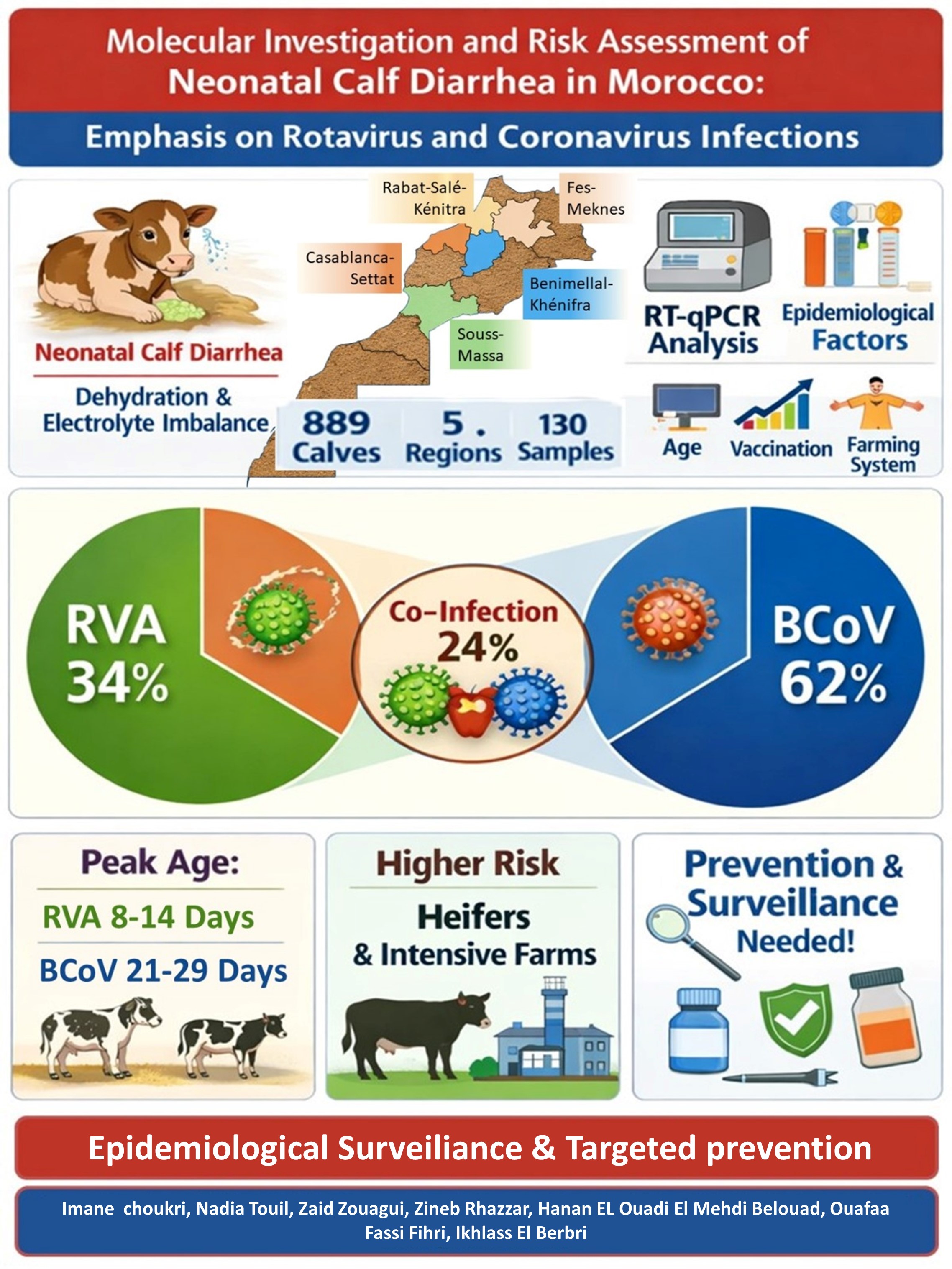
Molecular Investigation and Risk Assessment of Neonatal Calf Diarrhea in Morocco: Emphasis on Rotavirus and Coronavirus Infections
|
|
Choukri I, Touil N, Zouagui Z, Rhazzar Z, El Ouadi H, Belouad EM, Fassi Fihri O, and El Berbri I.
World Vet. J. 16(2): 436-448, 2026; pii:S232245682600041-16
DOI: https://dx.doi.org/10.54203/scil.2026.wvj41
ABSTRACT: Neonatal calf diarrhea represents a major health and economic burden in Moroccan cattle farming and remains a leading cause of calf mortality. It is commonly associated with infectious agents such as rotavirus, bovine coronavirus, Escherichia coli, and Cryptosporidium parvum, and is often aggravated by dehydration and electrolyte imbalances. The present study aimed to update the epidemiological profile of viral pathogens involved in neonatal calf diarrhea in Morocco, with particular emphasis on rotavirus group A (RVA) and bovine coronavirus (BCoV). A total of 889 newborn calves from 20 farms located in five Moroccan regions (Casablanca-Settat, Rabat-Salé-Kenitra, Souss-Massa, Fes-Meknes, and Beni Mellal-Khenifra) were included in this cross-sectional observational study. Among them, 130 rectal swabs were collected from diarrheic calves between November 2022 and March 2023 and analyzed using reverse transcription quantitative PCR (RT-qPCR). The results indicated that 34% of diarrheic calves tested positive for RVA and 62% for BCoV, with a co-infection rate of 24%. Infection rates were influenced by several factors, including calf age, geographic region, dam vaccination status, calving rank, production system, and farm size. RVA infection peaked in calves aged 8–14 days, whereas BCoV was most prevalent in calves aged 21–29 days. Notably, RVA positivity was higher in calves born to vaccinated dams (40%) compared to those from unvaccinated dams (20%), while BCoV infection was more frequently detected in calves from heifers than from multiparous cows. Higher infection rates in calves were also observed in intensive farming systems. Overall, these findings confirmed the major role of rotavirus and bovine coronavirus in neonatal calf diarrhea in Morocco and suggest that the limited effectiveness of vaccination may be influenced by herd management, colostrum transfer, and biosecurity practices. The potential mismatch between vaccine and circulating strains highlights the need for continuous molecular surveillance.
Keywords: Bovine coronavirus, Calf, Neonatal diarrhea, Rotavirus A, Risk factor
[Full text-PDF] [Crossref Metadata] [Scopus] [Export from ePrint]
 Research Paper
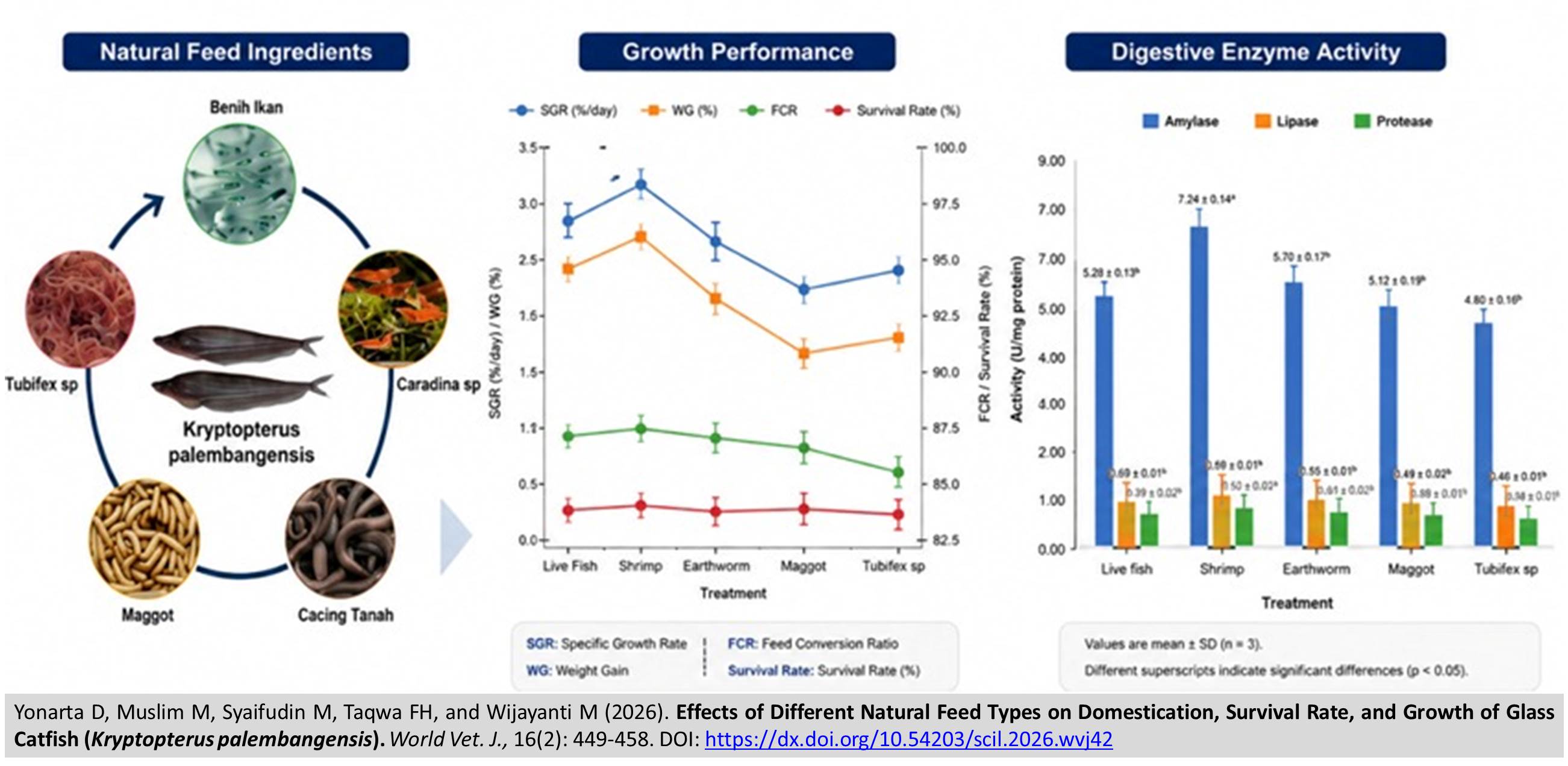
Effects of Different Natural Feed Types on Domestication, Survival Rate, and Growth of Glass Catfish (Kryptopterus palembangensis)
|
|
Yonarta D, Muslim M, Syaifudin M, Taqwa FH, and Wijayanti M.
World Vet. J. 16(2): 449-458, 2026; pii:S232245682600042-16
DOI: https://dx.doi.org/10.54203/scil.2026.wvj42
ABSTRACT: Intensive, uncontrolled fishing has primarily reduced glass catfish (Kryptopterus palembangensis) populations in Indonesian waters, especially in Sumatra, leading to a steady decline in natural populations through continuous overexploitation. The present study aimed to evaluate the effects of different natural feeds on the growth performance and survival of glass catfish during the domestication phase (process of adapting wild fish to aquaculture conditions using appropriate natural feed types). A total of 150 glass catfish, with an average initial length of 14.62 ± 0.53 cm and an average initial weight of 15.58 ± 0.73 g, were subjected to the present study, using a completely randomized design with five treatment groups and three replications. Each experimental unit contained 10 fish, resulting in 30 fish per treatment. The treatment groups consisted of different natural feed types, namely small live fish (P1), shrimp (P2), earthworms (P3), maggots (P4), and Tubifex sp. (P5). Growth performance, survival rate, and digestive enzyme activity of glass catfish were observed after 30 days of rearing. The present results indicated that Group P2 significantly improved the growth performance of glass catfish, including absolute weight (3.61 ± 0.16 g), absolute length (2.85 ± 0.11 cm), specific growth rate (0.85 ± 0.03% day⁻¹), and daily growth rate (0.12 ± 0.01 g day⁻¹) compared to other groups. Additionally, Group P2 exhibited the highest survival rate at 100% and the highest digestive enzyme activities, with amylase at 7.24 ± 0.14 U mL⁻¹, lipase at 0.37 ± 0.01 U mL⁻¹, and protease at 0.69 ± 0.01 U mL⁻¹. The second-best performance was observed in Group P1, followed by P3, P5, and P4. Shrimp was identified as the most effective natural feed for improving the growth performance and survival rate of glass catfish.
Keywords: Digestive enzyme, Domestication, Glass catfish, Growth, Survival rate
[Full text-PDF] [Crossref Metadata] [Scopus] [Export from ePrint]
 Research Paper
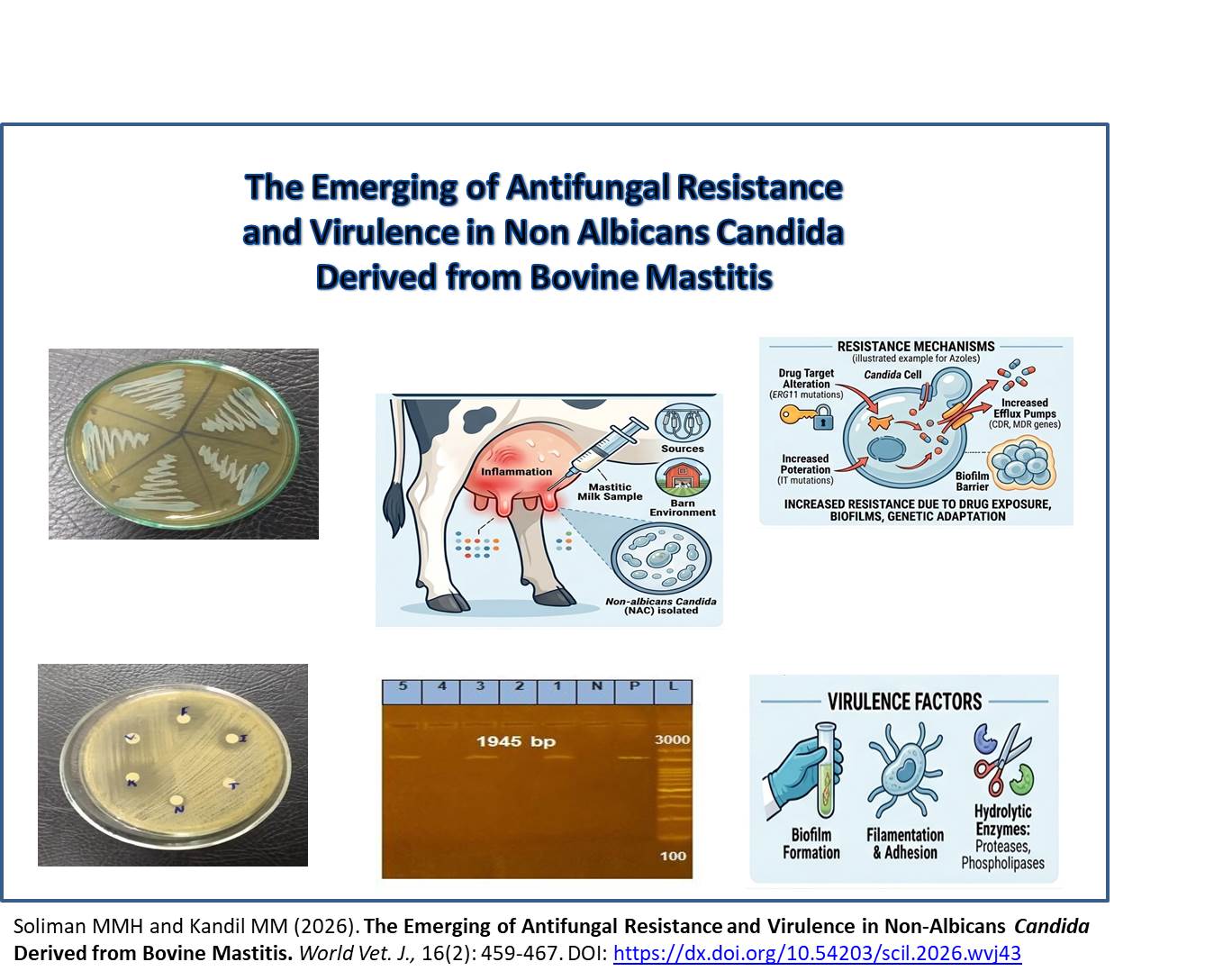
The Emerging of Antifungal Resistance and Virulence in Non-Albicans Candida Derived from Bovine Mastitis
|
|
Soliman MMH and Kandil MM.
World Vet. J. 16(2): 459-467, 2026; pii:S232245682600043-16
DOI: https://dx.doi.org/10.54203/scil.2026.wvj43
ABSTRACT: Mastitis represents a considerable economic burden on the dairy industry, adversely affecting milk yield and quality. In mycotic mastitis, Candida (C.) species are frequently responsible for opportunistic fungal infections in cows. The present study aimed to isolate C. tropicalis from aseptically collected milk samples from 60 dairy cows (average age 4.2 years) that tested positive for the California mastitis test (CMT). Mycotic etiology was confirmed through direct microscopy (KOH wet mount), culture on Sabouraud dextrose agar, and biochemical identification (API 20C AUX system). Antifungal sensitivity testing was conducted employing the broth microdilution method in accordance with CLSI M27-A3 guidelines. Additionally, molecular detection of antifungal resistance genes (ERG3 and CDR1) and virulence genes (SAPT3, ALS2, and LIP1) was carried out using polymerase chain reaction (PCR). A total of five C. tropicalis isolates were obtained from 60 mastitis milk samples, yielding a prevalence of 8.3%. Antifungal susceptibility profiles demonstrated that all tested isolates were sensitive to itraconazole, nystatin, and ketoconazole. However, two of five isolates (40%) were resistant to fluconazole, all five isolates (100%) were resistant to terbinafine, and three of five isolates (60%) were resistant to voriconazole. Virulence genes (SAPT3, ALS2, and LIP1) were identified in 100%, 40%, and 60% of the five examined isolates, respectively. Meanwhile, antifungal resistance genes (CDR1 and ERG3) were found in 100% and 80% of the isolates, respectively. The present study underscored the prevalence of multidrug-resistant C. tropicalis in bovine mycotic mastitis, emphasizing the need for routine antifungal susceptibility testing and molecular screening in dairy farms.
Keywords: Antifungal resistance, Candida tropicalis, Mastitis, Resistance gene, Virulence gene
[Full text-PDF] [Crossref Metadata] [Scopus] [Export from ePrint]
 Research Paper
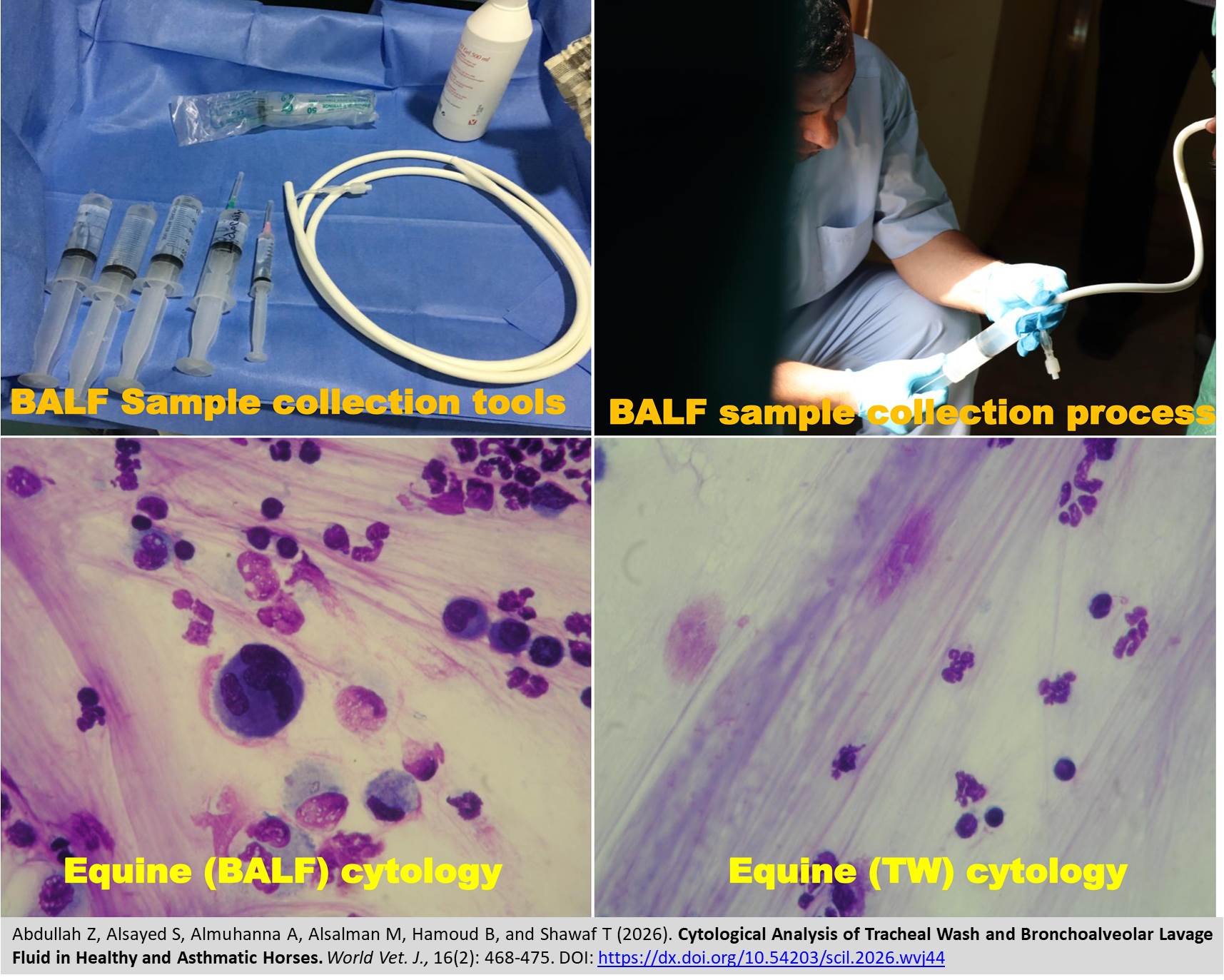
Cytological Analysis of Tracheal Wash and Bronchoalveolar Lavage Fluid in Healthy and Asthmatic Horses
|
|
Abdullah Z, Alsayed S, Almuhanna A, Alsalman M, Hamoud B, and Shawaf T.
World Vet. J. 16(2): 468-475, 2026; pii:S232245682600044-16
DOI: https://dx.doi.org/10.54203/scil.2026.wvj44
ABSTRACT: Although numerous recent studies have explored the cytology of equine asthma, its cytological profile in Arabian horses is still insufficiently described. This study compared the differential cell counts in tracheal lavage (TW) and bronchial lavage fluid (BALF) samples between healthy and asthmatic Arabian horses in Saudi Arabia. Seventeen horses (5 healthy, 12 asthmatic), with an average age of 7 ± 5.5 years, and an average weight of 325 ± 120 kg, enrolled in this study to collect and analyze tracheal wash (TW) or bronchoalveolar lavage fluid (BALF) samples. The affected horses were taken from the respiratory cases admitted to the veterinary teaching hospital of Faisal University, while the healthy horses were taken from the horse research center in Faisal University (Saudi Arabia). Differential counts were performed on TW and BALF samples using microscopic examination after staining the samples with Diff Quick stain for evaluation of macrophages, lymphocytes, neutrophils, mast cells, eosinophils, and epithelial cells. A significant increase in neutrophils was observed in the affected group in both TW and BALF, compared to the control group. In contrast, a marked decrease in the percentage of lymphocytes was observed in asthmatic BALF, while macrophage proportions decreased in affected and control groups. TW eosinophils were elevated in asthmatic horses compared to healthy horses, though BALF eosinophil counts did not differ between healthy and asthmatic horses. The percentage of epithelial cells was decreased in TW but modestly increased in the BALF of asthmatic horses. No change in the number of mast cells was observed in any of the groups, as it was low. These findings confirmed that equine asthma in Arabian horses enrolled in this study is characterized by pronounced neutrophilic inflammation with concomitant lymphocytic and macrophagic depletion, particularly in the BALF samples.
Keywords: Bronchoalveolar, Cytology, Horse, Respiratory, Tracheal, Wash
[Full text-PDF] [Crossref Metadata] [Scopus] [Export from ePrint]
 Research Paper
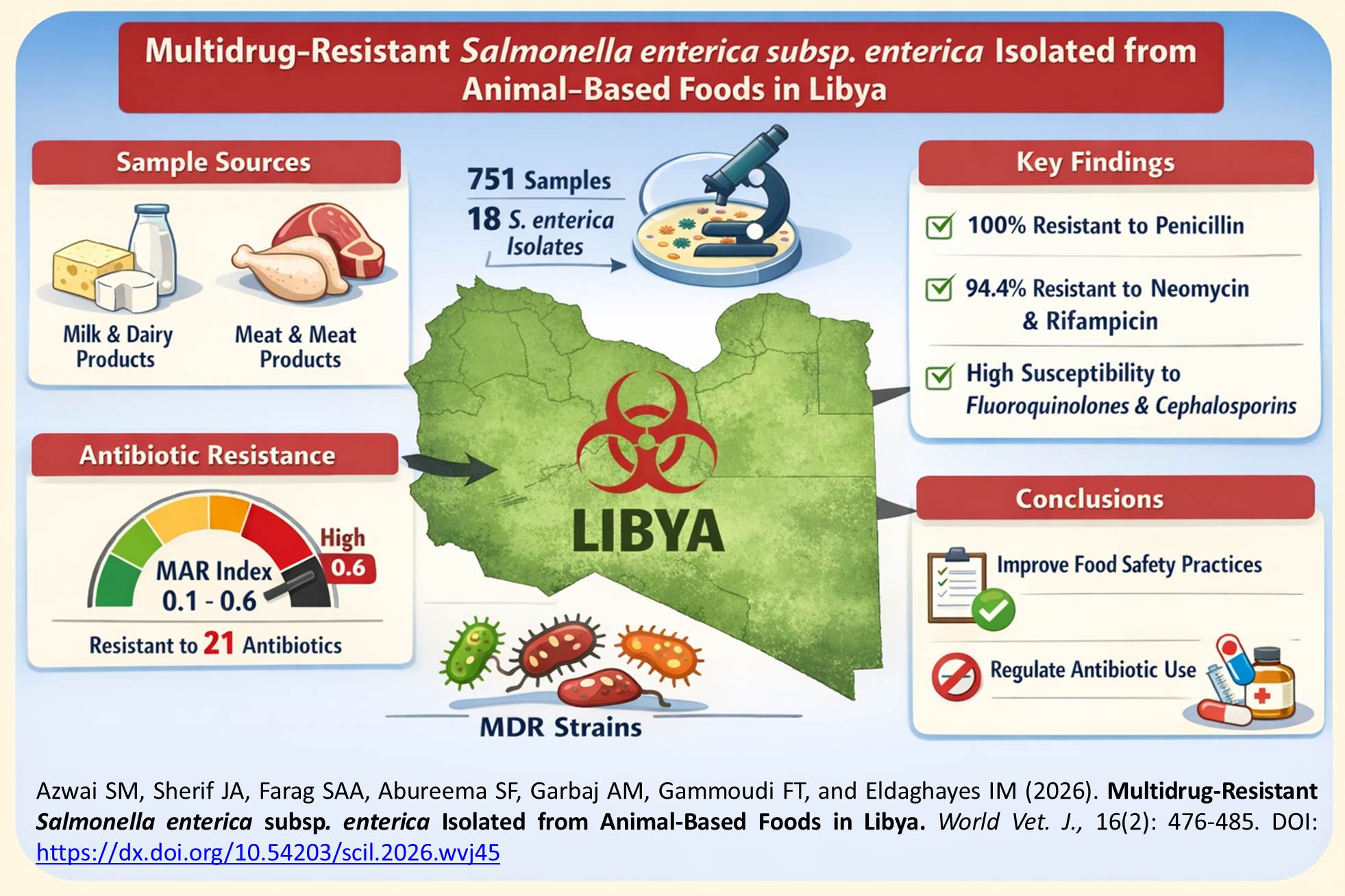
Multidrug-Resistant Salmonella enterica subsp. enterica Isolated from Animal-Based Foods in Libya
|
|
Azwai SM, Sherif JA, Farag SAA, Abureema SF, Garbaj AM, Gammoudi FT, and Eldaghayes IM.
World Vet. J. 16(2): 476-485, 2026; pii:S232245682600045-16
DOI: https://dx.doi.org/10.54203/scil.2026.wvj45
ABSTRACT: The emergence of Salmonella enterica subsp. enterica in food represents a significant public health concern worldwide, particularly in developing countries such as Libya. Addressing antimicrobial resistance in Salmonella enterica subsp. enterica is essential, particularly where food hygiene and antimicrobial regulations are weak. The present study aimed to evaluate the occurrence and antimicrobial susceptibility profile of Salmonella enterica subsp. enterica isolated from different animal-derived food products collected at retail markets in Libya. In the current study, 18 Salmonella enterica subsp. enterica isolates were obtained from 751 food samples, including milk, dairy products, meat, and meat products, collected randomly from retail markets in Libya. The isolates were tested for antimicrobial susceptibility, and their antibiotic resistance profiles were evaluated against 33 antibiotics representing 12 different classes. Antimicrobial susceptibility testing demonstrated that all isolates were 100% resistant to penicillin, with high resistance rates to neomycin and rifampicin (94.4%). However, high susceptibility rates were observed for chloramphenicol, nitrofurantoin, sulfamethoxazole/trimethoprim, and norfloxacin (88.9%). The multiple antibiotic resistance (MAR) index varied from 0.1 to 0.6, with the maximum MAR value (0.6) recorded in isolates exhibiting resistance to 21 antibiotics. The current findings underscore the necessity to enhance food safety protocols, as multidrug resistance was prevalent among the isolates, particularly to penicillin, neomycin, and rifampicin. Therefore, the utilization of antimicrobial agents in both veterinary and human settings should be strictly regulated to control the emerging threat of multidrug-resistant strains. Additionally, the present results suggested that fluoroquinolones and cephalosporins remain among the most effective antimicrobial agents and may be considered for the treatment of salmonellosis. The detection of multidrug-resistant Salmonella enterica subsp. enterica in animal-derived foods in Libya represented a significant public health concern, underscoring the critical need for enhanced surveillance, stricter antimicrobial use regulations, and improved food safety measures.
Keywords: Foodborne pathogen, Meat, Milk, Multidrug resistance, Salmonella enterica subsp. enterica
[Full text-PDF] [Crossref Metadata] [Scopus] [Export from ePrint]
 Research Paper
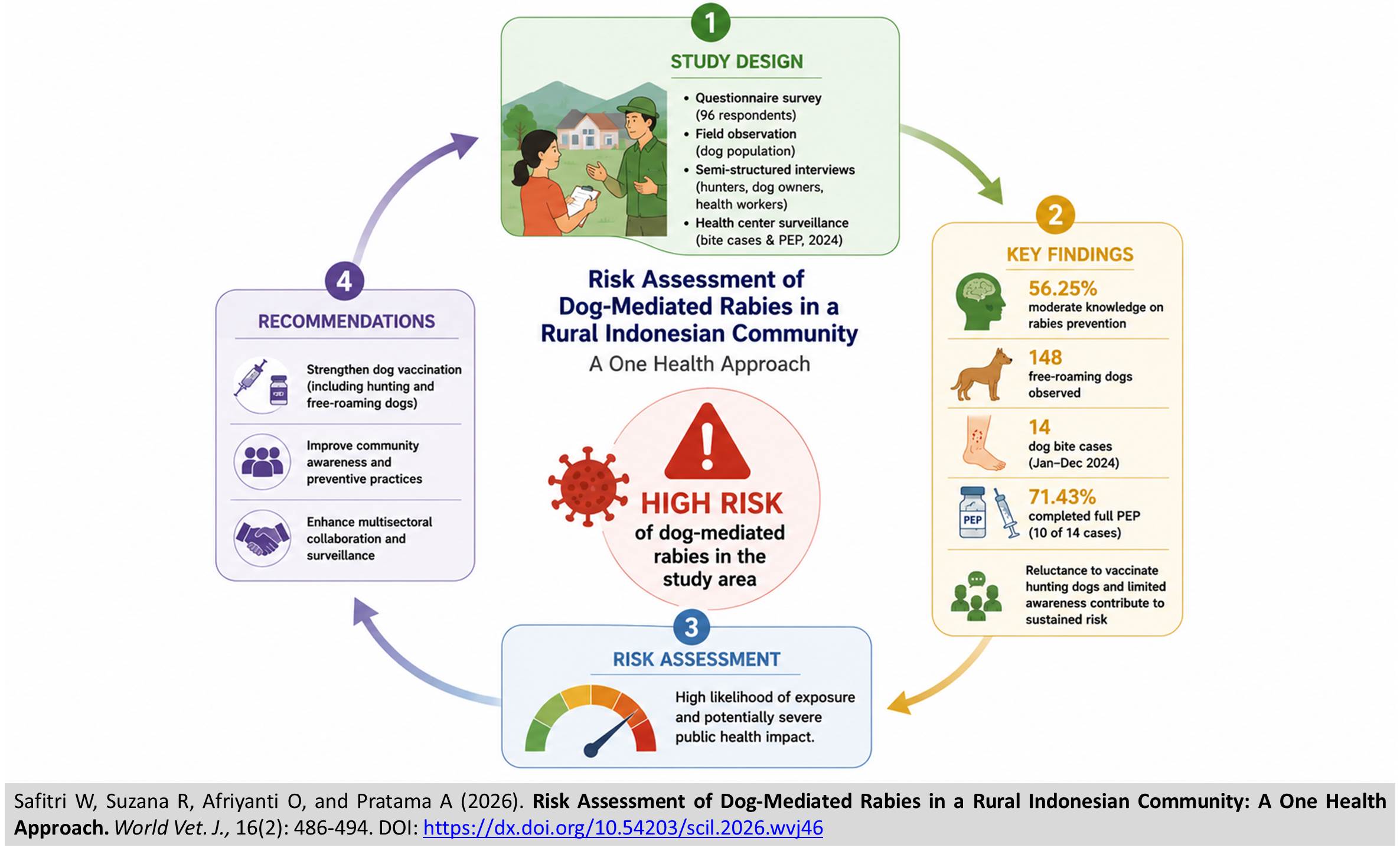
Risk Assessment of Dog-Mediated Rabies in a Rural Indonesian Community: A One Health Approach
|
|
Safitri W, Suzana R, Afriyanti O, and Pratama A.
World Vet. J. 16(2): 486-494, 2026; pii:S232245682600046-16
DOI: https://dx.doi.org/10.54203/scil.2026.wvj46
ABSTRACT: Rabies remains a fatal zoonotic disease that continues to cause thousands of human deaths annually, particularly in regions where dog-mediated transmission persists. In Indonesia, rabies remains endemic in different provinces, and rural communities with frequent human-dog interactions may face an increased risk of exposure. The present study aimed to assess the risk of dog-mediated rabies transmission in a rural Indonesian community using a One Health perspective. A cross-sectional descriptive study was conducted in Sirukam Village, Solok District, West Sumatra, Indonesia, in August 2025. Data were collected through structured questionnaires administered to 96 respondents, field observations of dog populations, and semi-structured interviews with hunters, dog owners, and local health workers. Secondary data on bite incidents and post-exposure prophylaxis (PEP) completion were obtained from the local public health center. The results revealed that 56.25% of respondents had moderate knowledge regarding rabies prevention, while preventive practices, including wound washing and vaccination adherence, were inconsistent. A total of 14 dog bite cases were reported during January-December 2024. Only 10 of the 14 exposed individuals (71.43%) completed the full PEP vaccination schedule, indicating suboptimal adherence. Field observations revealed 148 free-roaming dogs in the study area, indicating frequent opportunities for human-dog interactions. Qualitative interviews with selected participants suggested that reluctance to vaccinate hunting dogs and limited awareness of rabies prevention may contribute to sustained transmission risks. However, the qualitative findings from interviews with selected participants should be interpreted cautiously due to the limited number of informants. Based on a qualitative risk assessment combining the likelihood of exposure and the potential public health impact using a semi-quantitative scoring approach, rabies was categorized as a high-risk health threat in the study area. The results highlight the importance of strengthening dog vaccination programs, improving community awareness, and enhancing multisectoral collaboration to reduce rabies transmission in rural endemic settings.
Keywords: Dog bite, Rabies, Risk assessment, Vaccination, Zoonotic disease
[Full text-PDF] [Crossref Metadata] [Scopus] [Export from ePrint]
 Research Paper
First Molecular Characterization of Adult Physaloptera praeputialis von Linstow, 1889, Infecting African Lion (Panthera leo) in Tanzania
|
|
Ndossi BA, Mjingo EE, Mdaki MM, Zebedayo MW, Bia MM, Yang H, and Eom K.
World Vet. J. 16(2): 495-507, 2026; pii:S232245682600047-16
DOI: https://dx.doi.org/10.54203/scil.2026.wvj47
ABSTRACT: Physalopterid nematodes are common gastric parasites of carnivorous mammals, yet their diversity, host associations, and evolutionary relationships in African wildlife remain poorly understood. The present study aimed to investigate the adult Physaloptera specimens recovered from African lions (Panthera leo) in the Serengeti National Park in the Mara region, Tanzania, using morphological and molecular techniques. Seven non-captive lions comprising three males and four females were opportunistically necropsied between 2023 and 2025. The sampled lions included two subadults (4-5 years), three prime adults (6-9 years), and two older individuals (10-14 years). A total of 157 adult spirurid nematodes were recovered from three infected hosts with infection intensities ranging from 48 to 57 worms per host. Morphometric characterizations, such as cephalic collarette structures, marked unequal spicules, well-developed caudal alae in males, and an anterior positioned vulva in females, together with typical eggs, were consistent with Physaloptera praeputialis. Nuclear 18S rRNA sequences showed high similarity of 98-99.5% to P. praeputialis reference sequences. In contrast, mitochondrial cytochrome c oxidase subunit I (Cox1) sequences formed a distinct lineage, exhibiting approximately 12% divergence from available P. praeputialis sequences retrieved from the GenBank database at the time of analysis. A molecularly characterized record of adult Physaloptera from an African lion in Tanzania is presented, revealing previously unrecognized genetic diversity among African physalopterids. Findings highlight the role of apex predators as indicator hosts in trophic parasite transmission and emphasize the importance of multilocus approaches for resolving spirurid taxonomy, parasite biogeography, and host–parasite associations in wildlife ecosystems.
Keywords: African lion, Molecular characterization, Parasitic nematode, Phylogenetic, Serengeti ecosystem
[Full text-PDF] [Crossref Metadata] [Scopus] [Export from ePrint]
 Research Paper
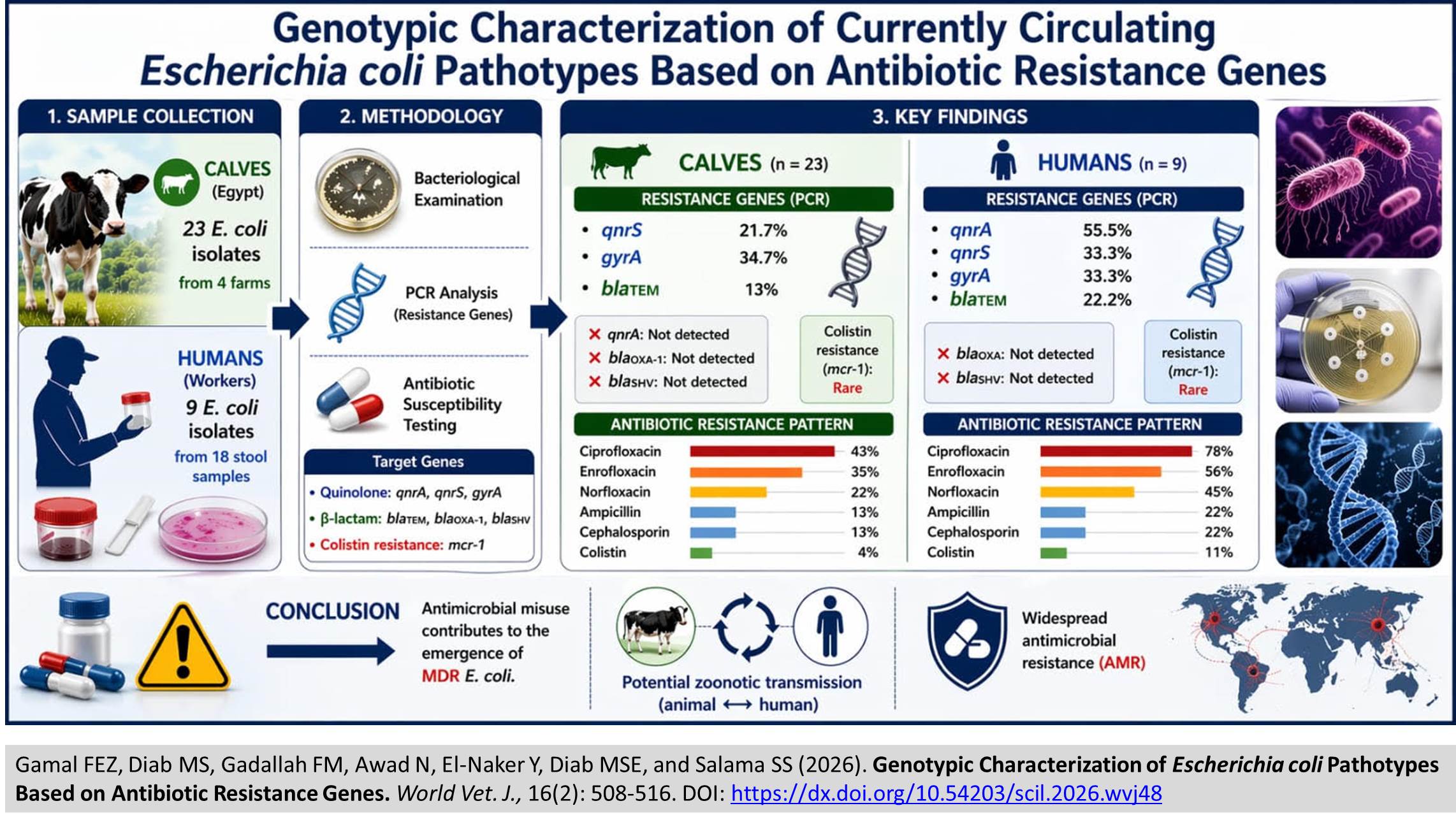
Genotypic Characterization of Escherichia coli Pathotypes Based on Antibiotic Resistance Genes
|
|
Gamal FEZ, Diab MS, Gadallah FM, Awad N, El-Naker Y, Diab MSE, and Salama SS.
World Vet. J. 16(2): 508-516, 2026; pii:S232245682600048-16
DOI: https://dx.doi.org/10.54203/scil.2026.wvj48
ABSTRACT: Diarrhea represents a major health challenge in young calves and is a leading cause of mortality, arising from infectious and non-infectious factors. The present study aimed to investigate antibiotic-resistant, multi-virulent diarrheagenic Escherichia coli (E. coli) strains isolated from human and animal samples. The current study included 23 E. coli strains obtained from calves across four different farms in Egypt, as well as nine E. coli isolates derived from 18 stool samples from workers. These samples were transferred to the microbiological laboratory for bacteriological and molecular analysis utilizing polymerase chain reaction (PCR). Molecular analysis of the antibiotic resistance gene was performed using PCR, followed by antibiotic sensitivity testing against ciprofloxacin, enrofloxacin, norfloxacin, ampicillin, cephalosporin, and colistin. Among 23 E. coli isolates obtained from calves, the resistance genes, including qnrS (21.7%), gyrA (34.7%), and blaTEM (13%), were identified. Conversely, qnrA, blaOXA-1, and blaSHV were not detected. Only one isolate exhibited colistin resistance, which was uncommon. Human E. coli isolates demonstrated moderate prevalence of qnrA (55.5%), qnrS (33.3%), gyrA (33.3%), and blaTEM (22.2%), while blaOXA and blaSHV were not detected, and a colistin resistance isolate (mcr-1) was rare. The antibiotic sensitivity test of E. coli isolates from calves exhibited that 43% were resistant to ciprofloxacin and 35% to enrofloxacin. Meanwhile, 22% of isolates demonstrated resistance to norfloxacin. The β-lactam group revealed 13% resistance to ampicillin and cephalosporin. Only 4% of all isolates exhibited resistance to colistin. Antibiotic sensitivity test of E. coli isolates from humans revealed significant resistance patterns. Among the quinolones, 78% demonstrated resistance to ciprofloxacin, 56% to enrofloxacin, and 45% to norfloxacin. In contrast, only 22% of isolates were resistant to ampicillin and cephalosporin, while resistance to colistin was detected in just 11% of isolates. The present study confirmed that the misuse of different antibiotics is a significant factor in the development of antimicrobial resistance genes, especially in E. coli strains isolated from both humans and infected calves.
Keywords: Antibiotic sensitivity test, Escherichia coli, Multidrug resistance, PCR
[Full text-PDF] [Crossref Metadata] [Scopus] [Export from ePrint]
 Research Paper
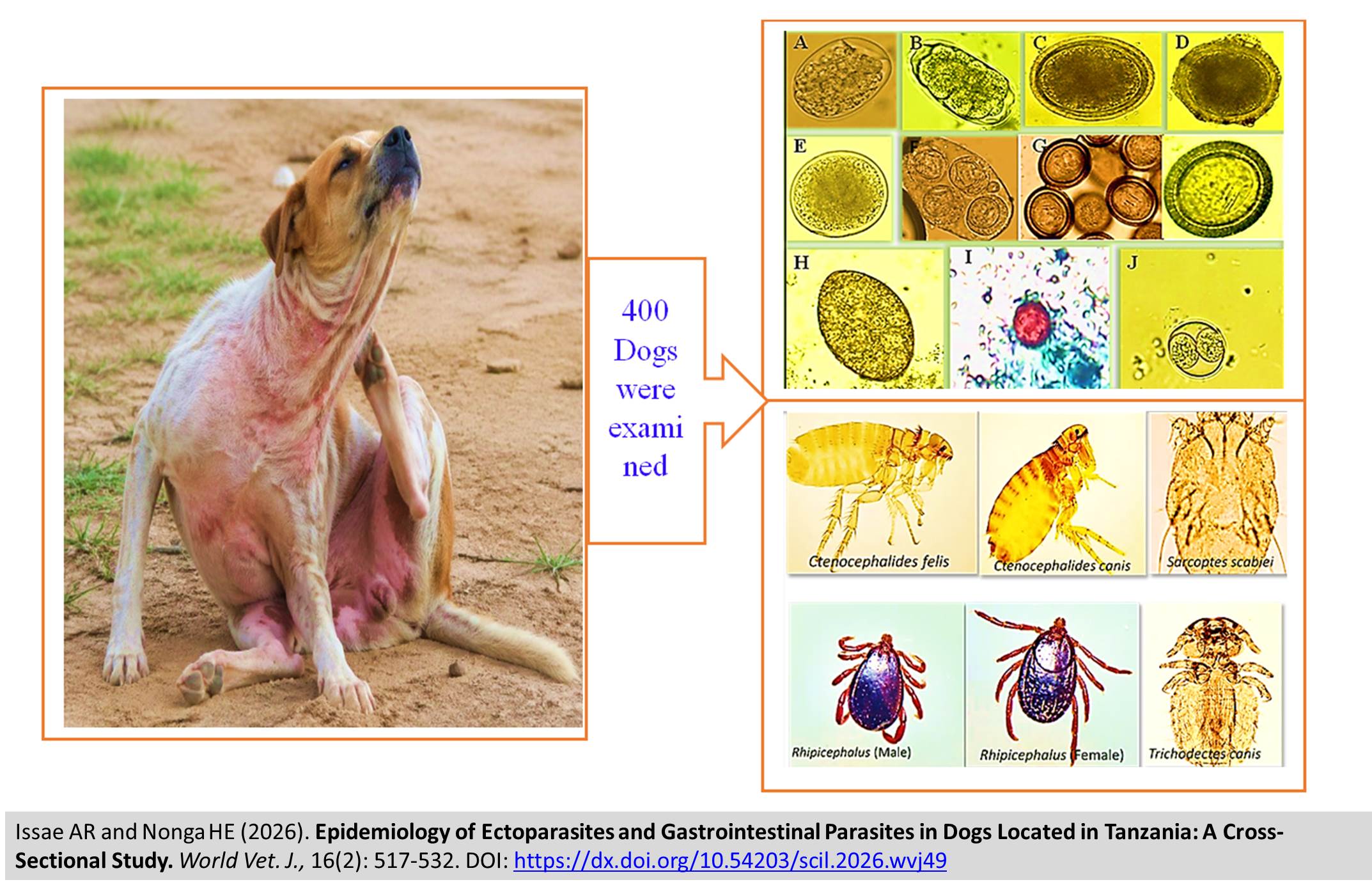
Epidemiology of Ectoparasites and Gastrointestinal Parasites in Dogs Located in Tanzania: A Cross-Sectional Study
|
|
Issae AR and Nonga HE.
World Vet. J. 16(2): 517-532, 2026; pii:S232245682600049-16
DOI: https://dx.doi.org/10.54203/scil.2026.wvj49
ABSTRACT: Dogs, common companion animals, serve several cultural, social, and economic functions in society but can pose public health risks if not properly managed. The present study aimed to examine the epidemiology of canine parasites in the Mvomero district and the Morogoro municipality in Tanzania. A cross-sectional study was conducted in 2024 involving 400 randomly selected dogs, aged from 3 months to over 1 year, selected from households in the Mvomero district and the Morogoro municipality of Tanzania. The study population consisted predominantly of indigenous mongrels (n = 372), with a smaller proportion of crossbreeds (n = 28). Ectoparasites were collected through full-body examination, including the skin, ears, and interdigital spaces. Ticks, fleas, mites, and lice were manually removed using forceps and combing, with ticks carefully extracted to preserve their mouthparts. Fleas were collected using an acetone application followed by brushing onto white cloths. All samples were preserved in 70% ethanol and identified morphologically under a light microscope using standard identification keys. Fecal samples were collected from the study dogs and examined using flotation, sedimentation, direct saline/iodine wet mount, and modified Ziehl-Neelsen staining techniques. The overall prevalence of ectoparasites was 83.8%, while gastrointestinal parasites were detected in 76.8% of the dogs. Helminths included Ancylostoma spp. (60.5%), Uncinaria stenocephala (22.0%), Toxocara canis (11.5%), Toxascaris leonina (6.3%), Ascaris spp. (3.8%), Taeniidae (6.0%), and Dipylidium caninum (1.8%). Protozoa included Cryptosporidium spp. (15.5%), Isospora spp. (8.0%), Cyclospora spp. (4.3%), and Entamoeba spp. (3.0%). Dogs from Mvomero, Tanzania, had significantly higher parasite prevalence than those from Morogoro municipality, Tanzania. Risk factors for parasitic infection included dog age, geographic location, management practices, and lack of deworming. The current study highlighted an alarming burden of parasitic infestations among dogs in Morogoro, Tanzania, posing significant threats to animal health, public health, and animal welfare.
Keywords: Disease, Dog, Ectoparasite, Gastrointestinal parasite, Risk factor, Zoonoses
[Full text-PDF] [Crossref Metadata] [Scopus] [Export from ePrint]
 Research Paper
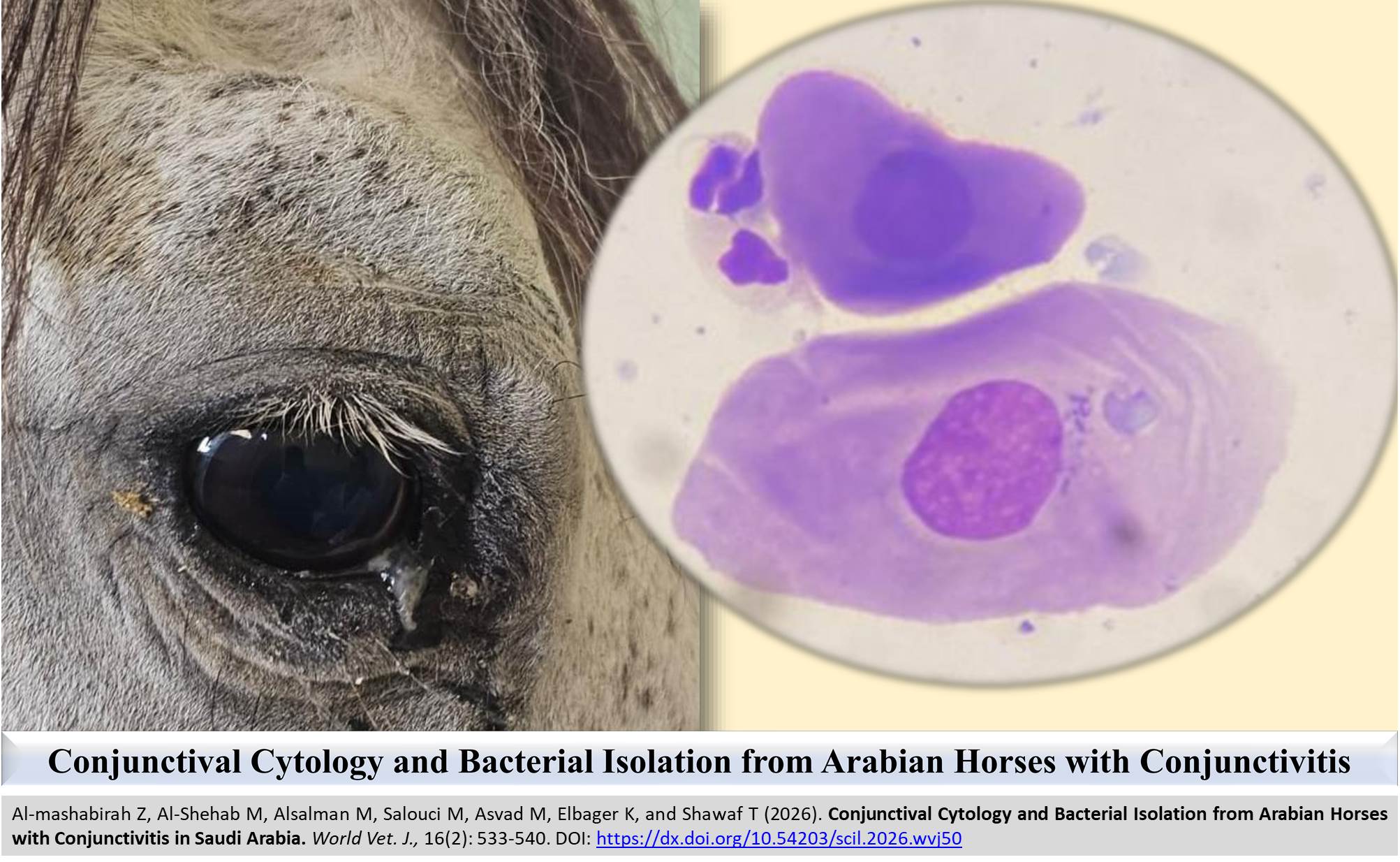
Conjunctival Cytology and Bacterial Isolation from Arabian Horses with Conjunctivitis in Saudi Arabia
|
|
Al-mashabirah Z, Al-Shehab M, Alsalman M, Salouci M, Asvad M, Elbager K, and Shawaf T.
World Vet. J. 16(2): 533-540, 2026; pii:S232245682600050-16
DOI: https://dx.doi.org/10.54203/scil.2026.wvj50
ABSTRACT: Cytological and bacterial analyses are vital for diagnosing equine conjunctival diseases. These analyses facilitate accurate pathogen detection and enable targeted treatments. The present study aimed to describe and compare the conjunctival cytology and bacterial flora of clinically healthy Arabian horses and those with conjunctivitis in the Eastern Province of Saudi Arabia. Eighteen Arabian horses, including 5 healthy and 13 with conjunctivitis, were referred to King Faisal Hospital and examined. Healthy horses were distinguished from those with conjunctivitis through case history and an ocular examination. Conjunctival swabs were collected for cytological analysis and for aerobic bacterial culture and identification, with Diff-Quik staining. Differential cell counts were compared across the groups, and the findings were correlated with bacterial isolates. Biochemical identification of bacterial isolates was performed using conventional methods, including Gram staining and catalase and oxidase tests. Healthy horses exhibited a cytological profile primarily composed of superficial epithelial cells (59 ± 12.0%), with only a small number of inflammatory cells, including neutrophils and eosinophils. In contrast, horses with conjunctivitis exhibited a significant decrease in superficial epithelial cells (28 ± 17%) and a significant increase in basal cells (5 ± 3.5%). Conjunctival samples exhibited marked neutrophilia (32 ± 12.5%) and a significant increase in eosinophils (12 ± 9.5%) compared to healthy controls, indicating an inflammatory condition in the conjunctiva. Bacterial growth was found in 40% of healthy horse samples and in 92% of infected horse samples. Staphylococcus aureus was the most common isolate in infected horse samples. Gram-negative bacteria, including Moraxella sp., Escherichia coli, and Klebsiella sp., were isolated from 7 of 13 affected horses and were associated with a severe neutrophilic response (39 ± 6.5%) and significant epithelial disruption. Conjunctivitis in Arabian horses in the Eastern Province of Saudi Arabia was characterized by neutrophilic and eosinophilic inflammation with concurrent epithelial disruption.
Keywords: Bacteria, Conjunctivitis, Cytology, Equine, Ocular, Swab
[Full text-PDF] [Crossref Metadata] [Scopus] [Export from ePrint]
 Research Paper
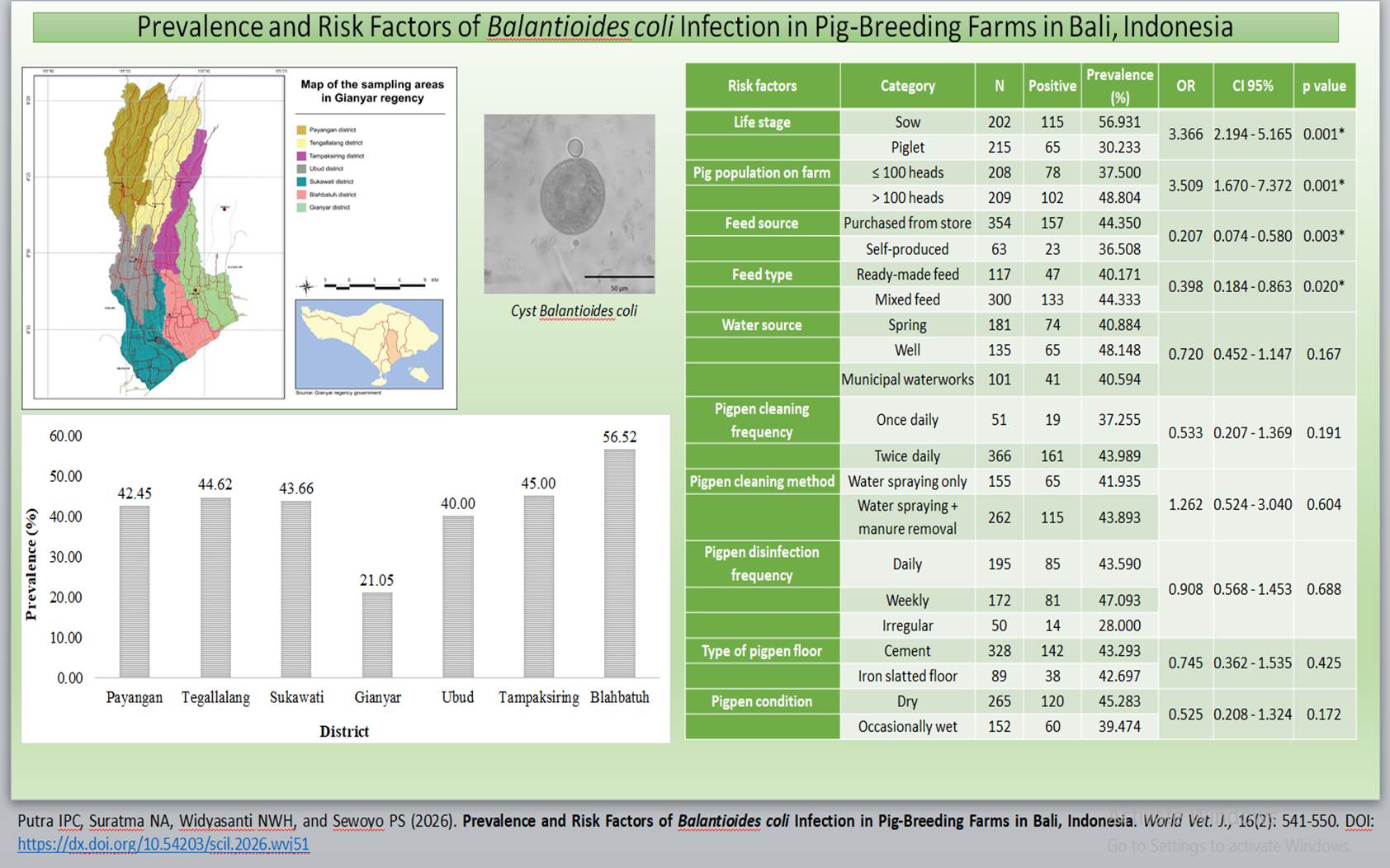
Prevalence and Risk Factors of Balantioides coli Infection in Pig-Breeding Farms in Bali, Indonesia
|
|
Putra IPC, Suratma NA, Widyasanti NWH, and Sewoyo PS.
World Vet. J. 16(2): 541-550, 2026; pii:S232245682600051-16
DOI: https://dx.doi.org/10.54203/scil.2026.wvj51
ABSTRACT: Balantioides coli (Balantidium coli [B. coli]) infection poses significant health and economic burdens in pigs, causing diarrhea, intestinal dysbiosis, and increased susceptibility to secondary infections. The present study aimed to assess the occurrence of balantidiasis and pinpoint related risk factors in pigs at breeding facilities in Gianyar Regency, Bali, Indonesia. A cross-sectional study with random sampling was conducted from August 2024 to February 2025. Fecal samples were collected from 15 to 35 pigs from 16 pig-breeding farms that utilized a semi-intensive rearing system. In total, 417 fecal samples were collected from pigs in seven districts, including 202 sows and 215 piglets. The samples were preserved in 3% potassium dichromate (K2Cr2O7) and examined using the coprological sedimentation method. Morphological identification was based on the detection of B. coli cysts in fecal samples. Data on potential risk factors were evaluated using logistic regression analysis, which was conducted on data obtained from structured questionnaires and direct on-farm observations. The results indicated that 43.17% of pigs were infected with B. coli, with a higher prevalence in sows (56.95%) than in piglets (30.23%). Logistic regression analysis indicated that sows had a 3.366 times higher risk of infection than piglets. Farms with pig populations exceeding 100 heads also exhibited a higher risk of infection compared to farms housing 100 or fewer pigs. In contrast, farmers who purchased feed from commercial suppliers and those who used ready-made feed had a significantly lower risk of B. coli infection, reducing the incidence by 79.3% and 60.2%, respectively, compared to farmers who produced their own feed or used mixed feed. Factors of water source, pigpen condition, and pigpen cleaning practices were not significantly associated with infection. The prevalence of B. coli infection in pig-breeding farms in Gianyar Regency is notably high (43.17 %). The analysis indicated that life stage, herd size, feed source, and feed type are significantly associated with the risk of balantidiasis in pigs and should be prioritized in disease prevention and control strategies by farmers in the study region.
Keywords: Balantidiasis, Balantidium coli, Piglet, Protozoa, Sow
[Full text-PDF] [Crossref Metadata] [Scopus] [Export from ePrint]
 Research Paper
A Retrospective Study on Foot and Mouth Disease Outbreaks and Vaccination during 2017-2023, North Shewa, Ethiopia
|
|
Yitayew Z.
World Vet. J. 16(2): 551-559, 2026; pii:S232245682600052-16
DOI: https://dx.doi.org/10.54203/scil.2026.wvj52
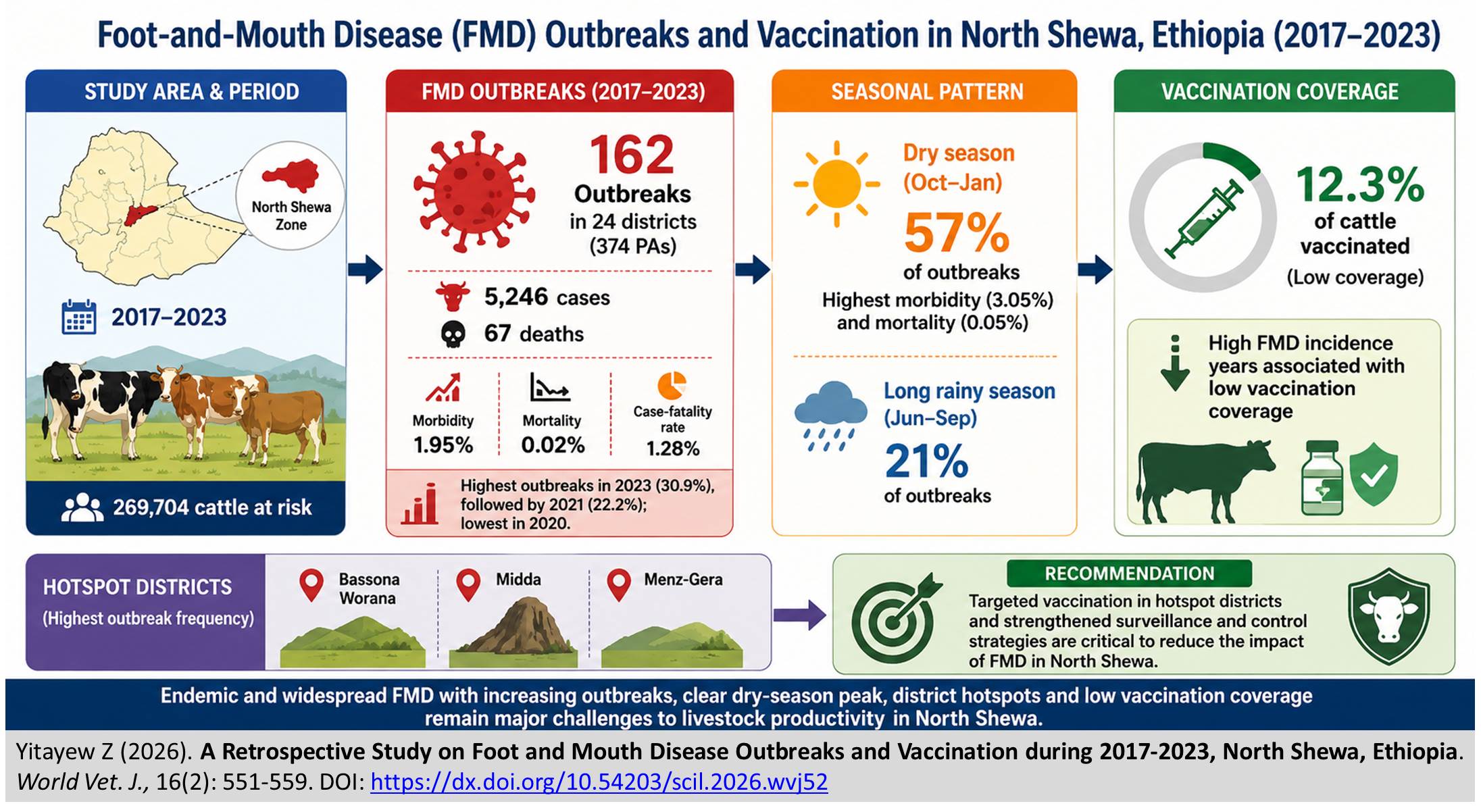
ABSTRACT: Foot-and-mouth disease (FMD) is a highly contagious viral disease that reduces livestock productivity in Ethiopia. The present study aimed to assess the spatial and temporal patterns of FMD outbreaks and associated morbidity, mortality, case-fatality rates, and vaccination coverage in the North Shewa Zone from 2017 to 2023. Data were collected from the Disease Outbreak and Vaccination Activities Reports (DOVAR) of the North Shewa Zone Livestock Office and analyzed using descriptive statistics. A total of 162 outbreaks were recorded across 24 districts and 374 peasant associations (PAs) over the study period, resulting in an overall outbreak proportion of 43.4% (162/374 PAs), with considerable variation between years. The highest number of outbreaks was recorded in 2023 (30.9%), followed by 2021 (22.2%), while the lowest was in 2020. Overall, there were 5,246 recorded FMD cases and 67 deaths among 269,704 cattle at risk, yielding morbidity, mortality, and case-fatality rates of 1.95%, 0.02%, and 1.28%, respectively. Outbreak occurrence differed by season, peaking in the dry season (October to January) at 57% and reaching its lowest in the rainy season (June to September) at 21%. Morbidity and mortality were highest in the dry season (3.05% and 0.05%, respectively). Outbreaks and cases were unevenly distributed across districts, with BassonaWorana, Midda, and Menz-Gera reporting the highest outbreak frequencies, while Merhabet and Siyadeber exhibited relatively higher morbidity rates relative to their cattle populations. Over the seven years, vaccine coverage was limited, reaching only 12.3% of the at-risk population. Years with a high incidence of FMD were generally correlated with low vaccination coverage. Endemic FMD across the North Shewa Zone, along with increasing outbreaks, dry-season peaks, district hotspots, and inadequate vaccination coverage, highlighted FMD as a significant obstacle to livestock productivity. The results indicated the critical need for targeted vaccination programs and strengthened control strategies, particularly in high-risk districts.
Keywords: Epidemiology, Foot and mouth disease, Morbidity, Mortality, Outbreak, Vaccination
[Full text-PDF] [Crossref Metadata] [Scopus] [Export from ePrint]
 Research Paper
Fabrication and Evaluation of Absorbable Sutures Derived from Cellulose Fibers of Pineapple (Ananas comosus) Leaves
|
|
Tran CB, Nguyen CTN, Mai KG, Nguyen TT, and Nguyen TT.
World Vet. J. 16(2): 560-572, 2026; pii:S232245682600053-16
DOI: https://dx.doi.org/10.54203/scil.2026.wvj53
ABSTRACT: Developing sustainable and biodegradable veterinary biomaterials is crucial for addressing limitations of synthetic sutures and avoiding secondary suture removal. The present study aimed to develop a novel, eco-friendly suture derived from pineapple leaves as an alternative to synthetic surgical threads and to assess its functional and clinical potential. The present study fabricated absorbable veterinary sutures from pineapple leaf fibers (PALF) via alkaline treatment and 2,2,6,6-tetramethylpiperidine-1-oxyl (TEMPO)-mediated oxidation. The purified fibers, characterized by an average diameter of 53.61 ± 1.89 µm were successfully isolated via alkaline treatment and TEMPO-mediated oxidation, dyed naturally with Peristrophe bivalvis, coated with 1% chitosan, and subsequently twisted into size 3/0 sutures. In vitro degradation in phosphate buffer solution over four weeks confirmed their biodegradability, as demonstrated by increased fragility and strand separation. For the in vivo trial, 24 male mice (20-24 grams) were housed at a density of three mice per cage throughout the cultivation periods of 7, 14, 28, and 45 days. The mice were divided into two groups, including those that underwent surgery and were treated with PALF sutures (experimental group) and those that were treated with Polyglactin 910 (control group). A 2-3 cm dorsal-to-abdominal skin incision was made to expose the subcutaneous tissue, followed by a 1-2 cm connective tissue incision to establish the wound model for testing PALF sutures. Specific parameters, including the degree of edema and erythema, localized temperature, and the presence of exudate, suppuration, secondary infection, and hemorrhage, were assessed for each group. Critical complications, including wound dehiscence or marginal necrosis, were recorded. The current results demonstrated that PALF sutures were biocompatible and followed a healing pathway similar to that of Polyglactin 910. The present results revealed that PALF sutures had significantly lower secondary infection scores (0.08 ± 0.28) than Polyglactin 910 (0.58 ± 0.90), indicating superior anti-infective property. All clinical inflammatory signs completely resolved by day 45. The TEMPO-oxidized PALF sutures were a viable, biocompatible, and sustainable alternative to absorbable veterinary sutures, demonstrating effective tissue healing and a significantly lower incidence of secondary infection.
Keywords: Absorbable suture, Ananas comosus, Cellulose, Pineapple leaf, Mice
[Full text-PDF] [Crossref Metadata] [Scopus] [Export from ePrint]
 Research Paper
Effects of Dietary Supplementation of Turmeric Powder on Haematological Profiles and Serum Biochemical Parameters in Local Sheep in Indonesia
|
|
Dewi ADT, Alfisyahri A, Hanif AS, Andini FC, Sholeh A, Santosa PE, Suharyati S, Qisthon A, Liman L, Widiastuti LK, Muhtarudin M, and Adhianto K.
World Vet. J. 16(2): 573-579, 2026; pii:S232245682600054-16
DOI: https://dx.doi.org/10.54203/scil.2026.wvj54
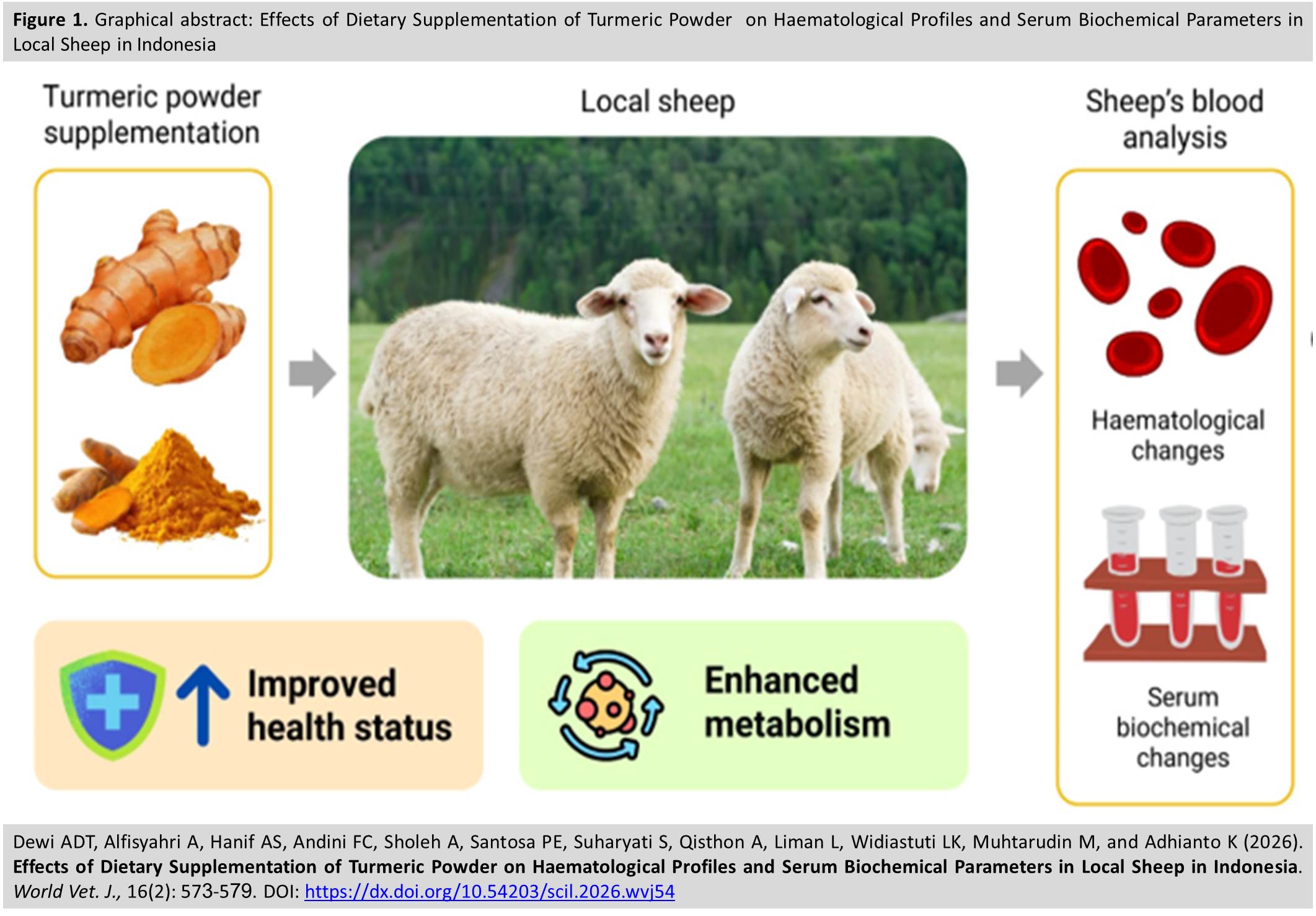
ABSTRACT: Productivity and livestock health are significantly affected by nutritional strategies, especially natural feed additives with immunomodulatory and antioxidant properties. Turmeric (Curcuma domestica) is considered a sustainable, safe alternative to synthetic additives. The present study aimed to evaluate the haematological and serum biochemical parameters in local sheep following the inclusion of turmeric powder in their diet. The experiment involved 12 male local thin-tailed sheep (Ovis aries), approximately 1 year old, with an average body weight of 24 kilograms. The present study was carried out at a private farm in Pringsewu, Lampung, Indonesia, using a completely randomized design with three dietary treatments, including a basal diet without turmeric supplementation (P0), a basal diet supplemented with 2.5% dry matter (DM) of turmeric powder (P1), and a basal diet supplemented with 5% DM of turmeric powder (P2). Hemoglobin, packed cell volume (PCV), total plasma protein (TPP), blood glucose, and low-density lipoprotein (LDL) levels were assessed. Dietary supplementation with turmeric powder in Group P2 modulated haematological parameters, as indicated by increased hemoglobin (14.30 ± 0.48 g/dL) and PCV levels (43.43 ± 1.48%) compared to the control group. Serum biochemical parameters were affected in Group P2. Total plasma protein remained within the physiological range in all groups (6.50-6.80 g/dL), while blood glucose levels decreased as turmeric inclusion increased, with a level of 60.00 ± 6.27 mg/dL in Group P0 compared with groups P1 and P2. The LDL concentrations demonstrated a moderate increase across the treatment groups, reaching the highest level in Group P2 at 23.25 ± 5.05 mg/dL. Supplementing local sheep diets with 5% DM of Curcuma domestica powder influenced hemoglobin, PCV, glucose, and LDL.
Keywords: Curcuma domestica, Haematological parameter, Phytogenic feed additive, Serum biochemical parameter, Sheep
[Full text-PDF] [Crossref Metadata] [Scopus] [Export from ePrint]
 Research Paper
Association between Dietary Mineral Profiles and Hypercalcemia in Cats with Chronic Kidney Disease: A Retrospective Study
|
|
Umanets M and Tsvilikhovskyi V.
World Vet. J. 16(2): 580-586, 2026; pii:S232245682600055-16
DOI: https://dx.doi.org/10.54203/scil.2026.wvj55
ABSTRACT: Hypercalcemia is an important clinical problem in feline veterinary medicine due to its association with a wide range of pathological conditions, particularly chronic kidney disease (CKD). The present study aimed to characterize the clinical and biochemical characteristics of hypercalcemic cats and to investigate the association between the dietary calcium-to-phosphorus (Ca:P) ratio and CKD, urolithiasis, and total and ionized calcium levels. A retrospective analysis was conducted of 50 hypercalcemic domestic cats presented to the Veterinary Clinic in Kyiv, Ukraine, between 2023 and 2025. For each cat, data on age, breed, total calcium, and ionized calcium were collected. Additionally, serum phosphorus levels and any concurrent diseases were documented from medical records. Dietary composition was assessed based on manufacturer-reported analytical values, including calcium, phosphorus, the Ca:P ratio, and vitamin D content. Cats were divided into two groups based on their dietary Ca:P ratio; one with a ratio of 1.4 or less (≤ 1.4) and the other with a ratio greater than 1.4. (>1.4). The majority of cats (70%) were over six years old. The median total calcium concentration was 3.05 mmol/L, while the median ionized calcium concentration was 1.60 mmol/L. Elevated ionized calcium levels, despite normal total calcium levels, was observed in 16% of cases. Chronic kidney disease was observed in 60% of cats with hypercalcemia, while 18% had urolithiasis, mainly calcium oxalate. Additionally, 18% of the cats had both conditions simultaneously. Comparative analysis demonstrated that cats fed diets with Ca:P ratios > 1.4 had a significantly higher prevalence of CKD (20/25, 80%) than cats fed diets with Ca:P ratios ≤ 1.4 (6/25, 24%). However, total and ionized calcium concentrations did not differ significantly between the groups. The current findings highlighted the diagnostic value of total calcium, the importance of measuring ionized calcium, and suggested a possible association between high dietary Ca:P ratios and concurrent CKD in hypercalcemic cats.
Keywords: Calcium-to-phosphorus ratio, Chronic kidney disease, Hypercalcemia, Ionized calcium, Vitamin D
[Full text-PDF] [Crossref Metadata] [Scopus] [Export from ePrint]
 Research Paper
Prevalence and Molecular Characterization of Antimicrobial Resistance Genes in Escherichia coli Isolated from Chicken Meat in Mosul City, Iraq
|
|
Al-Mahmood OA, Awed MJM, and Jwher DM.
World Vet. J. 16(2): 587-596, 2026; pii:S232245682600056-16
DOI: https://dx.doi.org/10.54203/scil.2026.wvj56
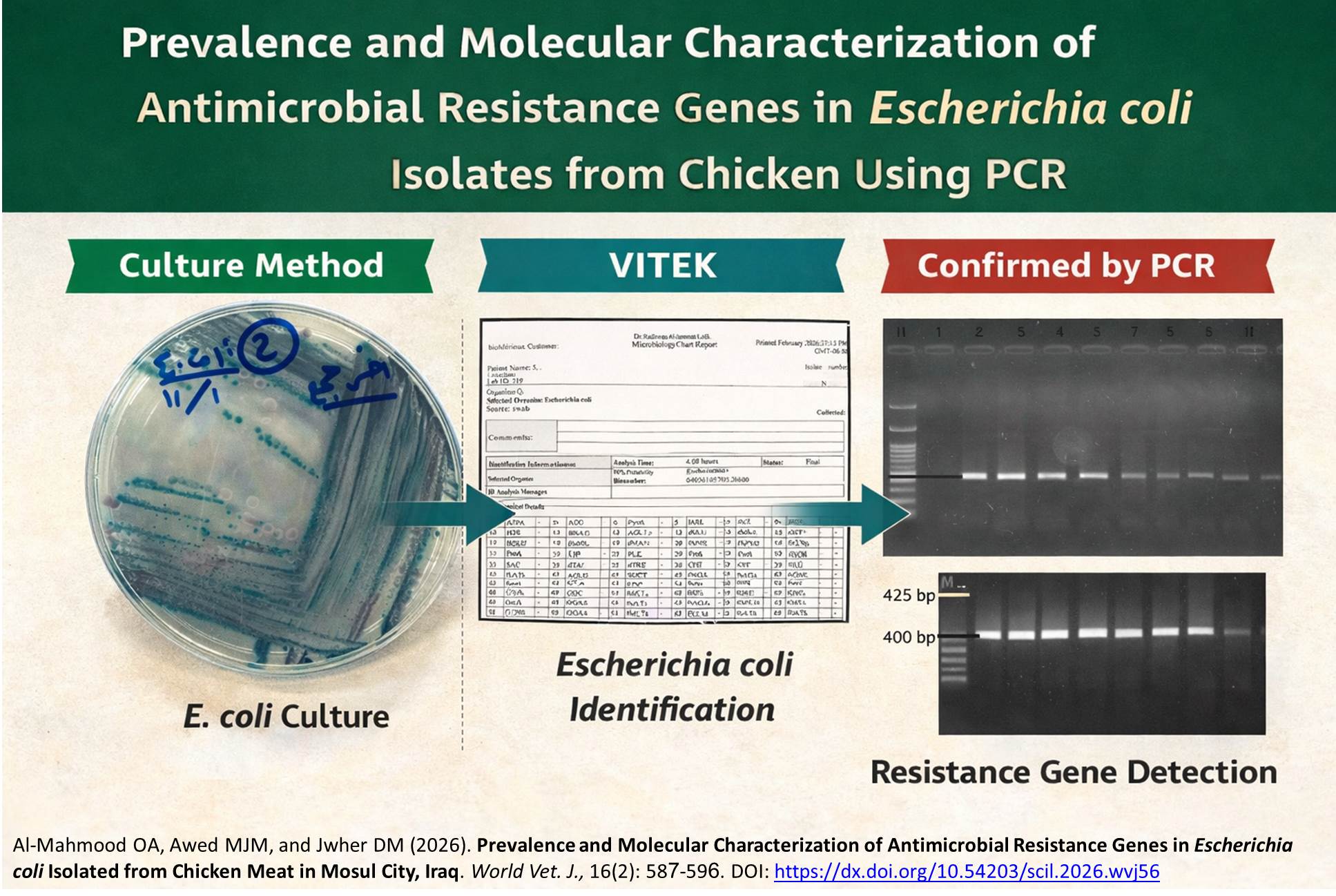
ABSTRACT: Antimicrobial resistance (AMR) in poultry is a growing concern, driven by the widespread use of antibiotics in farming, which can promote the development of resistant bacteria. Resistant pathogens in the food chain can spread AMR and impair the treatment of infectious diseases. The present study aimed to examine the incidence of Escherichia coli (E. coli) and the presence of AMR genes in chicken meat samples collected from different markets in Mosul City, Iraq. Of 120 samples, 27 isolates (22.5%) tested positive for E. coli, identified by chromogenic agar, the VITEK® system, and polymerase chain reaction (PCR) targeting the uidA gene. All isolates (27/27; 100%) were confirmed positive for uidA detection. The positive isolates were evaluated for five AMR genes, including dihydrofolate reductase A (dfrA), β-lactamase TEM (blaTEM), aminoglycoside acetyltransferase (aac), DNA gyrase subunit A (gyrA), and DNA gyrase subunit B (gyrB). The current findings indicated that 66.7% of the isolates carried at least one resistance gene, and 14.8% carried more than one. The most commonly detected gene was dfrA (37.0%), followed by blaTEM (29.6%) and aac (14.8%). The gyrA gene was found in one isolate (3.7%); however, the gyrB gene was not detected. Identifying resistance genes causing resistance to commonly used antibiotics, such as trimethoprim, β-lactams, and aminoglycosides, represented a significant public health concern. The current findings can help identify and reduce the spread of AMR across the food supply chain in Iraq.
Keywords: Antimicrobial resistance gene, Chicken meat, Escherichia coli, Polymerase chain reaction, Public health
[Full text-PDF] [Crossref Metadata] [Scopus] [Export from ePrint]
 Research Paper
Assessment of PPAR-α Gene Expression in Hens’ Liver After Administration of Q10 and Endosulfan
|
|
Hamid AA and Al-Sabaawy HB.
World Vet. J. 16(2): 597-602, 2026; pii:S232245682600057-16
DOI: https://dx.doi.org/10.54203/scil.2026.wvj57
ABSTRACT: Endosulfan is a long-lasting organochlorine pesticide, whereas coenzyme Q10 (CoQ10) is a widespread antioxidant mainly found in mitochondria. Peroxisome proliferator-activated receptor alpha (PPAR-α), a regulatory transcription factor, plays a crucial role in hepatic regulation. The current study aimed to evaluate the effect of CoQ10 and endosulfan on PPAR-α gene expression in broiler chicken livers. A total of 40 one-day-old broiler chickens weighing 42 ± 2 grams were randomly divided into four groups. The first group served as the control and received distilled water by gavage (T1). The second group received CoQ10 orally at 40 mg/kg body weight (T2), the third group received endosulfan orally at 30 ppm (T3), and the fourth group received the combination of CoQ10 at 40 mg/kg body weight and 30 ppm of endosulfan (T4). On days 27 and 42 of the study, 20 chickens were euthanized, and liver samples were collected for analysis of PPAR-α gene expression by quantitative polymerase chain reaction (qPCR). On days 27 and 42, all treatments exhibited significant downregulation of PPAR-α gene expression compared to the control group. The most significant suppression was observed in the endosulfan with CoQ10 (T4) group, followed by the endosulfan group (T3), whereas CoQ10 (T2) exhibited the lowest level of downregulation among the treatment groups. On day 42, all treatment groups exhibited elevated PPAR-α gene expression compared to the control group. The highest PPAR-α expression level was observed in Group T2, followed by Group T3, while Group T4 demonstrated the lowest degree of upregulation among the treatment groups. The current findings indicated an age-dependent reversal pattern in PPAR-α expression. On day 27, chickens demonstrated a consistent downregulation of PPAR-α, whereas on day 42, an upregulation was observed. The current results indicated that CoQ10 administration produced differential stimulatory effects on PPAR-α gene expression.
Keywords: Coenzyme Q10, Endosulfan, Liver, PPAR-α
[Full text-PDF] [Crossref Metadata] [Scopus] [Export from ePrint]
 Research Paper
Identification of Multidrug-Resistant Aeromonas salmonicida from Imported Seafood in Mosul City Shops via Microarray Technology
|
|
Albanna A, Al-Layla AAH, and AL-Saleem SL.
World Vet. J. 16(2): 603-616, 2026; pii:S232245682600058-16
DOI: https://dx.doi.org/10.54203/scil.2026.wvj58
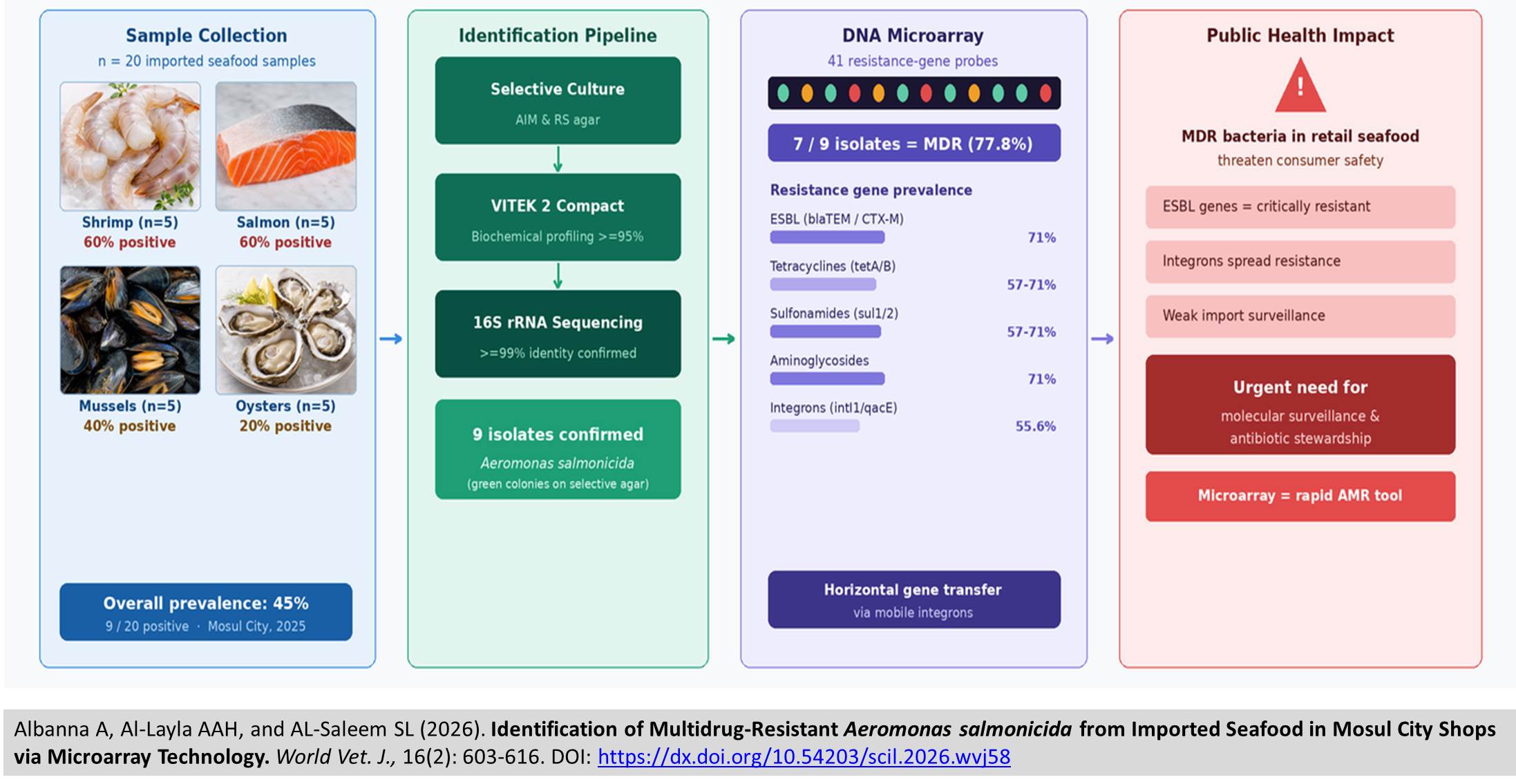
ABSTRACT: The widespread emergence of multidrug-resistant (MDR) pathogens in imported seafood is an increasing public health concern. The present study aimed to detect Aeromonas salmonicida (A. salmonicida) in seafood samples and to assess the antibiotic resistance gene profiles of the isolated bacteria using conventional polymerase chain reaction (PCR) and DNA microarray analysis. Twenty samples consisting of shrimp, mussels, oysters, and salmon (five of each) were collected from shops in Mosul city, Iraq. The biochemical characteristics of the strains were determined using the VITEK 2 compact system, and their identities were confirmed by 16S rRNA gene sequencing, which showed ≥99% identity to database sequences. Nine samples tested positive for A. salmonicida, with a prevalence of 45 percentage, with shrimp and salmon each accounting for three isolates (60%), mussels for two (40%), and oysters for one (20%). Microarray testing identified seven isolates as MDR, whereas two strains had no resistance genes and were antibiotic-sensitive. The current results revealed the absence of genes encoding extended-spectrum β-lactamases (ESBLs), including blaSHV, blaCTX-M, blaFOX, blaPER, blaVEB, and blaCMY, in all MDR strains. Tetracycline resistance was observed in 28.6% (2/7) of MDR isolates, with the tetA gene present, whereas the tetB gene was completely absent from all MDR isolates. Concerning sulfonamide resistance, all MDR isolates were found to carry sul1, whereas none carried sul2. The aphA and aadA1 genes were detected in all seven MDR strains, while the aac(6')-Ib gene was found in only three of the seven MDR isolates (42.9%). Additionally, each of these strains carried intI1 and qacEΔ1 genes. The widespread occurrence of MDR A. salmonicida carrying diverse resistance genes in imported seafood presented a significant public health risk.
Keywords: Aeromonas salmonicida, Multidrug-resistant, Microarray, Public health, Seafood
[Full text-PDF] [Crossref Metadata] [Scopus] [Export from ePrint]
 Research Paper
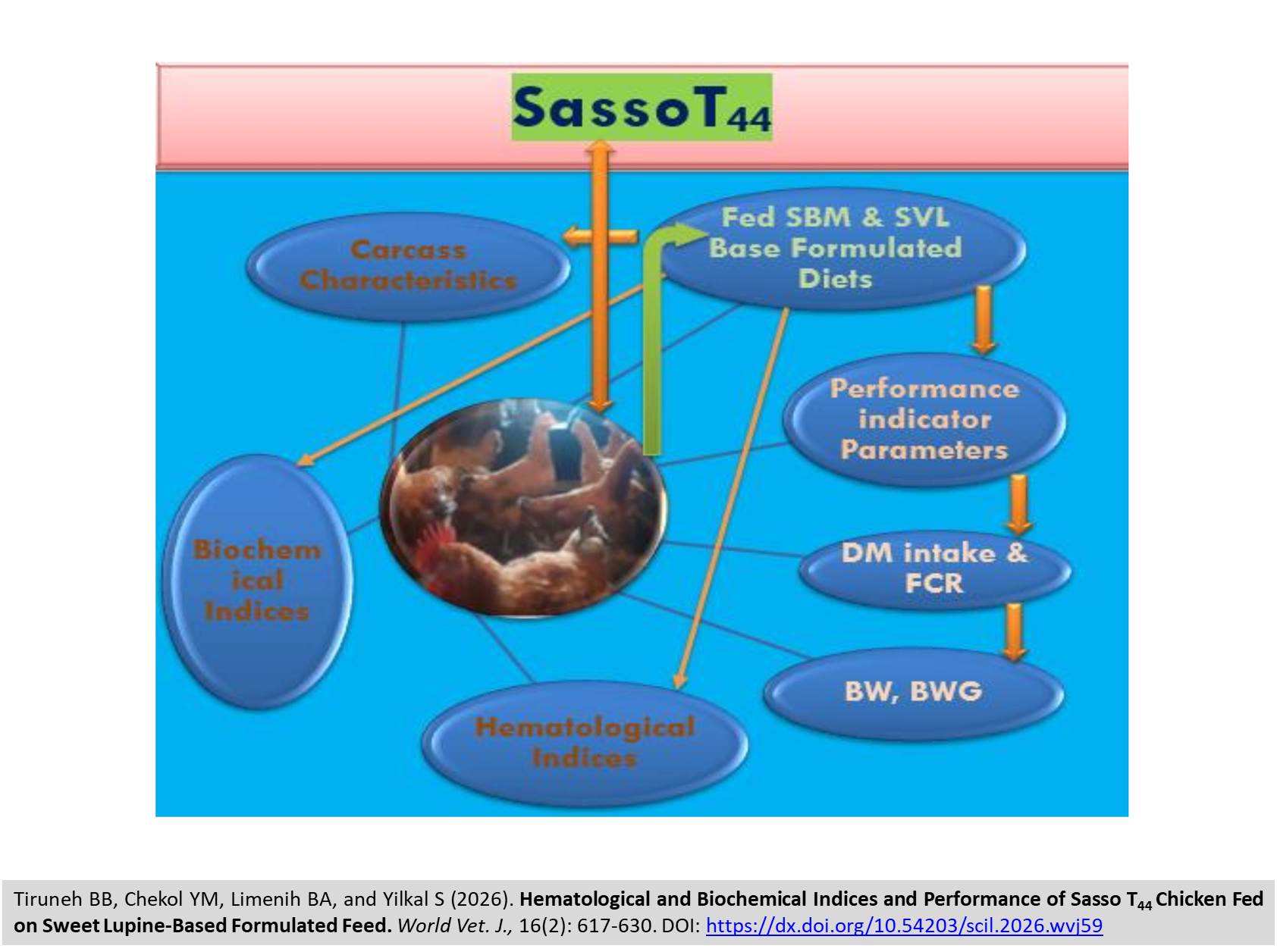
Hematological and Biochemical Indices and Performance of Sasso T44 Chicken Fed on Sweet Lupine-Based Formulated Feed
|
|
Tiruneh BB, Chekol YM, Limenih BA, and Yilkal S.
World Vet. J. 16(2): 617-630, 2026; pii:S232245682600059-16
DOI: https://dx.doi.org/10.54203/scil.2026.wvj59
ABSTRACT: Protein sources are essential components of poultry diets, with Soybean meal (SBM) being the most widely used due to its high protein content and balanced amino acid profile. However, its increasing cost and limited availability have encouraged the search for alternative plant protein sources such as sweet lupine (lupinus angustifolius). Dietary protein plays a crucial role in growth, performance, and blood profile parameters in determining the overall effectiveness of dietary treatments. Hematological and biochemical indices are valuable indicators of the physiological condition, metabolic activity, and health status of poultry. The current study aimed to evaluate the effect of replacing SBM with sweet vitabor lupine (SVL) in Sasso T44 dual-purpose chicken diets on growth performance and blood hematological and biochemical indices. A total of 180 chickens with five dietary treatments (Ts) were used. SBM was replaced by SVL at 0% (T1, control), 15% (T2), 25% (T3), 30% (T4), and 50% (T5). Each treatment had three replicates of 12 chickens and was fed for 90 days. Blood hematological parameters and biochemical indices of experimental chickens were measured on day 90. Results revealed that increasing SVL inclusion significantly affected the hematological, biochemical, and growth performance of experimental chickens. Live weight, carcass weight, and dressing percentage were significantly improved in T5 chickens compared to T1, T2, T3, and T4, indicating enhanced production performance with SVL inclusion. However, feed conversion efficiency remained statistically unchanged across treatments. Compared with the control diet (T1), chickens fed the highest SVL level (T5) had higher red blood cell counts and hemoglobin concentrations; however, despite the hematocrit value (36.18%) remaining within the normal standard reference range (25-45%), it was significantly lower. Diets T4 and T5 also resulted in higher total protein and lower uric acid and creatinine levels relative to the control, while glucose and triglycerides were unaffected; however, cholesterol was higher in T5. Overall, the results of the present study suggest that SVL may serve as a potential alternative plant protein source to partially replace SBM in diets of Sasso T44 dual-purpose chickens, with no observable negative effect on growth performance and almost all hematological and biochemical parameters.
Keywords: Biochemical indices, Hematological parameter, Growth performance, Sasso T44 chicken, Soybean meal, Sweet lupine
[Full text-PDF] [Crossref Metadata] [Scopus] [Export from ePrint]
 Research Paper
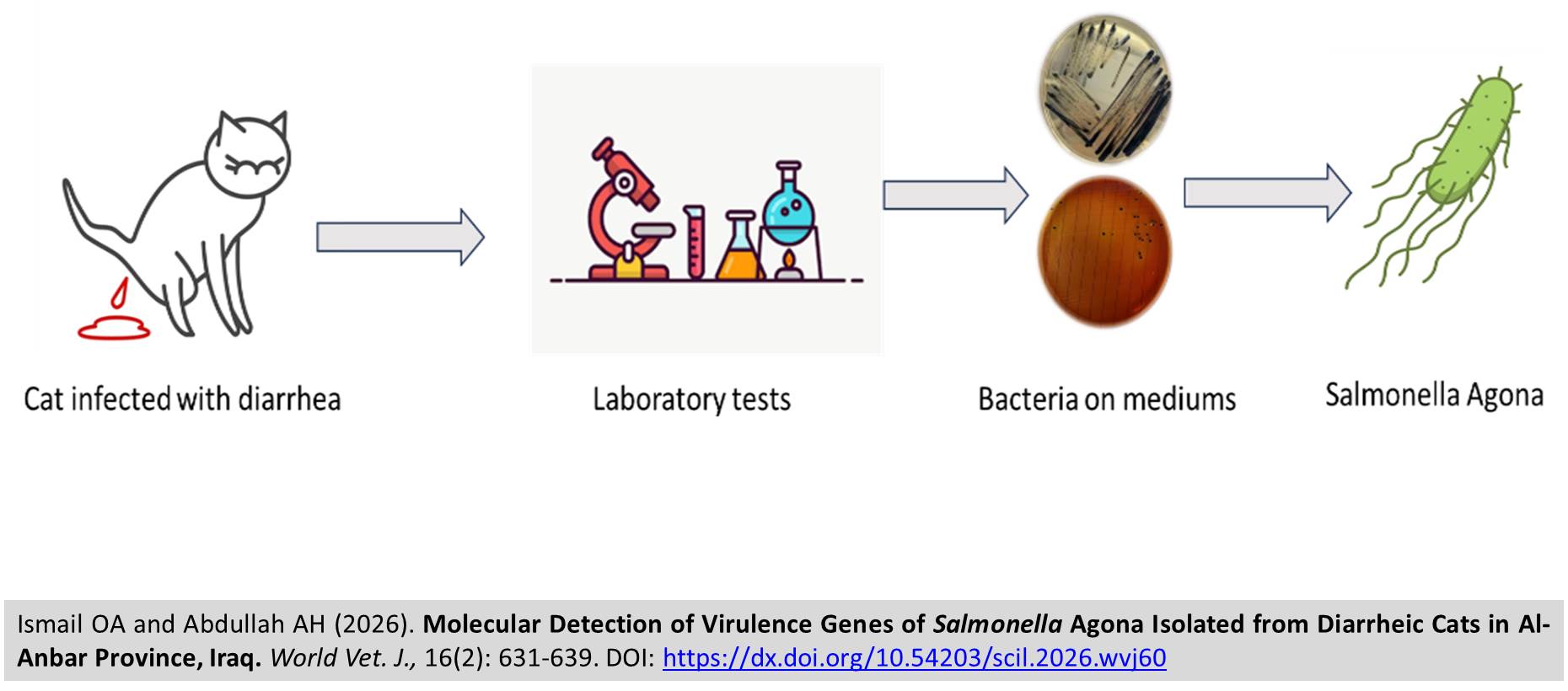
Molecular Detection of Virulence Genes of Salmonella Agona Isolated from Diarrheic Cats in Al-Anbar Province, Iraq
|
|
Ismail OA and Abdullah AH.
World Vet. J. 16(2): 631-639, 2026; pii:S232245682600060-16
DOI: https://dx.doi.org/10.54203/scil.2026.wvj60
ABSTRACT: Salmonella infections are a major cause of foodborne infection in both humans and animals. Some serotypes are capable of inducing severe clinical manifestations, including gastroenteritis, septicemia, and abortion. The present study aimed to identify, isolate, and detect Salmonella Agona in cats with diarrhea in Al-Anbar Governorate, Iraq, and to evaluate the antimicrobial resistance profiles of the recovered isolates. Between November 2024 and May 2025, 100 fecal samples were collected from cats of different breeds presenting with diarrhea at veterinary clinics in Iraq. These samples were processed using established culture methods, including pre-enrichment in buffered peptone water followed by selective enrichment in tetrathionate broth. The enriched samples were then cultured on selective and differential media, including xylose lysine deoxycholate (XLD) agar and Salmonella-Shigella (SS) agar. For isolates identification, biochemical analyses, including catalase, indole, methyl red, Simmons citrate, oxidase, urease, lactose fermentation, triple sugar iron test, and phenylalanine, were performed, and the automated VITEK®2 test was used to confirm the results. The polymerase chain reaction targeted the invA gene to identify Salmonella species, followed by sequence analysis. Eventually, additional virulence genes were identified, including Salmonella enterotoxin (stn) and Salmonella outer protein E (sopE). The current results demonstrated that 4% of the samples (4 out of 100) were positive for Salmonella Agona. Antibiotic susceptibility testing against 16 antimicrobial agents demonstrated that the isolates were resistant to eight antibiotics (50%), namely amoxicillin, streptomycin, cefotaxime, oxytetracycline, doxycycline, tetracycline, trimethoprim-sulfamethoxazole, and gentamicin. The virulence gene results indicated that 2 out of 4 isolates (50%) possessed the sopE gene, whereas only 1 isolate (25%) carried the stn gene. The current findings indicate that Salmonella Agona was not prevalent among cats presenting with diarrhea; however, the existence of highly virulent, multidrug-resistant strains represented a vital public health concern for both humans and animals.
Keywords: Feline, invA gene, Polymerase chain reaction, Salmonella Agona, Virulence gene
[Full text-PDF] [Crossref Metadata] [Scopus] [Export from ePrint]
 Review
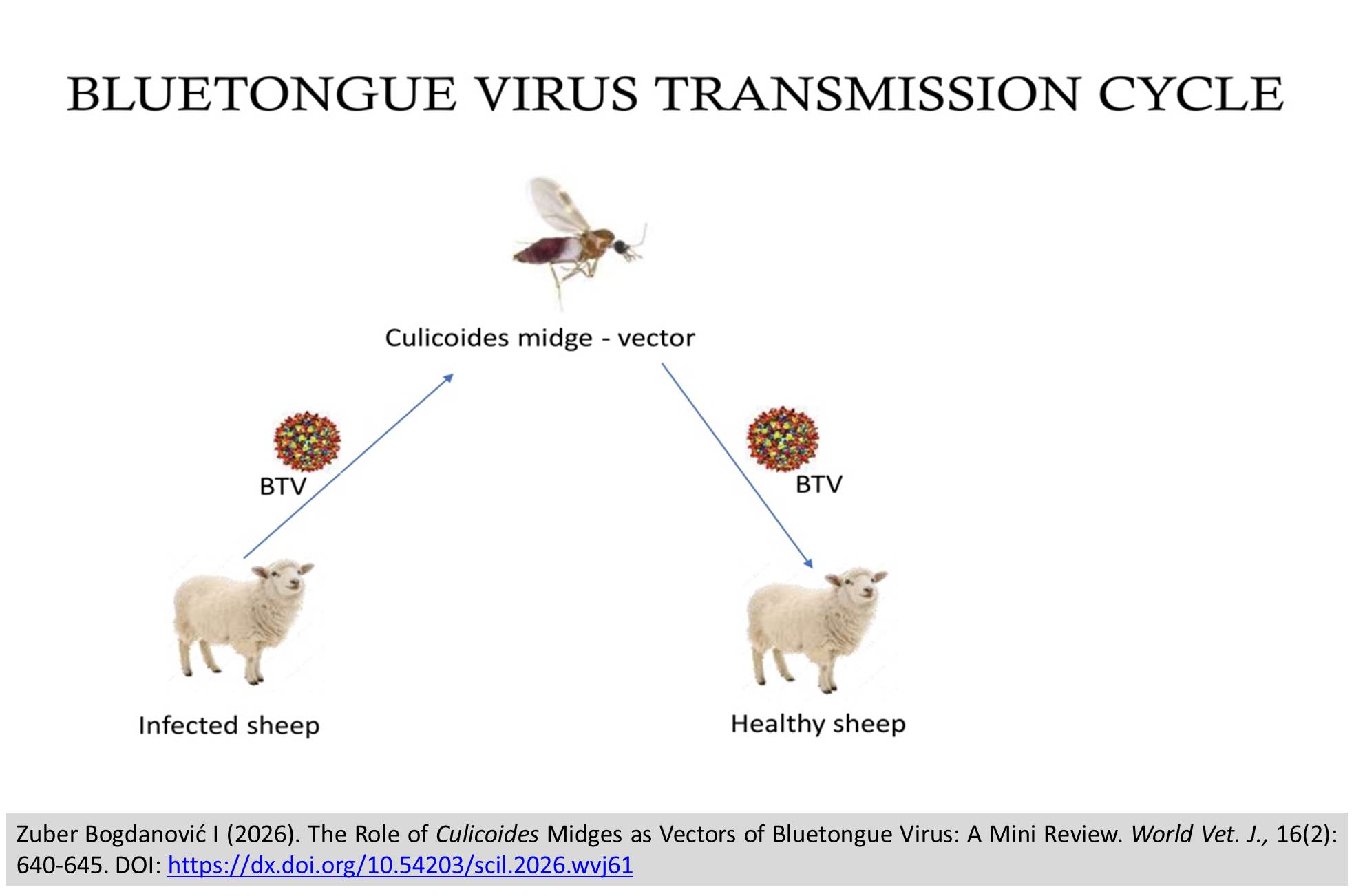
The Role of Culicoides Midges as Vectors of Bluetongue Virus: A Mini Review
|
|
Zuber Bogdanović I.
World Vet. J. 16(2): 640-645, 2026; pii:S232245682600061-16
DOI: https://dx.doi.org/10.54203/scil.2026.wvj61
ABSTRACT: Culicoides biting midges (Ceratopogonidae) are the primary biological vectors of Bluetongue virus (BTV). The BTV is an orbivirus that causes substantial economic losses in livestock worldwide. Although over 50 arboviruses have been isolated from Culicoides species, BTV remains the most economically impactful disease. The present study aimed to evaluate the vector-virus association, including vector competence, transmission dynamics, and environmental factors influencing the spread of BTV. Vector competence in Culicoides is determined by midgut infection and dissemination barriers, which vary significantly among species. Transmission efficiency is influenced by temperature, extrinsic incubation period, and host factors, with cattle serving as long-term reservoirs and sheep exhibiting greater disease severity. Understanding vector-virus associations is essential for predicting outbreaks and developing effective control methods, especially as climate change promotes vector spread.
Keywords: Arbovirus, Bluetongue virus, Culicoides, Transmission, Vector competence
[Full text-PDF] [Crossref Metadata] [Scopus] [Export from ePrint]
Review
Single Nucleotide Polymorphisms of the Growth Hormone Gene and Their Association with Growth Traits in Sheep: A Systematic Review
|
|
Salka K, Nurgiartiningsih VMA, As A, Akram S, Novianti I, Marjuki M, and Suyadi S.
World Vet. J. 16(2): 646-659, 2026; pii:S232245682600062-16
DOI: https://dx.doi.org/10.54203/scil.2026.wvj62
ABSTRACT: Growth hormone (GH) is synthesized and secreted by the pituitary gland. It is regulated by the GH gene, located on chromosome 11 in sheep, and is crucial for regulating postnatal growth and development in sheep. Single-nucleotide polymorphisms (SNPs) in the GH gene are associated with substantial differences in weight and body size in sheep. This study aimed to systematically evaluate SNPs of the GH gene and their association with growth parameters such as weaning weight (WW), yearling weight (YW), average daily gain (ADG), and linear body conformation in sheep. A total of 71 studies were extracted from January 2011 to March 2026. The results identified 25 distinct SNPs (with 15 SNPs reported on exon 5), of which five SNPs, A781G, A1544G, C1765A, T1772A, and G1769C, were detected in more than one breed. Eighteen SNPs were found to be significantly associated with growth traits; these associations were not uniform, as individual SNPs were linked to single or multiple traits, including body weight, birth weight, pre-weaning gain, weaning weight, 6-month weight, daily live weight gain, yearling weight, and morphometric traits. In conclusion, polymorphism at the GH gene influences growth traits in sheep, and several SNPs such as C1776G, A1544G, A1678G, A1558G, C1765A, G1550A, T1772A, G1769C, G1756C, 476G>A, 480 G>A, 55G>A, G871A, G1383A, A1509G, A781G, C408G and T735A associated with growth traits are promising candidate markers after validation in larger breed-specific and trait-specific validation.
Keywords: Breeding program, Growth hormone gene, Marker-assisted selection, Sheep growth, Single nucleotide polymorphism
[Full text-PDF] [Crossref Metadata] [Scopus] [Export from ePrint]
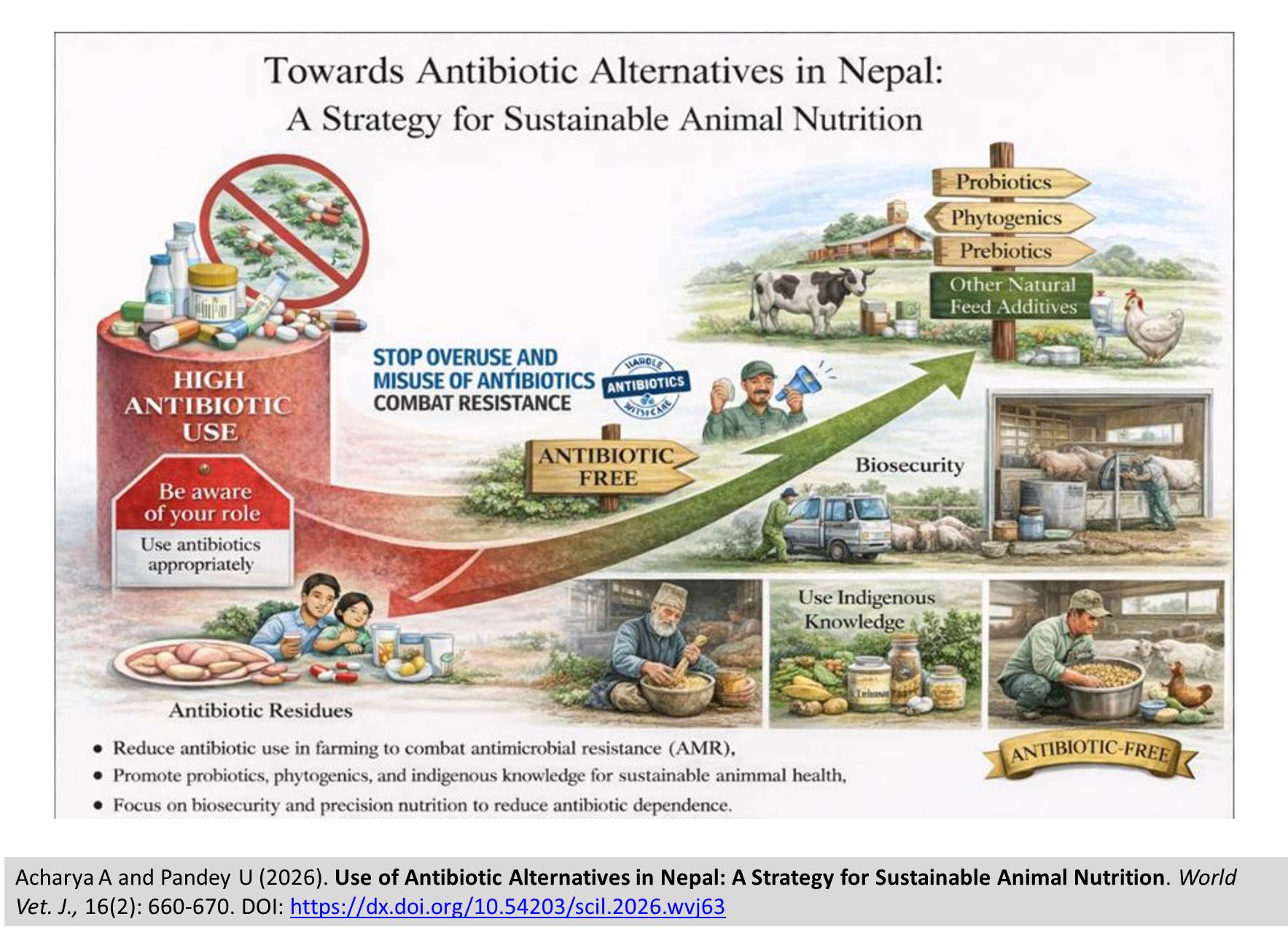 Review
Use of Antibiotic Alternatives in Nepal: A Strategy for Sustainable Animal Nutrition
|
|
Acharya A and Pandey U.
World Vet. J. 16(2): 660-670, 2026; pii:S232245682600063-16
DOI: https://dx.doi.org/10.54203/scil.2026.wvj63
ABSTRACT: The routine use of antibiotics in animal nutrition has historically improved growth and productivity. However, the continued and often indiscriminate use of these compounds has accelerated the emergence of antimicrobial resistance (AMR), posing serious risks to animal health, food safety, and public health. Nearly three-quarters of antimicrobials are consumed by livestock, allowing resistant pathogens to cross animal, human, and environmental boundaries and undermining the concept of One Health. The present study aimed to assess sustainable feed-based alternatives to antibiotics and their effectiveness in enhancing animal health in the Nepalese context. Based on global evidence and national experiences, the review synthesizes the roles of probiotics, prebiotics, phytobiotics, organic acids, enzymes, precision feeding, and complementary management practices in maintaining animal performance while reducing reliance on antibiotics. Nepal presents both urgency and opportunity for this transition, as livestock production remains largely smallholder-based, regulatory enforcement is uneven, and antimicrobial residues continue to be detected in animal-derived foods. At the same time, increasing awareness, ethno-veterinary knowledge, emerging feed innovations, and recent policy commitments under the national AMR action framework signal positive momentum. The review suggests that replacing antibiotics with alternatives should not be viewed as a simple substitution but rather as a system-level transformation integrating nutrition, biosecurity, vaccination, farmer capacity building, and governance within a One Health framework. Strengthening locally adaptable, cost-effective solutions through field-based research and extension will be critical for sustaining productivity while contributing to national and global efforts to mitigate AMR.
Keywords: Antimicrobial resistance, Feed additive, Sustainable livestock production, One Health
[Full text-PDF] [Crossref Metadata] [Scopus] [Export from ePrint]
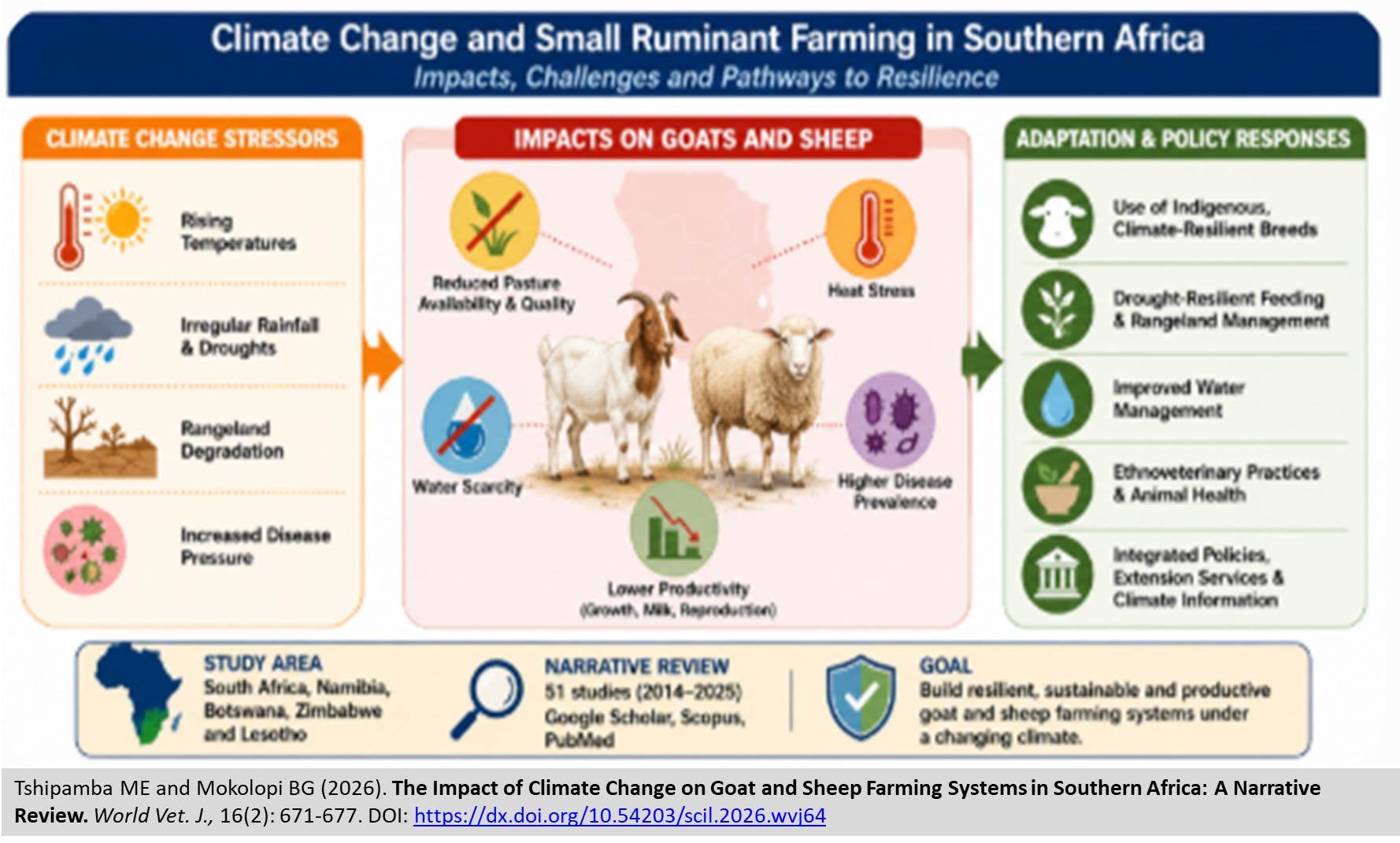 Review
The Impact of Climate Change on Goat and Sheep Farming Systems in Southern Africa: A Narrative Review
|
|
Tshipamba ME and Mokolopi BG.
World Vet. J. 16(2): 671-677, 2026; pii:S232245682600064-16
DOI: https://dx.doi.org/10.54203/scil.2026.wvj64
ABSTRACT: Smallholder goat and sheep farming is a critical component of rural livelihoods in Southern Africa. Climate change has, however, aggravated the situations of drought, heat stress, and disease burdens, which threaten the productivity of small ruminants. The present review aimed to determine the multidimensional effects of climate change on goat and sheep farming in Southern Africa, to analyze existing adaptation measures, and identify policy measures to build resilience. The current review used Google Scholar, Scopus, and PubMed to cover peer-reviewed articles and grey literature published between 2014 and 2025. Based on the inclusion criteria, 102 articles were initially screened, and 51 articles were considered for the narrative review. The review focused on studies conducted in South Africa, Namibia, Botswana, Zimbabwe, and Lesotho. The results indicated a strong relationship between climate variability and decreased ruminant productivity, driven by pasture degradation, water shortages, heat stress, and limited access to veterinary services in Southern African countries. Additionally, the results showed that adaptive strategies include the use of indigenous breeds, drought-resistant feeding, and ethnoveterinary practices to cope with climate variations. The present narrative review highlights the importance of adaptive strategies and integrated policies in Southern African countries for sustaining the development of small ruminant farming amid climate variability.
Keywords: Climate change, Heat stress, Rangeland management, Small ruminant
[Full text-PDF] [Crossref Metadata] [Scopus] [Export from ePrint]
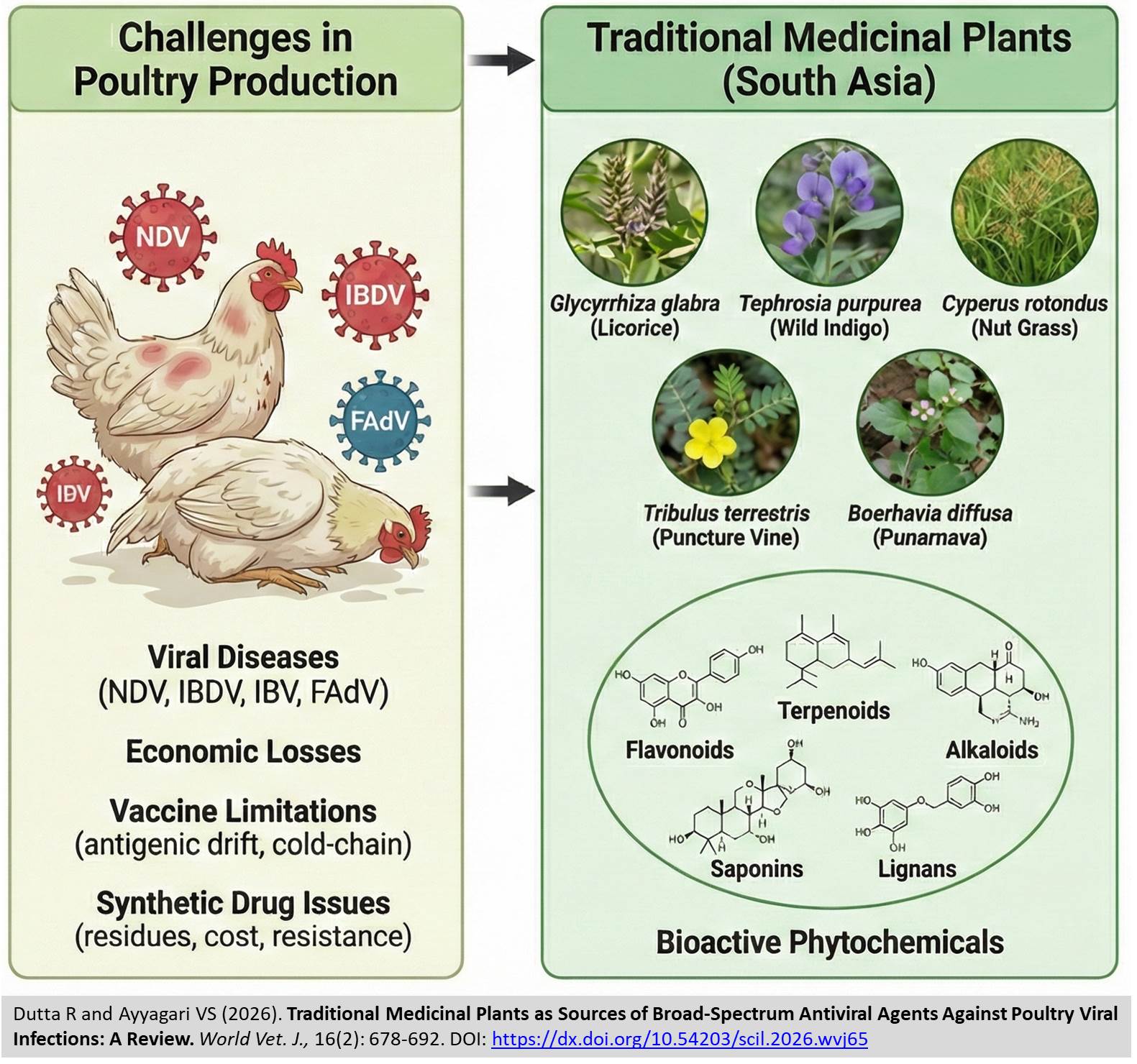 Review
Traditional Medicinal Plants as Sources of Broad-Spectrum Antiviral Agents Against Poultry Viral Infections: A Review
|
|
Dutta R and Ayyagari VS.
World Vet. J. 16(2): 678-692, 2026; pii:S232245682600065-16
DOI: https://dx.doi.org/10.54203/scil.2026.wvj65
ABSTRACT: Across Asia, poultry farming plays a critical role in ensuring food security and supporting rural communities, delivering affordable protein to billions of people. Sustainable poultry production in Asia, especially in India, has been consistently affected by viral diseases. Conventional interventions, including vaccination and biosecurity protocols, often remain inadequate against viral infections, require specific storage conditions, elicit suboptimal immune responses, and pose economic challenges and limitations. In poultry, synthetic antiviral medications are often unsuitable due to their high cost, adverse effects, and concerns about residual compounds. Plant-based remedies emerge not as direct replacements but as valuable alternatives to consider for developing broad-spectrum antiviral solutions. The present study aimed to evaluate the antiviral potential of South Asian ethnomedicinal plants against Newcastle disease virus, infectious bursal disease virus, infectious bronchitis virus, and fowl adenovirus. Compounds such as flavonoids, terpenoids, alkaloids, saponins, and lignans were targeted for their multitarget activities, including inhibition of viral entry and polymerases, immunomodulation, and antioxidant properties. Different studies on Glycyrrhiza glabra, Tephrosia purpurea, Cyperus rotundus, Tribulus terrestris, Boerhavia diffusa, Azadirachta indica, Andrographis paniculata, and Ocimum sanctum reported promising therapeutic potential against poultry viral diseases. Available in vitro studies demonstrated strong antiviral activity across multiple phytochemical classes. Nevertheless, in vivo validation and implementation at the field level remain substantially limited. The current findings confirmed the strong potential of ethnomedicinal plants as sustainable, multi-target antivirals for poultry health.
Keywords: Flavonoid, Fowl adenovirus, Infectious bronchitis virus, Infectious bursal disease virus, Saponin, Terpenoid
[Full text-PDF] [Crossref Metadata] [Scopus] [Export from ePrint]
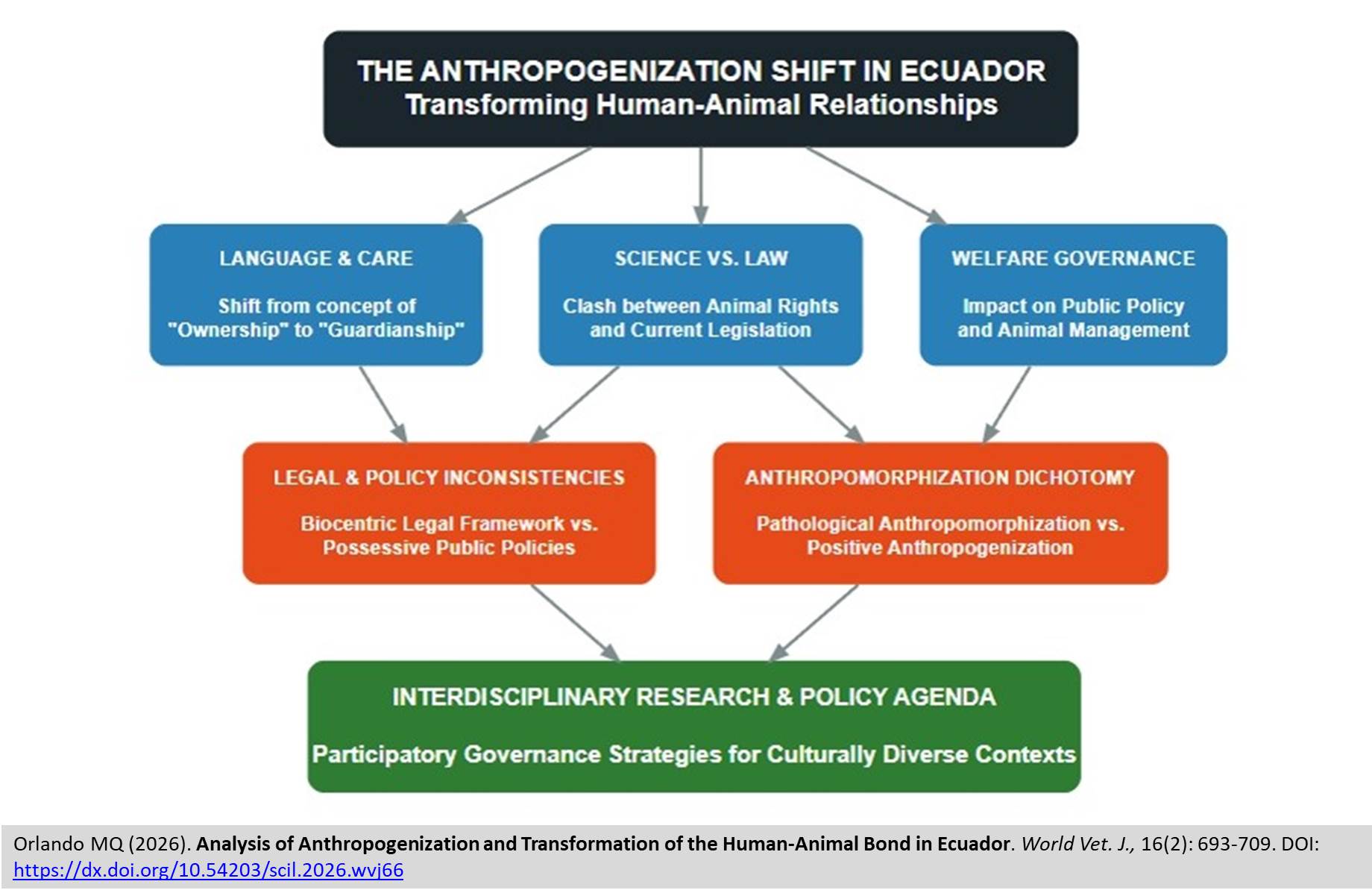 Review
Analysis of Anthropogenization and Transformation of the Human-Animal Bond in Ecuador
|
|
Orlando MQ.
World Vet. J. 16(2): 693-709, 2026; pii:S232245682600066-16
DOI: https://dx.doi.org/10.54203/scil.2026.wvj66
ABSTRACT: The human-animal bond is currently experiencing a profound paradigm shift globally. The present study addresses the growing transformation of human–animal relationships in contemporary societies. The current study aimed to offer a critical narrative review of the anthropogenization of companion animals in Ecuador, understood as the process through which dogs, cats, and other domestic species acquire social, normative, and moral meanings that transform interspecies coexistence. Based on an interdisciplinary review of academic databases, regulatory documents, and institutional reports, the study integrates evidence from cognitive ethology, human–animal psychology, law, and urban sociology. Three central axes are analyzed. The first axis examined the impact of language, particularly ownership versus guardianship, on care practices. The second axis explores the tension between scientific evidence on animal agency and current regulations. The third axis evaluates the implications of anthropogenization for animal-welfare governance in diverse territorial contexts. The analysis identified contradictions between the biocentric constitutional framework and secondary legislation that retains possessive registers. The findings also revealed the simultaneous emergence of pathological anthropomorphization and positive anthropogenization processes. In addition, significant empirical gaps were identified for the design of coherent public policies. The study proposes an interdisciplinary research agenda and presents recommendations aimed at aligning terminology, education, and governance, with emphasis on territorial strategies and participatory approaches. Overall, the manuscript provides a conceptual framework to guide applied studies and regulatory reforms in countries characterized by sociocultural heterogeneity, such as Ecuador.
Keywords: Animal ethic, Animal right, Animal abuse, Anthropogenization, Education, Guardianship
[Full text-PDF] [Crossref Metadata] [Scopus] [Export from ePrint]
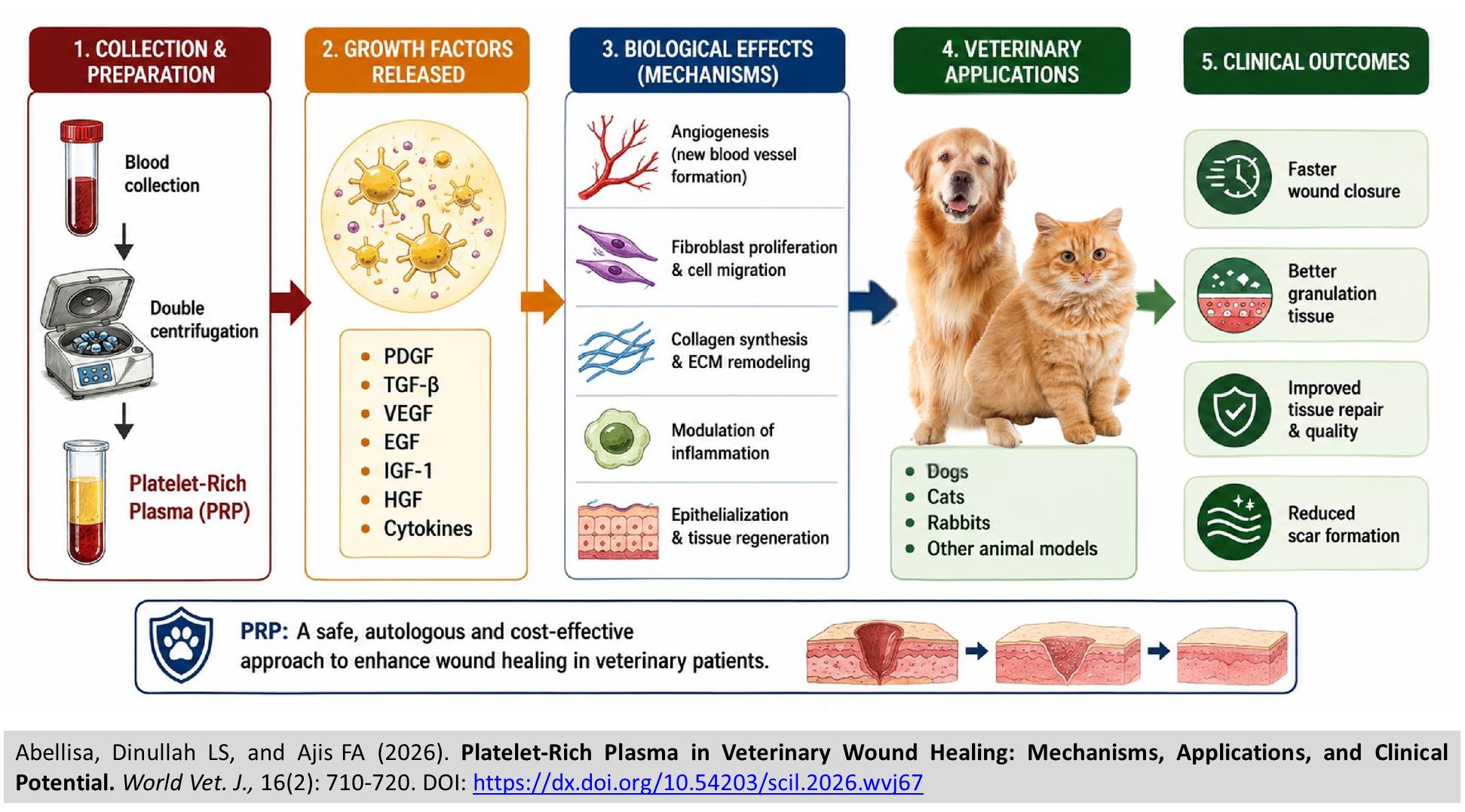 Review
Platelet-Rich Plasma in Veterinary Wound Healing: Mechanisms, Applications, and Clinical Potential
|
|
Abellisa, Dinullah LS, and Ajis FA.
World Vet. J. 16(2): 710-720, 2026; pii:S232245682600067-16
DOI: https://dx.doi.org/10.54203/scil.2026.wvj67
ABSTRACT: Wound healing is a significant challenge in both human and veterinary medicine, particularly in cases involving trauma, infection, or chronic tissue damage. Platelet-rich plasma (PRP), a product derived from the patient’s own blood and enriched with growth factors and cytokines, has gained interest for its potential to promote regeneration and enhance healing. The present study aimed to evaluate current evidence on the application of PRP and its derivatives in wound healing, with a specific focus on veterinary animal models, and to identify key mechanisms, therapeutic outcomes, and existing knowledge gaps. While the present study highlighted veterinary applications, the included studies also consisted of rodent models, in vitro experiments, and human cell lines, providing broader mechanistic insights. A structured narrative review was conducted using 25 peer-reviewed articles published between 2024 and 2025. The selected studies included controlled trials, in vitro experiments, systematic reviews, and concept papers on PRP, platelet-rich fibrin, plasma rich in growth factors, and emerging formulations such as induced pluripotent stem cell-derived platelets and protein-rich PRP matrices. Key data related to study design, subjects, intervention types, outcomes, and theoretical frameworks were extracted and analyzed. All studies confirmed the positive role of PRP in promoting angiogenesis, collagen formation, epithelialization, and inflammation modulation. Evidence from veterinary models, including feline trauma cases and animal-derived PRP, supported the clinical applicability of PRP in wound healing. Several studies have demonstrated that the PRP approach is a valuable and effective treatment method in clinical practice, applicable to patients and animals. The PRP proved to be an efficacious intervention for cutaneous wounds, including surgical wounds, traumatic injuries, and chronic ulcers. However, differences in PRP preparation methods and outcome assessment criteria hinder direct comparisons across studies. Recent findings indicated new mechanisms involving telocytes and the regulation of vascular genes. It has been indicated that PRP and its derivatives are promising biological therapies for improving wound healing in veterinary practice.
Keywords: Growth factor, Platelet-rich plasma, Tissue repair, Veterinary medicine, Wound healing
[Full text-PDF] [Crossref Metadata] [Scopus] [Export from ePrint]
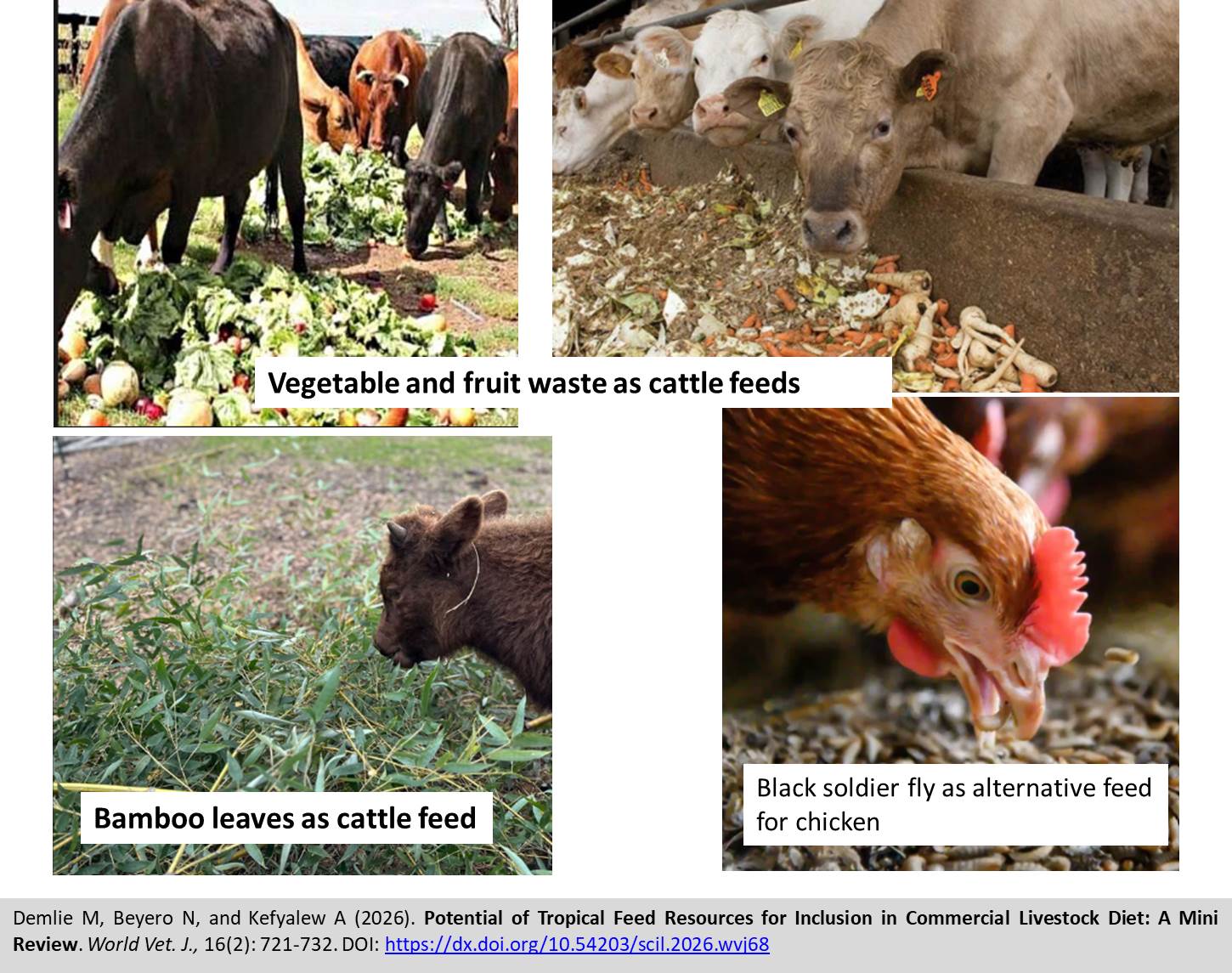 Review
Potential of Tropical Feed Resources for Inclusion in Commercial Livestock Diet: A Mini Review
|
|
Demlie M, Beyero N, and Kefyalew A.
World Vet. J. 16(2): 721-732, 2026; pii:S232245682600068-16
DOI: https://dx.doi.org/10.54203/scil.2026.wvj68
ABSTRACT: The demand for locally accessible, reasonably priced, and environmentally resilient alternative feed resources has increased due to rapid population growth, climate variability, land degradation, and growing competition for land between human food and animal feed. To address this problem, the utilization of emerging feed resources in the tropics is important. Therefore, the objective of this review was to identify emerging topical feed resources, nutritional potential, limitations, and integration techniques for commercial livestock production. Trees and shrubs, improved legumes and grasses such as lablab and alfalfa, insect-based proteins, aquatic feeds, root and tuber crops, agro-industrial by-products, fruit and vegetable wastes, and fermented or biotechnologically enhanced feeds are just a few of the many emerging feeds that were found to be valuable options. Emerging feeds partly fill the gap in feed supply, reduce competition for food between humans and animals, lower feed costs, and contribute to self-sufficiency in nutrients from locally available feed sources. Despite the high potential of emerging feeds, their utilization remains limited due to several interrelated constraints, including the presence of anti-nutritional factors, high fiber content and low digestibility, variable and inconsistent nutrient composition, poor palatability, high moisture content, rapid spoilage, and seasonal availability. Additional barriers include inadequate processing and preservation technologies, lack of infrastructure and equipment, limited farmer knowledge and technical skills, weak extension services, and insufficient research-based feed standards. Consequently, these factors result in inconsistent feed quality and reduced economic returns for commercial livestock producers. The review highlighted that appropriate processing techniques such as drying, chopping, grinding, ensiling, fermentation, urea or ammonia treatment, heat treatment, enzyme supplementation, and mineral fortification are required to utilize emerging feeds. In conclusion, emerging feed resources represent a viable pathway toward sustainable, cost-effective, and climate-resilient livestock production in the tropics. Strengthening studies, improving processing and preservation technologies, enhancing extension services, and building farmer capacity are essential to unlock their full potential and ensure their successful adoption in commercial livestock feeding systems.
Keywords: Diet, Emerging feed, Integration strategy, Livestock, Nutritional factor
[Full text-PDF] [Crossref Metadata] [Scopus ID: ] [Export from ePrint]
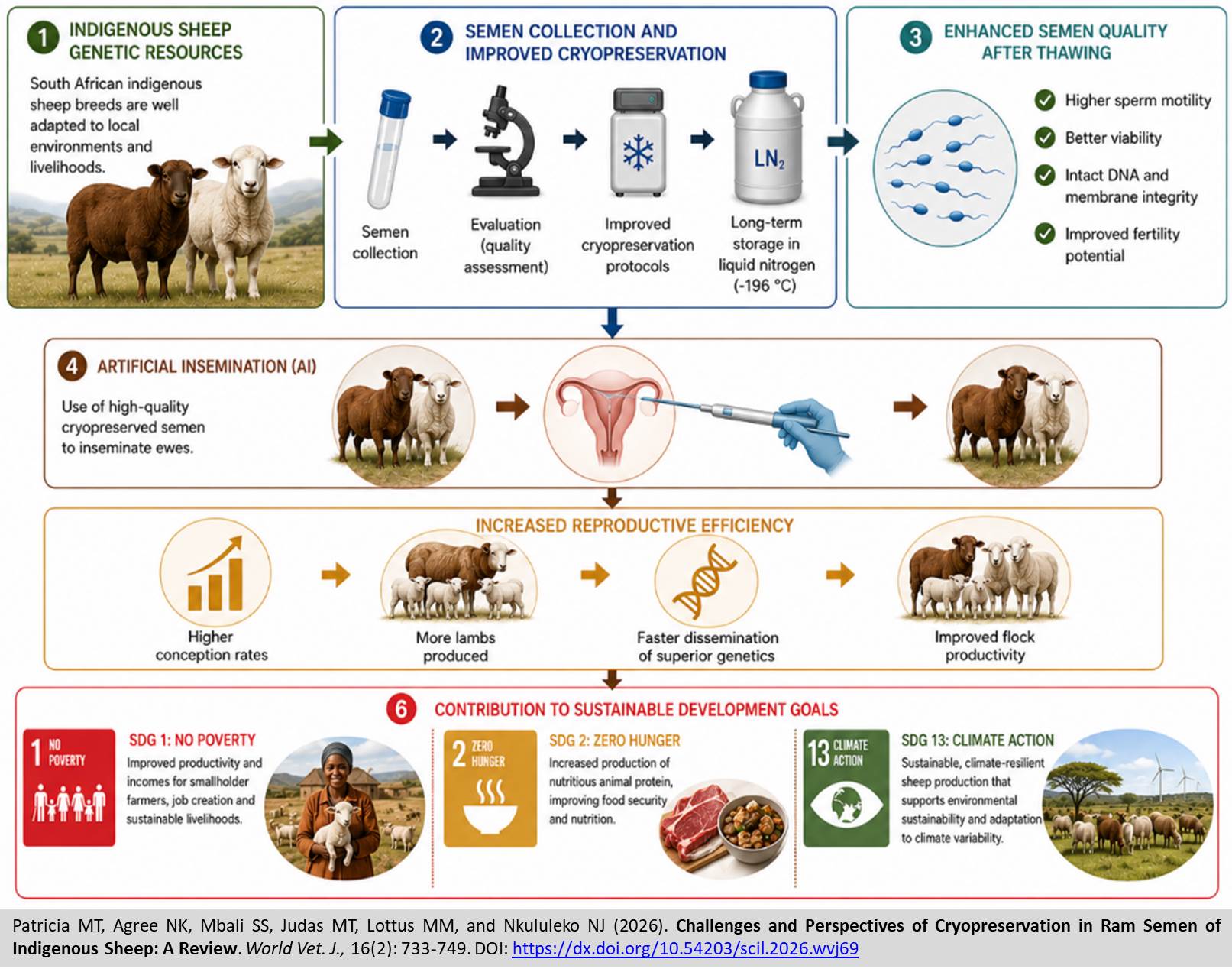 Review
Challenges and Perspectives of Cryopreservation in Ram Semen of Indigenous Sheep: A Review
|
|
Patricia MT, Agree NK, Mbali SS, Judas MT, Lottus MM, and Nkululeko NJ.
World Vet. J. 16(2): 733-749, 2026; pii:S232245682600069-16
DOI: https://dx.doi.org/10.54203/scil.2026.wvj69
ABSTRACT: Artificial insemination (AI) is a widely used technique to enhance genetic diversity and breeding efficiency in livestock such as cattle, sheep, goats, and pigs. Sheep are important in developing the livelihoods of poor farmers by reducing poverty and promoting sustainable agriculture and food security. Therefore, the present study aimed to explore the challenges and perspectives associated with cryopreserving ram semen to conserve indigenous sheep ecotypes. Indigenous sheep populations are vital for meat production in challenging environmental conditions, where feed is limited and land is scarce. However, concerns have emerged about the decline in indigenous sheep populations, mainly due to the growth of composite breed production. Composite breeds, which are preferred for their faster growth rates and larger body size, reduce the capacity of indigenous sheep to survive in environments affected by climate change. This decline highlighted the importance of assisted reproductive technologies, such as AI and semen cryopreservation, in preserving the genetic resources of indigenous sheep before they become extinct. While AI and semen cryopreservation have been successful in livestock species such as cattle and pigs for genetic preservation, results in sheep have been less successful. Ram semen quality and fertility are often compromised by the freezing and thawing process. Ram spermatozoa produce high levels of reactive oxygen species (ROS) and are sensitive to cold shock, leading to oxidative stress, cellular damage, and conception rates of 30-50%. Adding antioxidants, such as polyunsaturated fatty acids and plant extracts, to semen extenders can reduce ROS production and mitigate oxidative damage, thereby improving sperm quality and functionality during cryopreservation. Despite these advances, optimizing freezing and thawing protocols and addressing knowledge gaps are necessary to enhance semen preservation outcomes.
Keywords: Antioxidant, Artificial insemination, Extender, Nanoparticle, Sheep, Semen cryopreservation
[Full text-PDF] [Crossref Metadata] [Scopus] [Export from ePrint]
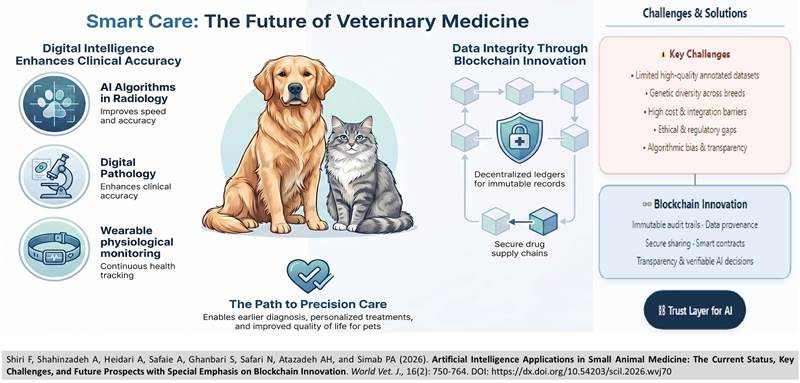 Review
Artificial Intelligence Applications in Small Animal Medicine: The Current Status, Key Challenges, and Future Prospects with Special Emphasis on Blockchain Innovation
|
|
Shiri F, Shahinzadeh A, Heidari A, Safaie A, Ghanbari S, Safari N, Atazadeh AH, and Simab PA.
World Vet. J. 16(2): 750-764, 2026; pii:S232245682600070-16
DOI: https://dx.doi.org/10.54203/scil.2026.wvj70
ABSTRACT: Artificial intelligence (AI) and machine learning are rapidly transforming companion animal veterinary medicine. The present narrative review examined current applications, challenges, and future directions for AI in the care of dogs, cats, and other companion animals. The current study is based on a structured literature search across PubMed/MEDLINE, Scopus, and IEEE Xplore from January 2015 to April 2026, with clearly defined inclusion and exclusion criteria to ensure transparency and reproducibility. In diagnostic imaging, computer vision algorithms improve the speed and accuracy of interpreting radiographs, ultrasound, and dermatoscopic images, helping detect conditions such as hip dislocation, osteoarthritis, foreign bodies, skin lesions, and parasites. In digital pathology, AI aids in identifying abnormal cells from blood and histology slides, supporting diagnoses such as lymphoma and anemia. Wearable devices with AI algorithms continuously monitor physiological data, including activity, sleep, and early signs of pain. Natural language processing (NLP) extracts information from electronic health records to facilitate epidemiological studies. Despite this promise, several challenges remain. Technical hurdles include the need for large, high-quality annotated datasets, which are harder and more costly to obtain than in human medicine, and the high genetic diversity among dog and cat breeds, which makes it difficult to develop generalizable algorithms. Ethical and legal issues involve liability for diagnostic errors, data privacy, and algorithmic bias, requiring new regulatory frameworks. Practical barriers include high costs, integration into clinical workflows, and the need to train veterinarians to effectively use and critically evaluate AI outputs. Future progress depends on close collaboration among AI specialists, veterinarians, biologists, and industry. Priorities include developing cost-effective, user-friendly tools; creating internationally shared, standardized databases; and establishing ethical and professional guidelines. Blockchain may serve as a trust layer for recording and verifying data access events, rather than as a primary repository for large-scale medical data. Ultimately, AI is expected to act as a powerful assistant, not a replacement for veterinary expertise, enabling earlier diagnoses, personalized treatments, improved preventive care, and a better quality of life for companion animals and their owners.
Keywords: Artificial intelligence, Companion animal, Diagnostic imaging, Machine learning, Veterinary medicine
[Full text-PDF] [Crossref Metadata] [Scopus] [Export from ePrint]
Previous issue | Next issue | Archive
 This work is licensed under a Creative Commons Attribution 4.0 International License (CC BY 4.0).